

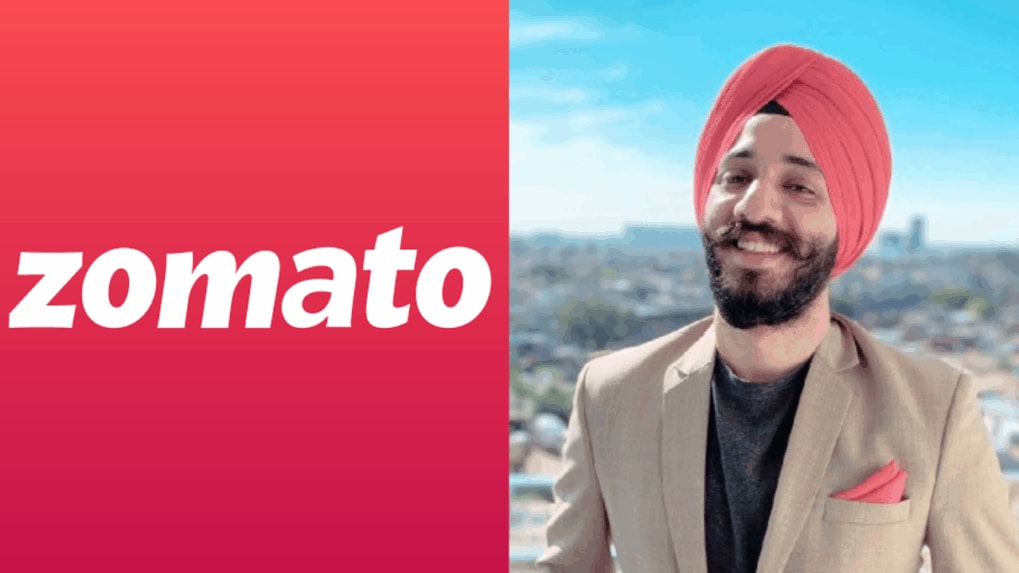
Traditional advertising matters only if people talk about it online, says Zomato marketing head
Traditional advertising matters only when it generates conversations online, according to Zomato Marketing Head Sahibjeet Singh Sawhney.
“Traditional advertising holds value only in how much conversation it now generates online. A print, an OOH, even a TVC matters only when it’s spoken about on social media,” Sawhney told Storyboard18. He believes marketers need to be clear about the role each piece of communication is expected to play. “And on digital, you need to have clarity. You’re either creating an ad or a piece of content. It cannot be both.”
According to Sawhney, campaigns designed to drive transactions should be approached differently from content designed to generate engagement.
“When you drive for the conversion, be quick, snappy and CTA oriented. When you drive for conversations, create the kind of content people are already interested in and use your brand to make it slightly more interesting.” “Don’t try to be both in one, you’ll end up being neither.”
Creators have become content engines
Sawhney said the same thinking has influenced how Zomato works with creators. “Nobody opens Instagram to hear from a brand.” Instead, he said audiences respond to stories, personalities and moments that feel authentic.
“The most engaging content right now sits at the intersection of both: creators who bring reach and relatability, and stories worth telling. Audiences are responding to content with a strong narrative, a person, a moment, whether that comes from a creator or from the brand itself.”
As a result, Zomato no longer sees creators purely as a distribution channel. “Our approach has shifted from treating creators as distribution to treating them as content engines, capable of driving both performance and brand building.”
“The best creator partnerships we’ve done don’t feel like sponsorships. They feel like the creator had an interesting idea and Zomato happened to be part of it.”
Sawhney cited Zomato’s IPL-season Gully Cricket campaign as an example. The company chose not to promote the content through paid boosts and instead relied on organic engagement.
“We made a deliberate call not to boost or promote these videos. If the content earned its views, it earned them on merit.” According to Sawhney, the campaign contributed to 6.5% follower growth on the brand account.
Why Zomato doesn’t make annual marketing plans
The company’s approach also extends to planning. “We don’t build annual marketing plans. Food delivery is too dynamic (read: exciting) to plan a year in advance.” Sawhney said Zomato works on shorter planning and execution cycles instead of annual marketing roadmaps.
The company focuses on two priorities, one is acquiring new consumers and the second is, creating share-of-voice peaks around category demand moments.
Brand and performance must work together
Sawhney also pushed back against the idea that performance marketing and brand building are competing priorities. “They’re not in tension if you build it right.” He said brands can end up weakening recall when high-frequency performance communication is disconnected from the broader brand identity.
“Your business-outcome communication will naturally run at a higher frequency; that’s fine. But if that high-frequency work doesn’t ladder back to the brand you’re trying to build, you’re eroding recall with every impression.”
At Zomato, he said both forms of communication are expected to share the same tone and personality. “Our performance communication and our brand work share a tone, not just a logo. When they’re coherent, both investments compound. When they’re not, neither fully pays off.”
Looking beyond reach and impressions
On the business side, Sawhney said order volume remains the most important metric. On the brand side, he tracks conversation volume. However, he said some of the strongest indicators of brand health show up in everyday consumer interactions.
“The number I find most telling is harder to quantify, it’s how the brand is actually showing up in daily touchpoints. A push notification, an OOH, a social post someone screenshotted and shared. That’s where you see whether the brand is alive or just present.”
Most marketing campaigns at Zomato are tied to product stories or seasonal demand moments, he said. The company measures campaigns using metrics such as reach, frequency and CPMs, while also tracking cost per incremental order (CPIO) through geo-tests and holdout cohorts.
Sawhney also disagreed with the view that rising customer acquisition costs are becoming a major challenge for online food delivery platforms. “We believe online food delivery has a lot of headroom to grow.”
AI’s biggest opportunity is personalisation
Sawhney said AI is already helping marketing teams reduce the time spent on repetitive work. “AI’s biggest unlock for marketing teams right now is workflow compression – research, briefing, content iteration, reporting.”
“The tasks that consumed hours and slowed good people down. Free your teams from those and they spend more time on the work that actually requires judgment and craft.”
The bigger opportunity, however, lies in personalisation. “We’re only beginning to see what it looks like when the right message finds the right consumer at the right moment, not through broad segmentation, but genuinely individualised. That’s the frontier.”
Sawhney said differentiation in food delivery and quick commerce will come from a mix of affordability, service quality and product innovation. For marketers, however, the challenge remains the same, which is, finding ways to stay relevant in an increasingly crowded content environment.
Also read: What is Entropy? Deepinder Goyal’s Temple claims a new way to measure the body’s ‘cost of being alive’
Follow Storyboard18 on Google for the latest and breaking brand makers and industry updates, along with in-depth coverage of digital media and brand marketing. Stay informed with the latest perspectives only on Storyboard18.
Tags
