

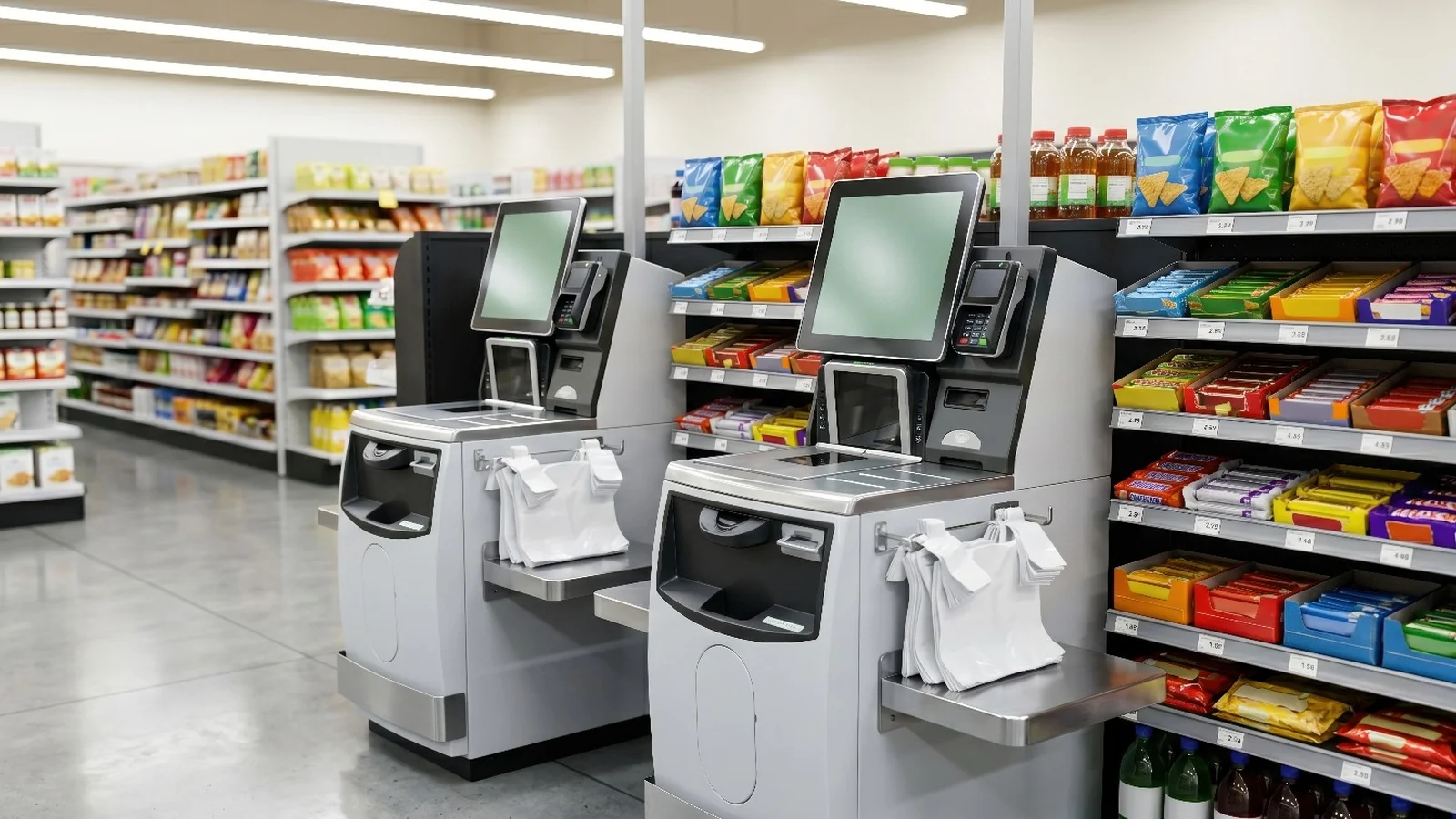
The autonomous pivot: What independent retailers should know before going cashierless | Vending Times
Micro Markets
The autonomous pivot: What independent retailers should know before going cashierless
Computer vision, smart access, sensor-based product tracking, cloud software, and digital payments have made autonomous retail more accessible across convenience, hospitality, multifamily, higher education, transportation, and workplace environments. That does not mean every store should remove the cashier.
August 17, 2026 by Ben Wheeler — Dir. of Business Dev. – Automated Retail, T-ROC

Cashierless retail is no longer limited to the largest technology companies.
Computer vision, smart access, sensor-based product tracking, cloud software, and digital payments have made autonomous retail more accessible across convenience, hospitality, multifamily, higher education, transportation, and workplace environments.
That does not mean every store should remove the cashier.
The real question is whether autonomy improves the economics and customer experience of a specific location.
For independent retailers, that decision should begin with a clear look at the technology, operating requirements, customer behavior, labor model, product mix, and service expectations.
Autonomous retail can create meaningful opportunities.
It can also create new operating demands that are easy to underestimate.
What “autonomous retail” actually means
The phrase can describe several different formats.
At one end is a fully autonomous store, where customers enter, select products, and leave without using a traditional checkout.
At the other end are smaller controlled-access coolers or cabinets that automate a single part of the retail experience.
Between those two are hybrid models that combine self-service technology with scheduled or part-time staffing.
That distinction matters because the cost, technical requirements, and operating model can vary significantly.
How computer vision fits into the experience
Computer vision is one of the technologies that can support autonomous retail.
In a full-store environment, cameras may help track movement and product interaction. Other technologies, including shelf sensors, RFID, smart access controls, and payment systems, can help validate what happened during the visit.
In smaller smart coolers, the process can be more contained.
A customer may present a payment card or digital credential to unlock the unit. Cameras, weight sensors, RFID, or another product-recognition system can identify what was removed. The system then reconciles the product activity with the transaction.
The important point is that autonomous retail rarely depends on one technology.
It works through several systems operating together.
Start with the use case, not the technology
One of the most common mistakes in automated retail is beginning with the machine.
A retailer sees a new autonomous concept and asks, “Where can we install this?”
I would reverse that question.
Start with the location.
- Who is the customer?
- When do they shop?
- What products do they need?
- How much traffic does the site generate?
- Is the location secure?
- What hours matter most?
- What service resources are available?
- How often can inventory be replenished?
- How will customers get help if something goes wrong?
Those questions determine whether a full autonomous store, smart cooler, micro-market, traditional vending unit, or hybrid format makes the most sense.
The technology should support the business case.
The cost conversation is bigger than hardware
Autonomous retail is often discussed in terms of cameras, sensors, and installation.
Those are only part of the investment.
Operators also need to account for:
- Software fees
- Connectivity
- Payment processing
- Equipment maintenance
- Remote support
- Installation
- Site preparation
- Inventory management
- Replenishment labor
- Cleaning
- Customer service
- Loss prevention
- System monitoring
- Equipment replacement and repair
A lower-cost installation does not automatically produce a stronger return.
A more expensive system may make sense if it increases operating hours, improves product selection, reduces checkout friction, or supports a location that could not otherwise be staffed economically.
The right calculation is total program cost against total program value.
Where autonomous retail can create value
The most compelling use cases tend to solve a specific operating problem.
Extending store hours
Autonomy can allow a location to remain accessible beyond staffed hours.
- Corporate campuses
- Apartment communities
- Hospitals
- Hotels
- Manufacturing facilities
- College campuses
- Transportation locations
- Overnight work environments
The benefit is not simply “removing labor.”
It is creating access during hours when staffing may not be practical.
Reducing checkout friction
In high-traffic environments, traditional checkout can become a bottleneck.
Autonomous retail can reduce the number of steps between product selection and purchase, especially when customers are already comfortable with digital payment.
That can be valuable in places where speed matters.
Using Retail Space Differently
Removing or reducing a traditional checkout area can free space for merchandise, foodservice, seating, or other customer-facing uses.
The value of that space depends on the location.
A compact store may benefit significantly. A larger store may see less impact.
Improving store-level data
Autonomous systems can provide more detailed information than a basic transaction record.
Depending on the system, operators may gain insight into:
- Product interaction
- Pick-up and put-back activity
- Time spent in different areas
- Inventory movement
- Transaction timing
- Product availability
- Customer flow
That information can help improve assortment, placement, replenishment, and store design.
The value comes from what the operator does with the data.
Automation does not remove operations
This is one of the most important points for any retailer considering autonomy.
A cashierless store is still a store.
- Replenish shelves
- Receive inventory
- Rotate fresh products
- Clean the location
- Handle damaged merchandise
- Maintain equipment
- Respond to transaction issues
- Monitor system alerts
- Address customer questions
- Review inventory discrepancies
Autonomy changes where labor is used.
It does not remove the need for people.
This is especially important in smaller retail environments, where one person may currently handle checkout, cleaning, stocking, customer service, and basic maintenance.
Removing the checkout function does not eliminate the rest of the work.
Customer service needs a new model
A staffed store has an immediate support channel.
The customer asks the person behind the counter.
An autonomous store needs another answer.
- Remote support
- In-app assistance
- A help button
- Text support
- Video support
- Clear refund procedures
- On-site staff during selected hours
The support model should be planned before launch.
A frictionless purchase experience can quickly become frustrating if the customer is charged incorrectly and cannot reach anyone.
Security still matters
Autonomous systems can improve visibility into product movement and transaction activity.
That does not mean they eliminate loss.
Operators still need to account for:
- Unauthorized access
- Tailgating
- Vandalism
- Product misidentification
- Inventory errors
- Equipment malfunction
- Improper replenishment
- Age-restricted merchandise
- Customer disputes
Technology can help identify irregular activity.
It cannot replace operating procedures.
For street-facing locations or environments with higher security risk, a fully autonomous model may require additional physical controls, remote monitoring, or scheduled staffing.
Hybrid models deserve more attention
The autonomous retail discussion is often framed as staffed versus unstaffed.
That is too narrow.
A hybrid model may provide the strongest operating fit for many independent retailers.
A store could be staffed during peak periods and autonomous during low-traffic hours.
A larger location could use a smart cooler after the main store closes.
A lobby market could operate without staff while receiving scheduled daily service.
A convenience retailer could automate part of the experience without converting the entire store.
Hybrid models allow operators to use automation where it creates the most value while preserving human support where it matters.
That flexibility is often more practical than an all-or-nothing approach.
How to evaluate a location
Before moving forward, I would look at five areas.
1. Traffic
How many customers use the location, and during which hours?
A location with meaningful demand outside staffed periods may benefit more from autonomy than one with a narrow traffic window.
2. Product Mix
Packaged snacks and beverages behave differently from fresh meals, high-value merchandise, or age-restricted goods.
The product mix affects equipment, security, replenishment, and customer support requirements.
3. Security
A controlled corporate environment presents a different risk profile from a street-facing convenience store.
Access, surveillance, building security, and location type should all influence the design.
4. Field operations
How quickly can someone reach the location when there is a problem?
Who replenishes it?
Who cleans it?
Who responds to an equipment issue?
The further a location is from field support, the more important system reliability becomes.
5. Economics
Do not evaluate autonomy based on labor savings alone.
- Incremental operating hours
- Potential sales
- Installation costs
- Software costs
- Field labor
- Maintenance
- Loss
- Inventory requirements
- Customer support
- Expected transaction volume
That provides a much more useful view of return.
T-ROC’s view: Autonomy is an operating model
At T-ROC, we do not look at autonomous retail as simply a technology deployment.
The technology is one part of a larger operating system.
Successful programs depend on site selection, deployment, inventory, replenishment, maintenance, connectivity, monitoring, customer support, and ongoing field execution.
That is why the same autonomous technology can perform very differently across two locations.
The machine may be identical.
The operating environment is not.
For retailers considering autonomy, the best first step is not choosing a camera system or smart cooler.
It is defining what problem the program needs to solve.
Once that is clear, the technology decision becomes much easier.
The bottom line
Autonomous retail is becoming more accessible to independent operators, but the opportunity is broader than simply removing the cashier.
The strongest programs improve access, simplify transactions, make better use of space, and support a customer experience that fits the location.
Some sites may justify a fully autonomous store.
Others may perform better with a smart cooler, micro-market, connected vending solution, or hybrid model.
The right answer depends on the customer, the environment, and the economics.
That is the real autonomous pivot.
Not replacing people with technology.
Using technology where it makes the retail experience work better.
VendingFoodserviceMicro MarketsPayments
About Ben Wheeler
Ben Wheeler, known as The KioskGuy, is a long time kiosk industry executive who assists companies with kiosk solutions.
Related Media
Blog
The battle for the breakroom: Which automated retail model wins?
Blog
From vending machines to autonomous retail: The evolution of grab and go shopping
Blog
From Vending Machines to Autonomous Retail: The Evolution of Grab‑and‑Go Shopping
Blog
Beyond surge pricing: A smarter model for automated retail
Article
From vending to vision: How automated retail can go beyond convenience
Blog
An operations guide to shrink mitigation in unattended retail
