

Digital Transformation | FTE Event News | On the Ground // Aug 2026
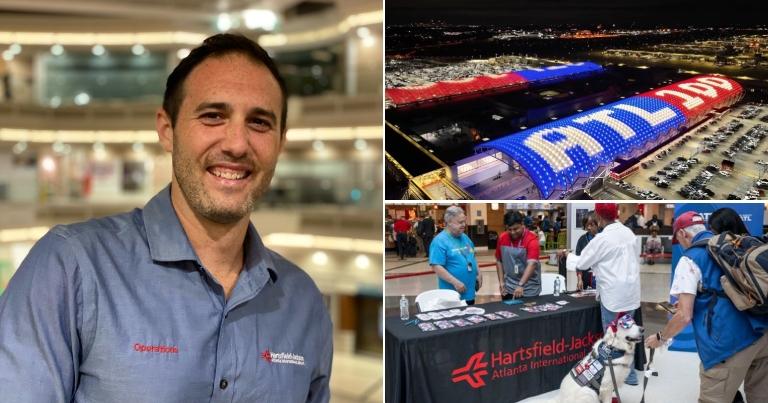
As passenger expectations continue to evolve, airports are under increasing pressure to deliver journeys that are seamless, personalised and inclusive, while balancing the opportunities presented by digital innovation with the value of human interaction. From harnessing artificial intelligence (AI), biometrics and customer insights to creating more accessible experiences and building resilience during disruption, the industry’s focus is shifting towards making every stage of the journey as effortless as possible. In this interview, ahead of his participation in ‘The Customer Experience Leaders Symposium’ at the 20th anniversary FTE Global (Dallas, Texas, 8 to 10 September 2026), David Sconzo, Senior Customer Experience Manager/Assistant FIFA Lead, Hartsfield-Jackson Atlanta International Airport (ATL), shares his perspectives on creating airports that become destinations in their own right, the lessons learned from hosting one of the world’s biggest sporting events, and why exceptional customer and employee experiences go hand-in-hand.
See the FTE Global schedule at a glance >>Register for FTE Global >>
A vision for inclusive customer experience
As part of ‘The Customer Experience Leaders Symposium’ at FTE Global, Sconzo will join fellow industry experts to explore how airlines, airports and their partners are reimagining the end-to-end passenger journey. The session will examine how the industry can harness emerging technologies, data and collaboration to deliver more seamless, personalised and inclusive travel experiences, while striking the right balance between digital innovation and human support. Discussions will also address improving accessibility, enhancing the customer experience during disruption, overcoming operational challenges through cross-industry collaboration, and exploring how more travel processes could move beyond the airport to provide passengers with greater flexibility and choice.
“For me, for ATL, and for the industry as a whole, a truly inclusive airport experience is one where everyone wants to be at the airport,” Sconzo shares. “And not just because they have to, but because they genuinely enjoy being there. In that kind of environment, the airport becomes a destination within the destination. We’re not all the way there yet, and there’s still work to do to fully realise that vision. Even so, as an industry we’re moving in the right direction and making real progress toward creating that kind of atmosphere. A big part of what makes this possible is listening carefully to the ‘Voice of the Customer’, which reflects the perspectives of passengers and stakeholders alike. The insights we gather through surveys and other feedback channels are essential to our mission – and to airports more broadly – to deliver an exceptional customer experience.”
Balancing technology and the human touch
Passenger expectations continue to diversify, with some travellers embracing fully digital journeys while others still value personal assistance. It is therefore crucial to strike the right balance between technology and human interaction.
“We’re always working to meet the needs of every passenger,” says Sconzo. “As more travellers embrace digital options, we’ve expanded our social media and technology footprint and partnered with our airlines to create a smooth, end-to-end digital journey for those who prefer it. That can mean checking in on a phone, ordering food and beverages from a device, and boarding with a digital pass. At the same time, we know the human side of travel still matters. We have staff positioned throughout ATL to support passengers who want that personal interaction or simply need a bit of extra help. Digital tools are efficient and convenient, but there are moments when speaking with a real person, someone who can read a situation, show empathy, and respond with compassion. That makes all the difference in the experience.”
Indeed, Sconzo highlights that one of the biggest opportunities to remove friction is improving the comfort of the journey. It’s about creating a seamless experience from pre-security, through boarding, all the way to arrival at the destination airport. “We need to continue exploring ways to make screening less of an inconvenience for passengers, without sacrificing top-tier security,” Sconzo explains. “Clear, timely communication plays a huge role here by keeping travellers informed, sharing what’s happening, and updating them about any disruptions or improvements along the way. In doing so, the airport itself becomes part of the destination. If we can build a relaxed, calm environment, it becomes much easier to reduce friction and, in turn, create a genuinely positive experience for our passengers.”
A FIFA World Cup host airport:A global test of customer experience

Atlanta played a major role in the recent FIFA World Cup, which helped shape the airport’s thinking around customer experience, accessibility and operational readiness. “Serving as both host city and host airport was no easy task, and it really highlighted what ATL is capable of,” says Sconzo. “In my view – and I’ll admit I’m a bit biased – it confirmed that we have one of the best-designed facilities in the world. Our layout and efficiency are a big reason we’re able to move so many passengers so smoothly. It also gave us a broader window into the world and how the world perceives us. Welcoming an unusually high number of international travellers – people who might not have otherwise passed through, stayed in the city, or visited the airport – showed us what many global visitors look for in a customer experience. Over roughly 45 days, we tested the limits of our resources and staffing, pushed our workload to see what we could truly handle, and understood what it takes to operate at the next level.”
From a learning standpoint, a few things stand out. “The biggest takeaway is that our staff is truly top-notch, able to respond to almost any need while still offering an exceptional customer experience with that familiar ‘southern charm’,” Sconzo shares. “Consistently striving to meet the needs of every passenger – regardless of traveller type – and resolving issues by going the extra mile is not just our goal; it’s a priority that should remain at the heart of everything we do.”
Building inclusive and resilient experiences
Accessibility is increasingly seen as an opportunity to improve the experience for everyone, rather than simply a compliance requirement. Indeed, Hartsfield-Jackson Atlanta International Airport is approaching accessibility with that broader mindset. “Accessibility isn’t just about serving able-bodied travellers – every person deserves the same exceptional experience,” says Sconzo. “At ATL, we’re always looking for ways to ensure that all passengers receive outstanding customer service and leave the airport feeling better than when they arrived. One of the ways we’re working toward that goal is through the ACI Accessibility Accreditation programme. The programme helps guide airports and shifts our mindset from simply ‘checking a box’ to truly living the principle of accessibility and embedding it into our culture.”
Hartsfield-Jackson Atlanta International Airport is similarly focused on maintaining trust and confidence when operations don’t go to plan. Airport disruption is inevitable, but ATL is focused on the quality of the passenger experience. “One of my favourite quotes from one of my former leaders is ‘come with a plan and don’t expect to do it’ as each day in aviation is never the same, every aviation professional can agree with this ‘motto’,” Sconzo shares. “Disruptions happen all the time. Disruptions are constant. They can be large, small, within your control, and not. With ATL, we have a robust Operations, Customer Experience, and Marketing team that comes together, no matter the disruption, to make sure information is dispersed correctly and promptly. This is done through multiple fronts and has to be clear, concise, and consistent. We have our personal touch of employees who assist in the verbal message and guidance through the disruption, as well as our social media messaging that allows us to connect instantly with those on the digital platforms.”
From digital journeys to destination experiences
Many airports are exploring ways to move more processes away from the terminal through digital services, off-airport processing and greater personalisation.
“As someone who relies heavily on technology, I find that the more I can do digitally, the easier my journey becomes,” says Sconzo. “Even so, I still value real, human interaction. Watching my children, I’m convinced that technology will have an even greater influence on future passengers, especially when it comes to streamlining how they move through an airport. At the same time, even the most tech-savvy traveller can get turned around or need a bit of help, and in those moments that personal touch is both necessary and genuinely appreciated. Biometrics, in particular, will be a powerful technology with a lasting impact on the travel experience. It has the potential to create a secure, customised journey for each passenger, helping to speed up processing, reduce delays, and make travel feel more seamless overall.”
ATL has fully embraced the use of artificial intelligence (AI). The more information the airport can gather and make sense of, the better it can shape the travel experience for the public. “I can’t improve what I don’t know, and not everyone sees things the way I do – AI helps us bridge that gap,” Sconzo explains. “By analysing data, AI allows us to pinpoint and address the most significant concerns our customers raise. Our use of biometrics further simplifies travel for passengers and strengthens security for everyone in and around the airport, whether they’re flying or not. In many ways, the information we collect is our most powerful tool for meeting the needs of both internal and external customers and continuing to deliver an exceptional customer experience.”
Looking beyond today’s priorities, Sconzo believes seamless, tech-enabled transitions and the idea of an “airport as a destination” are what truly define a world-class facility. Creating a place people want to visit simply for the experience says a lot about the airport itself.
“When I travel – and I know this may not be true for everyone – once I arrive and switch into ‘vacation mode’ it feels like blue skies and sunshine,” Sconzo shares. “Of course, things don’t always go perfectly, but when you’re comfortable and relaxed, you can handle more, and you’re more inclined to enjoy yourself. At many major destinations, the stress tends to come from the travel, not the vacation. So, if we, as an airport, can become part of the destination, we can help recreate that same sense of ease and enjoyment. Our mission is to recognise that the experience covers the entire journey. From the moment a ticket is purchased until the plane departs, understanding and shaping each step along the way is what will make that journey memorable.”
FTE Global: “Sharing what we know and learning from one another”
Looking ahead, Sconzo is eager to participate in ‘The Customer Experience Leaders Symposium’ at the 20th anniversary edition of FTE Global, taking place in Dallas, Texas, on 8 to 10 September 2026. The core message he hopes attendees walk away with is that the customer experience matters more than anything else.
“It’s great that we have an airport, but that alone doesn’t guarantee people will choose to use it. Travellers have options. They can use other modes of transportation, other airports, other airlines. Organisations that perform best are the ones that truly commit to offering the best possible customer experience. And the most important ‘customer’ you have is your own employees. Without them, you simply can’t operate. Caring for your people – and for those who may not be on your payroll but are part of the airport’s broader employee ecosystem – is essential to consistently delivering the kind of exceptional experience that keeps passengers coming back. I’ve yet to meet someone who dislikes their job, feels mistreated, and still chooses to stay. That’s why taking care of our employees is not just a nice idea; it’s critical to providing exceptional service and sustaining the level of customer experience we’re aiming for.”
Finally, at FTE Global Sconzo is most looking forward to building lasting connections and sharing ideas and best practices, so the industry can collectively make airports, aviation, and travel better for everyone. “We’re all working toward the same goal, and the only way we truly improve is by sharing what we know and learning from one another.”
Shaping the future of passenger experience
As airports continue to redefine the passenger journey, success will depend on creating experiences that are not only more connected, personalised and efficient, but also more welcoming and human-centred. While technologies such as AI, biometrics and data analytics are transforming how passengers move through the airport, delivering a truly seamless journey still relies on empathy, clear communication and the people who bring those experiences to life. Increasingly, the ambition is not simply to reduce friction, but to create airport environments where passengers feel informed, comfortable and genuinely valued.
As Sconzo’s insights demonstrate, achieving that vision requires a collaborative approach that combines innovation with a strong customer-first culture. From embedding accessibility into everyday operations and strengthening resilience during disruption to empowering employees to deliver exceptional service, every aspect of the journey contributes to the overall passenger experience. These themes will be at the heart of ‘The Customer Experience Leaders Symposium’ at FTE Global, where industry leaders will share practical strategies for shaping more seamless, inclusive and future-ready journeys across the aviation ecosystem.
