

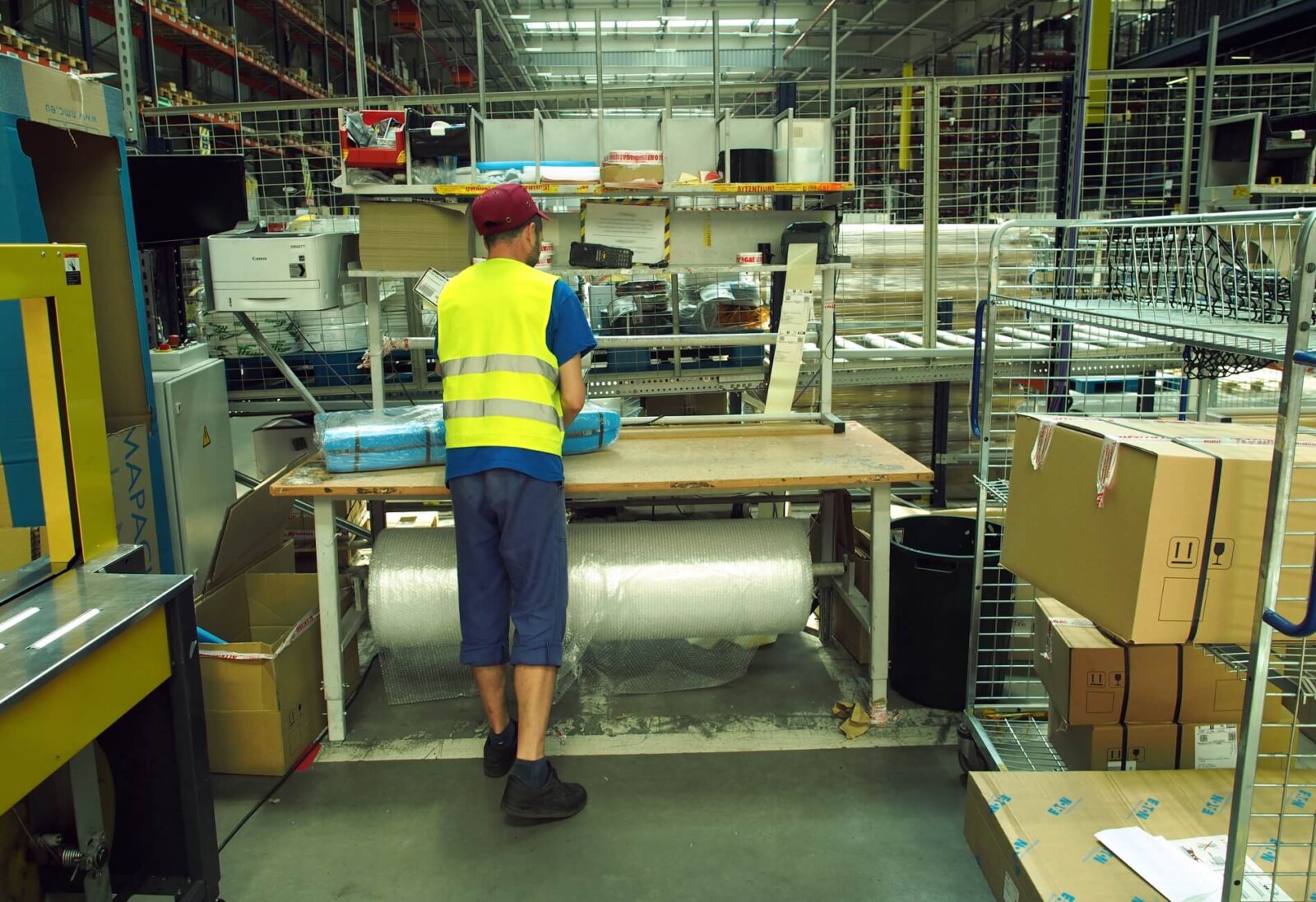
Sales growth is usually good news for an e-commerce business—until operating costs start rising at the same pace. Picking, packing, processing returns and handling complaints all scale with volume. In many organisations, the default response is to add headcount and absorb more repetitive work simply to keep up.
Some of the biggest margin erosion comes from work the customer never sees. Manually re-entering data between systems, losing time locating stock or correcting avoidable fulfilment mistakes rarely appears as a single line item. Instead, the cost shows up in overtime, customer complaints and the need to re-prepare shipments.
Fulfilment errors are particularly expensive. A single mistake can trigger a second shipment, additional warehouse labour, more customer service workload and documentation corrections. While typical benchmarks are around 1–3 errors per thousand orders, many companies do not measure the metric consistently—leaving the true level of loss hidden.
Returns are another pressure point. Every parcel that comes back must be received, checked, assessed for condition, often repacked and then returned to available stock. In categories with high return rates, an inefficient returns process can quickly cap profitability across the business.
A common assumption remains in e-commerce that higher order volumes automatically make operations more profitable. In practice, profitability is often determined by the “backstage” processes customers do not notice. Warehousing, fulfilment and returns are areas where hard-won margin is easiest to give away. These processes also shape the customer experience and influence whether shoppers come back.
Customer experience does not end after payment
A few years ago, online retail success was largely about making it easy to buy. Today, what happens after checkout carries just as much weight. Even the most polished storefront will not build loyalty if deliveries arrive late, parcels are incomplete or returning an item turns into a drawn-out hassle.
Three factors tend to have the greatest impact on customer satisfaction: on-time delivery, receiving exactly what was ordered and a straightforward returns process. Shoppers are increasingly unforgiving when shipping promises are missed, parcels are packed incorrectly or refunds take too long.
Fulfilment errors are also among the most common triggers of negative reviews. The wrong item, missing products or damaged goods do not only increase operating costs—they undermine trust. A single poor review on a marketplace or sales platform can be enough to deter future buyers.
Returns handling is just as important to the overall experience. In many shops, the process remains manual, leaving customers waiting for updates and for their money to be returned. For some brands, this is where loyalty breaks.
In many cases, the root cause is not staffing levels but process design. That is why more companies are looking for competitive advantage in the warehouse.
The warehouse is becoming a profit lever
More businesses are starting to treat the warehouse not as unavoidable overhead, but as a core driver of e-commerce profitability. It is where productivity can be improved, error rates reduced and higher order volumes processed without hiring at the same pace.
Two areas make a particularly large difference: how orders are prepared and the accuracy of inventory data. When stock information is unreliable or out of date, companies tend to carry excess inventory, run into delays and ship incomplete orders.
In many organisations, warehouse work still relies on manual handling and fragmented data. Staff spend time searching for products, copying information between systems, reconciling figures in spreadsheets or carrying out stocktakes that disrupt day-to-day operations. The result is slower fulfilment and a higher risk of costly mistakes.
Warehouse management systems (WMS) are designed to address these issues by standardising processes and reducing errors. Using scanners, real-time inventory control and integration with ERP systems, they can reduce repetitive tasks and provide end-to-end control over fulfilment.
Automation can also extend into back-office workflows—from stock reconciliation and invoicing to corrections and returns processing. This can help companies absorb growth without increasing headcount in lockstep, while deploying staff where they add the most value.
