

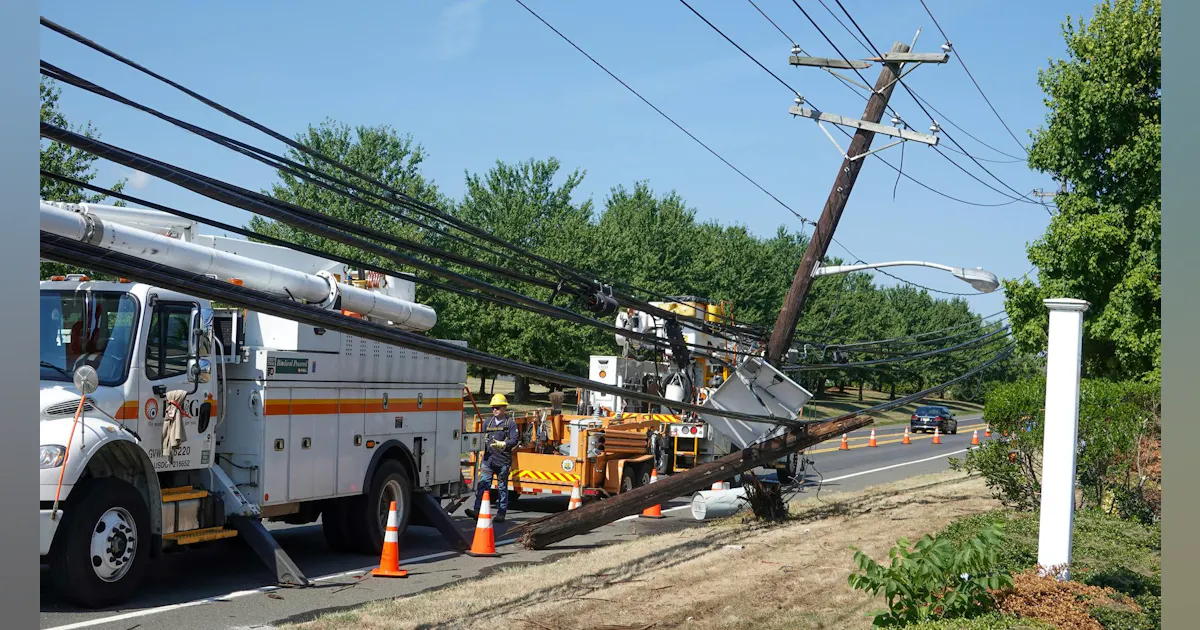
When an outage hits, the utility’s operational picture and customer experience (CX) often diverge. Control rooms may be managing feeder-level events, crews may be updating restoration plans, and call centers may be fielding thousands of questions without a synchronized view of which customers are affected, what crews know, and how confident the latest estimated time of restoration (ETR) really is.
The operating challenge is no longer simply restoring centralized service after a fault. Utilities are managing two-way power flows, fluctuating EV charging patterns, volatile weather, and customers who expect accurate restoration information delivered instantly.
That’s why CX can no longer be separated from grid reliability. As outages, distributed energy resources, demand response events, and grid constraints become more dynamic, utilities need to turn operational data into insights that keep customers informed during disruption.
A New Role for the Utility Customer
Utilities can no longer think of customers as passive ratepayers at the end of the line. A homeowner with rooftop solar, a business with onsite generation or battery storage, and a household charging an electric vehicle off-peak all impact reliability, flexibility, and load management.
Customer participation is becoming a resource even during normal daily operations. A demand response event only reduces peak load if customers understand the signal, trust the incentive, and remain engaged. EV charging only supports the grid if customers accept managed charging or time-varying rates. Rooftop solar and batteries only become grid assets if utilities can communicate interconnection status, export limits, event dispatch, and program value clearly.
That makes communication more than a customer service function. It is part of how utilities enroll customers in programs, shape demand, manage distributed resources, and build the trust required to support peak moments of usage.
Customers Expect More Than a Call Center
Historically, many utilities communicated with customers only when necessary: Through bills, service notices, outage updates, or call center interactions. But customers now compare those experiences with the digital transactions they rely on every day, raising expectations for timely, accessible, and personalized information.
This expectation becomes most visible during outages. Customers understand that severe weather and other major events can cause disruption. What they struggle with is uncertainty. They want to know whether their home or business is affected, when crews will arrive, and when power will be restored.
In those moments, information becomes critical to reliability. One of the clearest examples came following Hurricane Beryl in Texas, when some customers used the Whataburger app to infer where power had been restored based on which locations were accepting online orders. That creative response illustrates a larger issue for the industry: When customers cannot get timely, localized information from their utility, they will find another source.
Connected Data Creates Better Communication
Improved communication requires more than a new mobile app or a modernized call center. It depends on whether the systems that understand the grid can connect with the systems that understand the customer. How is data harmonized across operational and transactional systems of record?
In many utilities, those systems are still siloed. Grid operations may know that an outage has occurred, but customer teams may not have a clear view of which customers are affected, whether a crew has been assigned or how reliable the latest ETR is. Customer service teams may understand call volume and customer urgency, but lack the operational context needed to provide accurate answers.
That shift also changes how utilities should measure success. As AI is integrated to handle more interactions, the calls that remain are often more complex. A longer call is not necessarily a sign of poor performance; it may mean digital channels are resolving simpler needs while agents spend more time with customers who need additional support.
The same principle applies more broadly. Success should be measured by whether customers receive accurate information, whether issues are resolved and whether each interaction strengthens trust in the utility.
A Practical Path for AI
AI will play an important role in connecting reliability and customer experience, but utilities should be practical about where they start.
The near-term value lies around improving operational decisions: helping customer service agents remove duplicate queries, summarizing field updates, identifying customers likely to be affected by prolonged disruptions, improving ETR accuracy, and targeting demand response or energy efficiency programs to customers most likely to participate.
These use cases are valuable, because they are specific, repeatable, and grounded in existing workflows. They can reduce manual work, improve visibility, and help employees make faster decisions. Over time, this foundation can improve reliability and response time.
Reliability Now Depends on the Customer Relationship
Data centers, AI workloads, electrification, new industrial investment, and distributed energy resources are all adding complexity and demand to the grid. Utilities are the ones being asked to deliver new capacity and maintain existing infrastructure while managing extreme weather and supporting customers who expect more visibility and control.
…Customer experience is not a separate initiative from reliability.
Utilities will always be judged by whether the lights come on. But the future of reliability will depend on how well utilities can connect the operational side of the business with the customer side and even further into the financial records.
In that sense, customer experience is not a separate initiative from reliability. It is part of the reliability mandate itself. And the utilities that recognize this shift will build more transparent, responsive, and resilient relationships with the communities they serve.
