

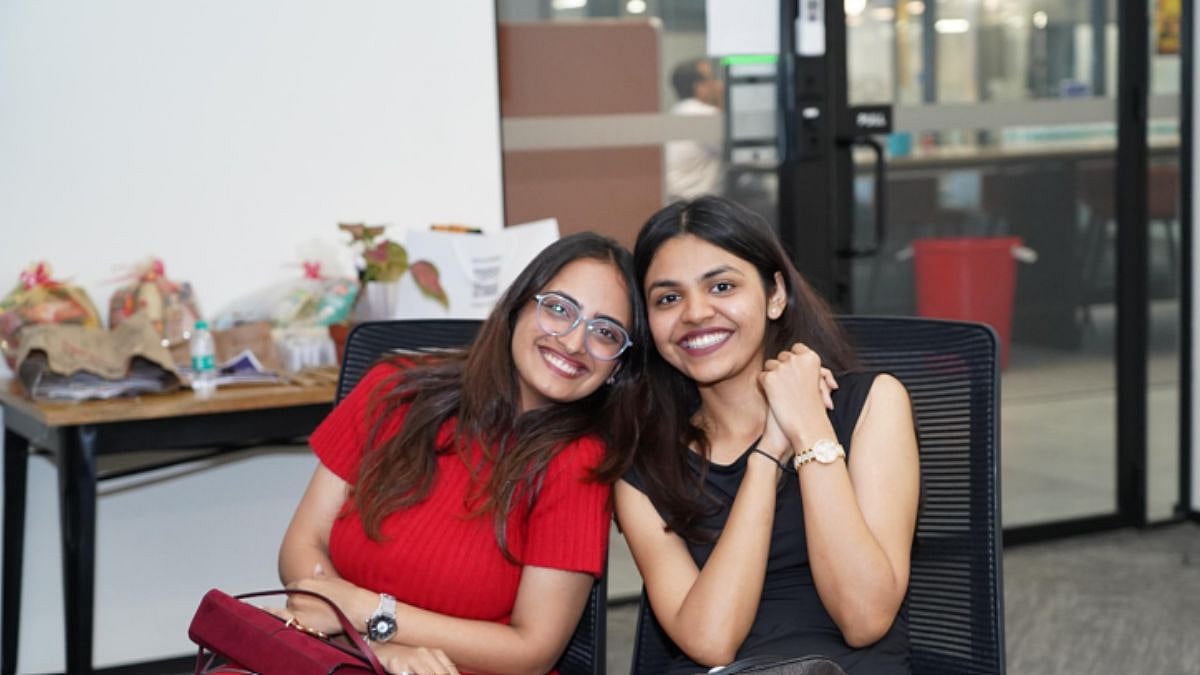
Ruhani credits practical business analytics projects with helping her prepare for her role at National Australia Bank, while Riya highlights the demands of hands-on Cybersecurity learning. Both students emphasise technical capability, cross-cultural collaboration and continuous learning as important foundations for their future careers.
A few months before starting her role at National Australia Bank, Ruhani found herself staring at a dataset.
The numbers were messy.
The information was incomplete.
The answers were unclear.
`;
data.items.forEach(function(shorts_news) {
let slug = shorts_news.story.slug;
let headline = shorts_news.story.headline;
let imageKey = shorts_news.story[“hero-image-s3-key”];
html += `
${applyDotsFpj(headline)}
`;
});
html += `
`;
document.getElementById(“fpj-shorts-section”).innerHTML = html;
}
document.addEventListener(“DOMContentLoaded”, function () {
fetch(baseUrl+”api/get-fpj-shorts/?var=”+fetchTime)
.then(response => response.json())
.then(data => {
renderFPJShorts(data);
});
});
And that, ironically, was exactly the point.
Unlike university assignments, real-world business problems rarely arrive neatly packaged.
“The data that they give us is not what we have been doing with the assignments. It’s very different.”
She wasn’t describing her new job. She was describing a university project.
Specifically, a client-facing capstone project at Deakin University GIFT City Campus, India.
The distinction between university and workplace had started to blur.
For students like Ruhani and Riya, that blur may be one of the strongest predictors of employability.
Long before graduation, they are already working on the kinds of challenges employers would later ask them to solve.
That wasn’t what either expected when they began searching for postgraduate programmes.
Ruhani, pursuing a Master of Business Analytics at the campus, had studied FinTech previously.
She knew the theory. What frustrated her was the distance between understanding a tool and using it.
“I knew what Python was, but I didn’t get hands-on experience with it.”
The difference sounds subtle. In reality, it is enormous.
One approach teaches concepts. The other develops capability.
For Riya, studying Cybersecurity meant constantly engaging with practical work.
“Cyber students are busy a lot more because they do technical and practical things on a day-to-day basis.”
The rhythm is closer to professional life than traditional academia.
Deadlines are frequent. Assessments are practical.
Responsibility sits with the student.
What makes the experience more distinctive is that the learning extends beyond technical application.
It includes learning how to work across cultures and perspectives.
One of the moments that convinced Riya to choose Deakin was discovering that projects could involve collaboration across the university’s global ecosystem.
“You can work with people from the Australian campus as well.”
The experience exposed her to something that many graduates only encounter years into their careers.
Different work styles.
Different expectations.
Different ways of solving the same problem.
“You understand their working behaviour, their type of thinking.”
Context. Not just knowledge.
Understanding what work actually looks like.
Which may explain why Ruhani’s most striking observation came after she secured an offer from NAB.
She drew a direct line between her final trimester and her future role.
“What I will need to do when I go into NAB is something I’m learning through this fourth trimester in GIFT City.”
It is an unusually powerful statement.
Most graduates hope university will prepare them for work.
She could already see the overlap.
That overlap may become increasingly important as industries evolve.
Ruhani is already thinking about how artificial intelligence will reshape analytics.
Not as a threat.
As a collaborator.
“I need to learn how to work with it instead of competing with it.”
Meanwhile, Riya views Cybersecurity as a field in perpetual motion.
One where complacency is the only real risk.
“I never want to stop learning about my domain.”
Most placement stories end with an offer letter.
This one begins there.
Because for these students, employability wasn’t built during recruitment.
It was built long before anyone asked them to interview.
