

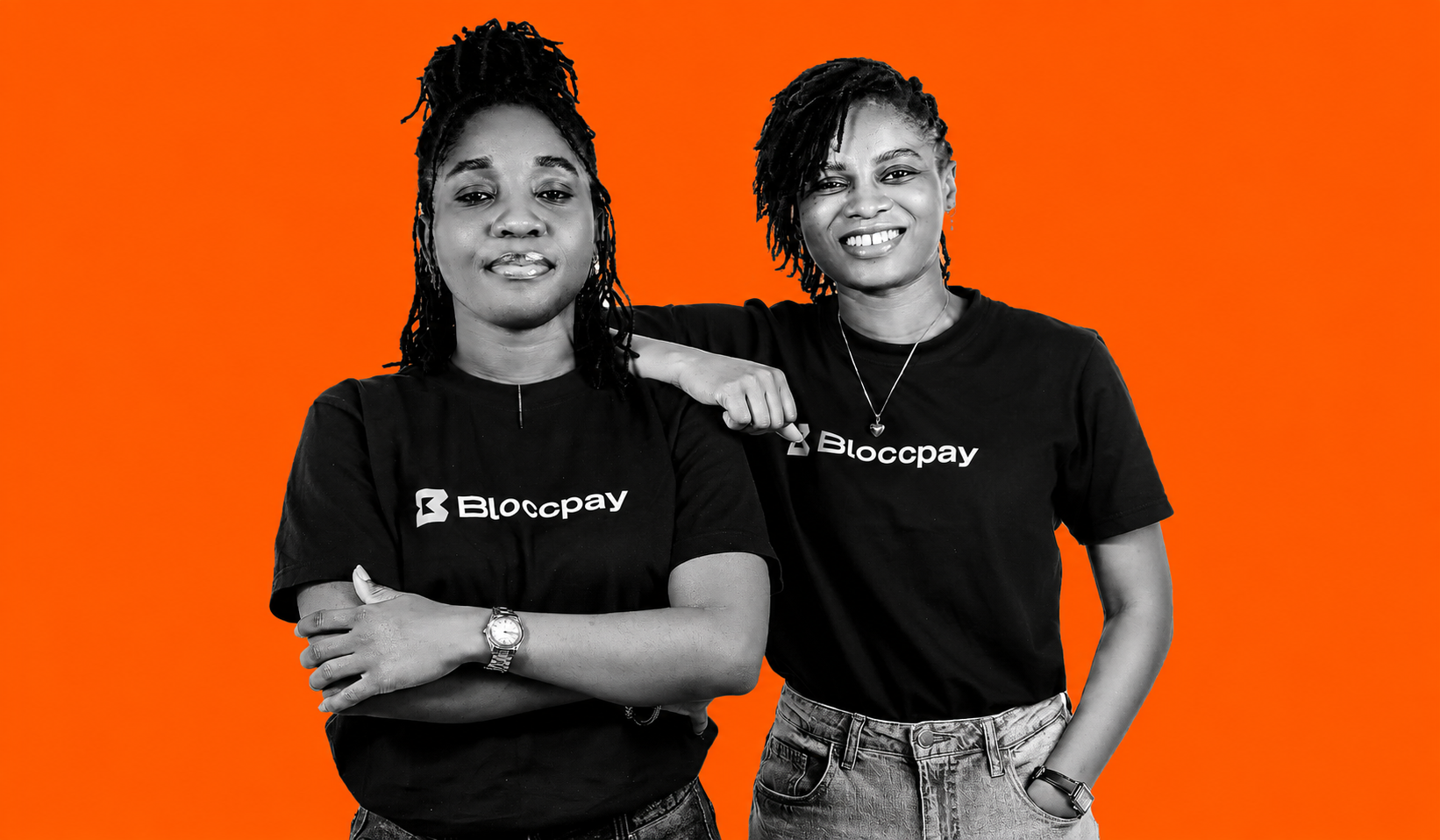
Jennifer Echenim was working remotely for international companies not that long ago, earning money that arrived in fits and starts through a patchwork of platforms.
Withdrawing it meant routing funds through a friend, converting to stablecoins, and navigating peer-to-peer exchanges to access naira. Each step cost money, time, and documentation she thought was unnecessarily complicated.
The real trouble surfaced later, when she moved to the UAE. Opening a local bank account required proof of income, and the financial records her employment history had generated were not recognised by the systems she encountered there. The problem was not getting paid, as it turned out, but proving she had been, because while the money had arrived, the pesky paper trail had not.
“The financial records from my employment history were not recognised by the systems I encountered there,” Echenim says. “So I began thinking more deeply about it.”
That experience led her, alongside friend-turned-co-founder Ajoke Asunmonu, who had sometimes assisted Echenim with workarounds for her pay headaches, to build Bloccpay, a stablecoin-powered payroll platform for cross-border workers and the businesses that employ them.
The company is now in private beta across Nigeria, Kenya, Ghana, and South Africa, with business customers primarily in the US and UK. Its gross transaction volume grew sevenfold quarter-on-quarter in Q2 2026, and by mid-year it had matched its total volume for all of 2025.
An estimated 15 to 20 million African workers now earn across borders. Research from Harvard Business School puts the cost of moving that money at 8.7% to 12.6% of transaction value, well above the 3% target set by the UN. Cutting those costs by half could generate between 900,000 and 1.1 million remote jobs across the continent and add USD 3 B to Africa’s remote work exports.
But Bloccpay’s founders argue the payment itself is only half the problem, emphasising that the other half, what happens after the money lands, is equally critical.
“Traditional employment produces that record as a byproduct,” Asunmonu says, referring to the payslips, tax documents, and recurring credits that salaried workers accumulate. “Independent and cross-border work produces nothing equivalent.”
Asunmonu calls this missing layer “financial identity.” Every invoice raised and payment received on Bloccpay generates a trail showing who paid whom, how much, when, in what currency, and through what channel.
Over time, those records build into a documented history of a worker’s earnings that can be used to apply for a loan, rent a home, apply for a visa, or file taxes. The platform is also planning a feature that lets users upload invoices generated outside Bloccpay, so their history lives in one place.
It is a straightforward idea with an uncomfortable implication. Existing payment platforms, including the ones Echenim used, are designed to move money from point A to point B. Once the transaction clears, the job is done.
“What they weren’t building was the layer underneath,” Echenim says. “The record of the transaction, the documentation it creates, and the financial history it builds over time for the person receiving the money.”
The technical machinery behind Bloccpay is more complicated than the pitch suggests. The platform settles transactions in stablecoins like USDC and USDT and runs multichain across Stellar, Base, BSC, and Solana, routing around the high Ethereum fees that made Echenim’s own payments expensive.
Stablecoins are digital tokens pegged to currencies like the US dollar, designed to hold a steady value. They allow money to move across borders without the foreign exchange losses that traditional rails impose.
Africa already has the highest stablecoin ownership rate globally at 79 percent. But while the rails are mature and the cost problem is largely solved on the sending side, the receiving side is where it gets hard.
“Moving that into a bank account or mobile money is where the real work sits,” Echenim says. “Every corridor is its own piece of work. Local partners, local settlement times, local failure modes. Nigeria doesn’t work like Kenya.”
That operational reality has changed how the company thinks about expansion. “We used to talk about adding countries,” Echenim says. “Now we talk about corridors, because a country isn’t live until money lands the way people there actually get paid.”
The founders are equally blunt about what they got wrong early on. Echenim, had lived with the problem and spent six years building on blockchain, says her engineering instinct was to map every point of friction and abstract it away. What she did not map was where compliance sat. Some of those friction points, she says, “exist for a reason, and you have to design around them rather than through them.”
Asunmonu’s correction came at 3am on December 2, 2025, when a customer needed to pay contractors for the previous month. Bloccpay only supported future-dated payroll. The customer was ready to go back to spreadsheets and manual transfers.
“We had built for the version of payroll that exists in a diagram, not the one that exists in a company,” says Asunmonu, who spent years at Flutterwave managing enterprise payments accounts, seeing where cross-border flows break at scale.
The team shipped backdated payroll and automatic prorated calculations off the back of that call. “They aren’t edge cases,” she says of the messy realities of real-world payroll. “They’re most of it.”
The hardest assumption to prove wrong, both founders agree, is institutional recognition. A bank or consulate will not accept a new kind of income record because the company explaining it is persuasive. “They accept it when it’s familiar, when enough of it exists, and when it resembles documentation they already trust,” Asunmonu says. “Recognition follows the record, not the other way around.”
That is a function of time and volume, and Bloccpay is early on both. The platform is a recipient of a USD 100 K Stellar Community Fund Build Award and a member of the Circle Alliance Program.
It has matched a full year of 2025 volume in the first half of 2026. One customer started at around USD 1.5 K a month and now runs USD 22 K, growing roughly fourteenfold as they moved more of their payroll onto the platform.
“Aggregate growth can be new sign-ups,” Asunmonu says. “Expansion like that only happens when a business decides to trust you with more.”
For Echenim, the more pointed lesson is about the market itself. “The thing I’ve felt most isn’t about being a woman,” she says. “It’s about building for a market people have already decided isn’t commercially interesting.”
That assumption, she says, shapes everything. How much capital is available. How much explaining you have to do before anyone engages with the product. How often you are asked whether the volumes are really there.
“We’ve had to prove the market exists before we could argue we’re the right people to serve it,” she says. “Most founders only have to do the second part.”
Asunmonu frames the challenge differently. “It has shown me how uneven access can be. Funding, networks, and access to the rooms where decisions are made are not equally distributed, and you feel that as a woman building in a technical space.”
Bloccpay’s bet is that as hiring becomes more global, the financial systems of the countries where workers live will eventually have to recognise income earned across borders.
Time will tell whether that recognition arrives because the records become too voluminous to ignore, or whether the founders run out of runway waiting for institutions to catch up. For now, they are building the records and hoping the recognition follows.
