

In the Progressive International’s twenty-fifth Briefing of 2026, we trace Washington’s renewed assault on the sovereignty of the Americas — and the hemispheric forces assembling an alternative in Montevideo.
“We’re dead serious about the Trump corollary to the Monroe Doctrine,” declared self-styled US Secretary of War Pete Hegseth from the Panamanian jungle last week. He was inspecting the US-led PANAMAX military exercise, rehearsing operations to “secure key terrain”. Hegseth promised to achieve “the same effect on land” as the bombing campaign that has killed more than 200 people aboard boats in the Caribbean and eastern Pacific over the past year.
The revived doctrine was given its more colloquial name — the Donroe Doctrine — by Donald Trump in January after US forces attacked Venezuela and kidnapped President Nicolás Maduro. Seven months later, the United States controls the sale of Venezuelan oil and the accounts into which its proceeds flow. By late July, more than $13 billion had passed through those accounts; in July alone, 786,000 barrels a day were shipped to the United States. Trump has dispensed with the language of democratic transition. “We paid for the war with what we’ve taken out many, many, many times,” he told a crowd in Las Vegas earlier this month. “To the victor belong the spoils.”
Elsewhere, the pressure takes other forms. Panama has been pressed to curb Chinese involvement around the canal while US troops return in greater numbers. Brazil has been hit with new tariffs after Washington ruled that its policies on digital trade and electronic payments unfairly burden US commerce. Among the offending policies is Pix, the public instant-payments system that allows Brazilians to move money without passing through the American card networks.
In March, the presidents of Argentina, Ecuador, El Salvador, Honduras and other governments of the regional right joined Trump in Miami to launch the US-led Shield of the Americas. “The heart of our agreement,” the US President told them,“ is a commitment to using lethal military force.” Chile’s José Antonio Kast joined before taking office; Colombia entered the coalition days after Trump ally Abelardo de la Espriella was sworn in this month. Washington’s strategy for the hemisphere has willing recruits in Latin America’s elites.
The Trump administration has published the blueprint connecting these events. Its National Security Strategy promises to “restore American preeminence in the Western Hemisphere”: expanding US military access, wielding tariffs as commercial leverage and using US dominance in finance and technology to pull governments away from Washington’s rivals.
Two hundred and three years ago, President James Monroe also drew a line around the Americas. His doctrine warned the European powers against further intervention in the newly independent republics of the hemisphere. Three years after Monroe spoke, Simón Bolívar convened another gathering. In June 1826, delegates from the young American republics met at the Congress of Panama. Their independence was scarcely secured. Bolívar had not originally intended to invite the United States. His project was to bring the new republics together so that independence from the old empires did not simply leave them dependent on new powers. Two centuries later, the Congress of Panama remains an unfinished project.
This weekend, that anniversary will be marked 3,000 miles south of Panama City. More than 150 parliamentarians, ministers, presidents and political leaders from 15 countries and territories across the Americas will gather in Montevideo for the third Panamerican Congress. Founded in Bogotá in 2024 and expanded in Mexico City last year, the Congress brings legislators and political forces from across the hemisphere — including a US congressional delegation — together to develop a common programme for the future of “América”.
Delegates will debate how countries can retain economic sovereignty when access to the US market can be withdrawn as punishment; build digital infrastructure without submitting to the corporations that dominate American finance and technology; confront organised crime without surrendering their territory to another country’s military; and turn the hemisphere’s extraordinary reserves of energy, minerals, land and human capacity towards the needs of its peoples. Whether it’s the Democratic Socialists of America, Libre Honduras, Pacto Historico or Chile’s Frente Amplio, Progressive International members will be at the heart of the exchange. From industrial integration and digital sovereignty to common approaches on peace and social protection, the proposals begin to answer the question Bolívar left unfinished two centuries ago: what institutions and capacities can make sovereignty real?
Two centuries after Monroe and Bolívar, the rival projects are once again unusually explicit. Washington promises “American preeminence in the Western Hemisphere.” Montevideo offers another principle: “Solidarity between peoples. Sovereignty among nations.”
Latest from the Movement
Unpunished & Undeterred: Corporate Accountability After Grenfell
Nine years after the Grenfell Tower fire, the company whose flammable product covered the building has yet to face meaningful accountability. Arconic’s Reynobond PE cladding was a “primary cause” of the rapid spread of the fire that killed 72 people on 14th June 2017. In 2023, Arconic settled two claims tied to the fire. Today, a new report from CommonWealth reveals that the company’s shareholders received $31 million more compensation than the families and victims who lost everything. The vast majority of the compensation was paid out by insurers, with Arconic only compensating $2 million from its own finances. “Companies don’t seem to care about the impact of their conduct on ordinary people,” said Leela Jadhav, lead researcher at Common Wealth. “They care much more about their shareholders and profits. And that is a growing trend worldwide which needs to be addressed and which our project hopes to address.”
Abahlali baseMjondolo Remembers Lindokuhle Mnguni
This week, Progressive International member Abahlali baseMjondolo remembers Lindokuhle Mnguni, a leader of the movement who was assassinated in Durban on 20 August 2022. Mnguni, who was the chairperson of Abahlali’s eKhenana Commune and a leader in the Youth League, was shot several times in his home after spending months in hiding. His partner, Sindiswa Ngcobo was also shot but was fortunate to survive. He was 28 years old at the time of his death. The Progressive International honours his struggle for land, dignity and freedom.
Our History
On 13 August 1926, Cuban revolutionary Fidel Castro was born. “When he talks with people in the street, they call him: Fidel,” wrote Gabriel García Márquez. “They address him informally, they argue with him, they claim him. It is then that one discovers the unusual human being that the reflection of his own image does not let us see. This is the Fidel Castro that I believe I know.”
This was the “unusual being”, who from the mountains of the Sierra Maestra to the plains of southern Angola, never shirked the struggle for liberation. The Fidel who survived more than 600 assassination attempts to construct socialism on a small Caribbean island just 90 miles from the heart of imperialism. The Fidel who abhorred iconography, refused recognition and, when asked what he most wished to do most in this world, immediately replied: “stand on a corner.”
Today, as the Trump administration prepares to invade Cuba, Fidel’s centenary is of particular importance. It reminds us that, in spite of Washington’s decades-long shadow war, the Cuban revolution endures.
To mark El Comandante’s centenary, the Progressive International Workshop has released a limited-edition commemorative poster. All proceeds from the museum-quality product will support our internationalist campaigns.
India won its independence from British colonial rule on 15 August 1947. “Long years ago we made a tryst with destiny, and now the time comes when we shall redeem our pledge, not wholly or in full measure, but very substantially,” said Jawaharlal Nehru, India’s first Prime Minister and co-founder of the Non-Aligned Movement, as India cast off the shackles of British subjugation. “At the stroke of the midnight hour, when the world sleeps, India will awake to life and freedom. A moment comes, which comes but rarely in history, when we step out from the old to new, when an age ends, and when the soul of a nation, long suppressed, finds utterance.”
Read more about and share this history with this beautifully designed Instagram carousel.
On 19 August 1953, the CIA and MI6 overthrew Iran’s democratically elected Prime Minister Mohammed Mossadegh. Operation Ajax, as the CIA codenamed the intervention, was the first peacetime use of covert action by the United States to overthrow a foreign government. The formula of destabilisation and repression developed by the CIA during August 1953 was used again less than 12 months later in Guatemala and countless times over the next 70 years. Mossadegh was a highly popular leader known for instituting progressive social and economic reforms, including the nationalisation of the Iranian oil industry, which deprived the British-controlled Anglo-Iranian Oil Company (AIOC) of Iran’s oil wealth. The UK organized a crippling oil embargo against Iran in retaliation to Mossadegh’s sovereigntist agenda. “When the Iranians need money,” said the British Ambassador in Tehran, “they will come crawling to us on their bellies”.
Art of the Week
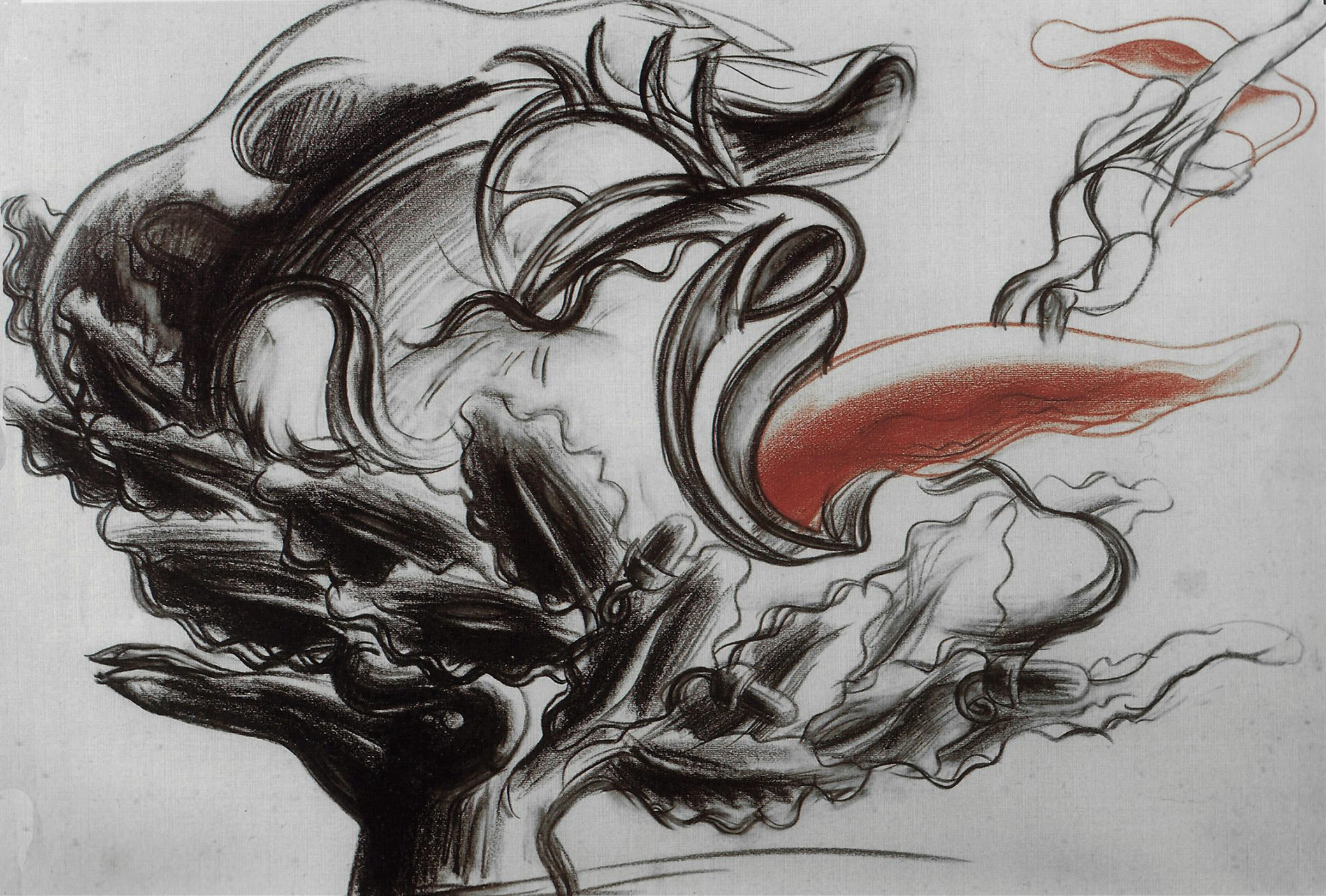
For the Silenced Uruguayans by Manuel Espínola Gómez (1921-2003) was made in 1974, a time of intense social unrest, with protests being systematically silenced and many disappeared during the violent Military Dictatorship, which lasted 12 years.
Despite the oppressive regime, Gómez had a significant influence on Uruguayan art, coming to prominence during right-wing control. He experimented with a range of materials including oils, graphite, and ballpoint pens, and contributed actively to social and political projects, including designing a logo for the National Confederation of Workers in 1967. One of his best-known works is a portrait of Bolívar (An American Integration?), 1983, which questions Bolívar’s unfinished work and predated the return of democracy to the country in 1985.
