

Bata India turns to AI for ad production, digital share rises to 45%
Bata India is moving a larger share of its marketing budget to digital, putting nearly half its video spends on connected television and using artificial intelligence to produce most of its recent advertising, as the footwear major overhauls its marketing playbook for younger consumers.
Digital accounted for around 45% of Bata India’s marketing spends this year, up from 35% last year CSO and CBD, Bata India. In some quarters, the share has gone as high as 65%
CTV, meanwhile, now takes almost 45% of the company’s video advertising budget.
The shift is also playing out inside the marketing organisation. Bata has largely moved away from retainer creative agencies, is using AI for production and has created a dedicated influencer marketing team, with creators now accounting for around 10-15% of its marketing budget.
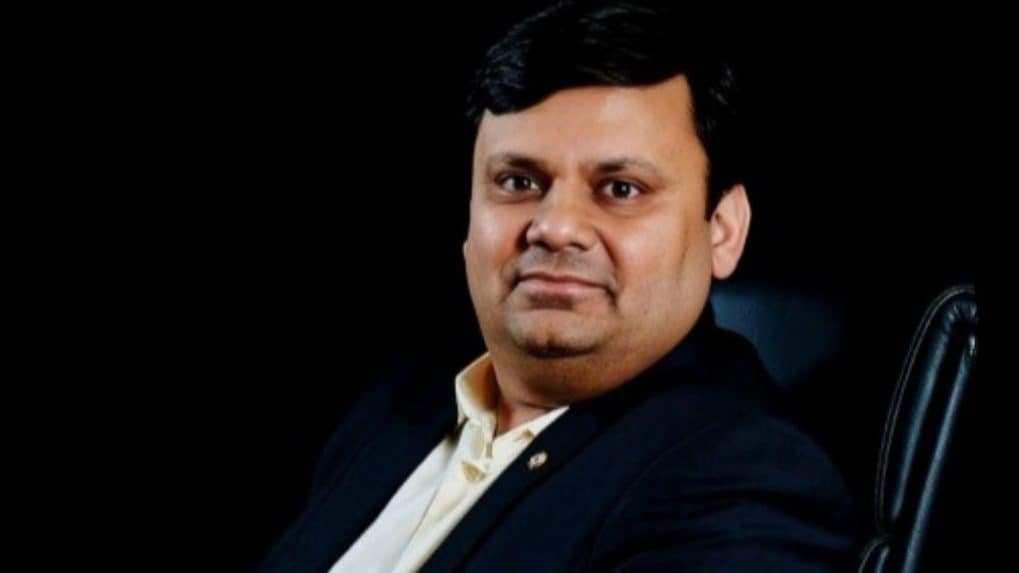
“We’ve completely transformed the way marketing is done at Bata,” Beriwal told Storyboard18.
From 35% to 45%: Bata’s digital share keeps climbing
Bata’s move towards digital has accelerated sharply over the past year.
“This year, we have spent around 45% on digital. Last year, it was 35%. There are quarters, like the last quarter, where we spent almost 65% on digital. But it depends on the campaign and the need,” Beriwal said.
The company is no longer approaching campaigns through the traditional television-first template either.
“Marketing is changing in a big manner. It is no more the traditional way of creating a TVC, plugging it and forgetting it,” he said.
That change is increasingly visible in Bata’s video allocation as well.
45% of Bata’s video spends now go to CTV
Bata has significantly reduced its reliance on generic television spots and shifted towards CTV, YouTube and digital video.
“Two years back, we would take general TV spots. In the last one year, I don’t think we have taken much of generic TV spots,” Beriwal said.
“Almost 45% of our video spends go towards CTV now, because that’s where the audience that we want to target is.”
Traditional television, he added, is no longer one of the biggest media environments for younger consumers.
For Gen Z, Bata sees Instagram, OTT platforms and YouTube as more important touchpoints.
“The biggest one is, of course, Instagram. The reels world is big for them. OTT happens to be a big one, and YouTube still happens to be a big one. I won’t say traditional TV is a big space for them.”
Bata says nearly all recent creatives have been made using AI
Perhaps the bigger change is happening behind the screen.
Beriwal said a large proportion of the advertising creatives put out by Bata over the past three months have been generated through AI.
The company has partnered with Zocket to build a customised system where brand teams feed briefs into an AI tool, which then generates creatives. Brand managers approve or give feedback on the output before it is deployed, while performance data is fed back into the system.
“Any creative that you see going out in the last three months has largely been generated through AI,” he said.
The change has also altered the economics of production.
“Last year, we were shooting our advertising in Spain. This year, everything has been done through AI. Pretty much 100% has been done through AI,” Beriwal said.
While Bata is spending on AI, he said agency and production expenses have “significantly come down”.
Does AI mean brands no longer need creative agencies?
For Bata, AI has not eliminated the agency completely, but it has significantly narrowed its role.
Beriwal said human intervention remains important for brand stewardship, long-term planning and strategic direction. But much of the day-to-day creative production can increasingly be handled by internal teams and AI systems.
“We’ve largely exited all retainer creative agencies. In the last one year, I don’t think we have any creative agency on retainer,” he said.
Creative agencies are brought in selectively when the company believes a campaign requires a more radical idea, he added.
“But there also, production happens through AI.”
Media buying remains an exception.
Bata continues to work with Zenith for media planning and buying, with Beriwal arguing that the buying muscle of a media agency continues to matter.
“Media is one place where the buying muscle does play a role. Zenith is our media agency, and they continue to drive the full-funnel marketing and spends around Bata.”
Want to understand Gen Z? Put Gen Z in the marketing team
Bata’s Gen Z strategy begins unusually close to home.
One of the company’s ways of understanding younger consumers, Beriwal said, is by ensuring that younger employees are actually part of the teams making marketing decisions.
“If I’m not mistaken, the average age of my marketing team would be less than 30,” he said.
“Barring me, if you take me out, my team’s age would be 27 or something.”
The logic, he said, is simple.
“Whatever you and I want to think about how Gen Z thinks, till the time you have team members with that mindset, you will not be able to connect with them. It starts from home.”
From SEO to ‘AI SEO’: Bata wants to show up when Gen Z asks ChatGPT-like tools
Bata is also changing how it thinks about search.
Beriwal believes younger consumers increasingly use AI interfaces to research products and brands instead of depending solely on traditional search engines.
“It is not just about old-age SEO anymore. Are you AI SEO?” he said.
“This generation goes and asks questions to AI.”
The company’s teams are consequently working on making sure the content, reviews and information that AI systems may reference are available across relevant online sources.
“We are ensuring that we have the right reviews and the right content there so that AI can pick it up.”
Influencers now take 10-15% of Bata’s marketing budget
Influencer marketing has meanwhile grown into a significant line item.
Bata currently puts around 10-15% of its marketing budget towards influencer marketing, Beriwal said, adding that the figure continues to rise.
The company created a dedicated influencer marketing team last year and is now working towards building what Beriwal described as an AI-enabled “content factory”.
“We are now working towards a content factory, of course enabled by AI. But you have to connect with influencers and ensure that the right content gets created,” he said.
Bata follows a mixed creator strategy.
Celebrity and macro influencers are generally used for larger quarterly campaigns, while micro and nano creators help the brand generate scale, regional relevance and vernacular content.
Bata has previously worked with creators and celebrities including Prajakta Koli, Kusha Kapila and Taapsee Pannu.
“Micro and nano play a huge role in giving you the scale that you need. You can’t ignore that, especially when you want to do vernacular and regional.”
Bata has another filter for creators now: Are they comfortable with AI?
Audience relevance, momentum and brand safety remain central to Bata’s creator selection process.
The first filter, Beriwal said, is whether the influencer connects with the audience Bata wants to reach. The company then looks at whether the creator’s reach is growing or declining.
“Are they trending up or are they trending down? There might be a very good influencer, but if they are trending down, why do you want to connect with them?”
Brand values are another filter, including what he described as checks around political sensitivity.
But Bata has now added another criterion: whether creators are comfortable with AI-generated adaptations of their content and likeness.
“Influencers and content creators who are okay with AI content is another filter that we are putting,” he said.
Beriwal said Bata has even passed on a creator because they were unwilling to work with AI-led content.
“They will create their mega content, but if we want to use them on our store fronts, we need AI to create multiple pieces of content.”
Festive season accounts for nearly 35% of Bata’s annual marketing spends
The coming festive season will be another major advertising window for the company.
Beriwal said close to 35% of Bata’s annual marketing spends can be deployed during the festive period.
“Almost 35% of our annual spends, we end up spending during this time,” he said.
The company nearly doubled its festive spends last year and plans to increase them further this year.
“Last year also in the festivities, we almost doubled our spends. So this year we are going on top of that.”
Rather than relying purely on one national campaign, however, Bata is placing a heavy emphasis on regional cultural moments.
Durga Puja in Bengal and Bihar and Onam in Kerala, for instance, are treated differently, while Diwali acts as the broader national festive campaign.
“We have always given very big importance to regional festivities,” Beriwal said.
“This year, the campaign is attuned to each market, customised to each market. Onam is being treated very differently versus Durga Puja for Bengal and Bihar, and similarly Diwali for the rest of India.”
Digital is growing, but Bata isn’t writing off print
Even as its digital share rises, Bata continues to invest in print.
“Print has a huge role to play,” Beriwal said, pointing to its ability to generate high reach quickly.
“This quarter also we had a very strong presence in the top English and regional dailies, and similarly for festivities there will be a strong plan.”
For Bata, the value proposition remains the ability to generate concentrated reach in a short period.
“The moment you put your ad, in one day, one shot, you get an instant reach.”
Quick commerce, Myntra Now and the race to deliver footwear within hours
Bata is also experimenting with faster delivery as lifestyle commerce begins borrowing from the quick-commerce playbook.
Beriwal said quick-commerce platforms have already moved through grocery and essentials into electronics and are now pushing deeper into lifestyle categories.
“Consumers are actually developing a habit of instantly gratifying themselves by checking one of these quick-commerce platforms to see if they can get the product now.”
Bata’s physical store network gives it an advantage here.
The company has around 2,000 stores and has activated more than 1,000 of them for Myntra Now
“When consumers are anyway shopping lifestyle on Myntra and they see that their product is available at their doorstep in the next one or two hours, they are more likely to consume you.”
Bata is also working with Zepto, while continuing to have an active presence across Amazon, Flipkart, Myntra and Jio.
Beriwal described the current quick-commerce strategy as one of “prioritisation and sequencing”, rather than choosing one platform over another.
“In lifestyle, there will be a right balance found between the traditional quick-commerce way and a lifestyle retailer driving fast delivery within an hour or so.”
Stores are getting a data makeover too
The marketing overhaul is happening alongside changes inside Bata’s physical retail network.
The company is implementing what it calls “zero-based merchandising”, using data science to determine how merchandise should differ across stores and localities.
It is also deploying camera analytics to improve the in-store experience.
“The biggest one from a consumer-facing perspective is a complete overhaul of the way consumers can experience our stores,” Beriwal said.
At the product level, the company is drawing on its global design centre in Italy as it tries to combine newer designs with the quality and comfort Indian consumers associate with Bata.
For a brand long associated with familiarity and legacy, the playbook is becoming considerably more experimental: AI-generated advertising, creators, CTV, rapid delivery and increasingly younger marketers deciding how Bata speaks to the next generation.
Follow Storyboard18 on Google for the latest and breaking brand marketing and industry updates, along with in-depth coverage of digital news. Stay informed with the latest perspectives only on Storyboard18.
Tags
First Published on August 21, 2026, 13:55:06 IST
