


With
just about one year to the commencement of the new financial reporting
standards, the country is facing a major challenge in complying with new reporting rules
The Institute of Certified Public Accountants of Kenya (ICPAK) says only a small number of companies have made significant progress in preparing to provide information on issues such as climate change, environmental impact and how these issues could affect their businesses.
The
ICPAK Sustainability Reporting Readiness Assessment 2026 found that the 385
entities that submitted substantive responses scored an average of 1.51 out of four
on preparedness.
These
new standards will become mandatory for public interest entities for accounting
periods beginning on or after January
1, 2027, leaving roughly four months to the effective date.
Of
the 385 entities assessed, 289, or 75
percent, were in the Nascent or Emerging categories, while only 23
entities, representing six per cent, had reached the Advanced stage.
“Of
the 512 entities in the assessment register, 444 completed the assessment,
representing an 86.7 per cent completion rate. Of these, 385 provided
substantive responses that were included in the scoring analysis. The national
readiness score is 1.51 out of 4, placing the market in the report’s ‘Emerging’
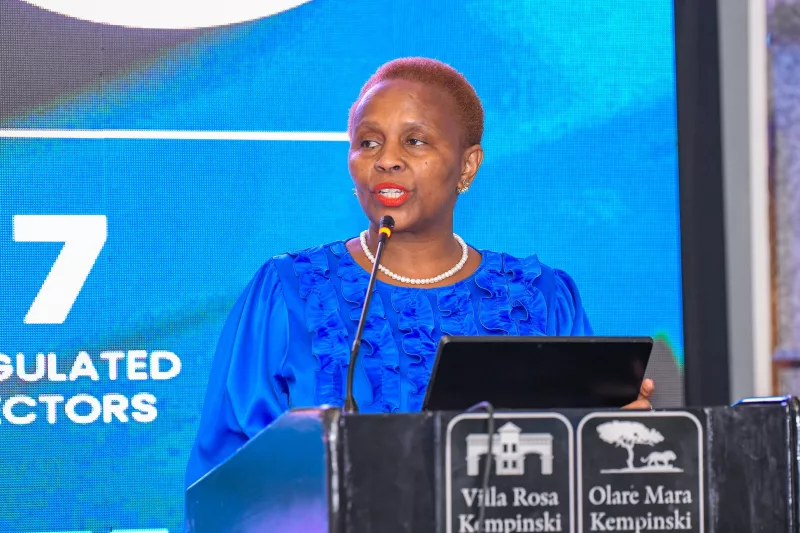
band,” said ICPAK chair Elizabeth
Kalunda.
The
findings point to a wide gap between companies’ stated commitment to
sustainability and their ability to produce the detailed, reliable and
auditable information required under the new framework.
ICPAK
said the biggest weakness is the ability of companies to collect and report
measurable information on sustainability issues.
Governance
was the strongest area, scoring 1.60
out of four, while metrics and targets scored just 1.22.
The
findings further note that companies are increasingly putting people in charge
of sustainability issues, but many are struggling to produce the actual figures
and information needed to back up their claims.
The
gaps include areas such as measuring carbon emissions, setting targets to
reduce emissions and linking management incentives to sustainability targets.
The report found significant
differences across sectors. Other listed companies recorded a readiness score
of 2.40, followed by State
corporations reporting under IFRS at 2.23
and commercial banks at 2.04.
Fund managers scored 1.73, insurance
companies 1.63, pension schemes 1.34 and deposit-taking SACCOs 1.26.
ICPAK chief executive Grace Kamau said the findings should
be used by companies to identify areas where they need to improve rather than
simply as a measure of compliance.
“As we launch this assessment, let
us treat it not as a final judgement, but as a baseline for action. It should
help entities understand their gaps, prioritise investments and strengthen
their reporting systems,” Kamau said.
She said the findings should also
help regulators identify areas where companies need support, while accountants
and auditors prepare for the new reporting requirements.
Capital Markets Authority director
of corporate services Mathew Mukisu, said listed and large companies were
increasingly moving towards mandatory and assured sustainability disclosures.
“Kenya cannot stand apart from this
shift. Our listed companies compete for capital. Investors are increasingly
seeking comparable information on how companies manage climate risk, resource
use, human capital and governance before providing funding,” said Mukisu.
He warned that companies unable to
provide credible information could face higher financing costs or see capital
move elsewhere, while better-prepared entities could attract greater investor
interest.
The assessment also found weaknesses
in the quality and assurance-readiness of existing sustainability disclosures.
Decision-usefulness and faithful
representation scored 1.77 out of four, while data and systems readiness scored
1.76. Connectivity of information scored 1.49, completeness and use of guidance
1.45, and assurance readiness 1.54.
This means that even entities
already publishing sustainability information still face challenges linking
those disclosures to financial reporting, supporting them with reliable data
and ensuring they can withstand independent scrutiny.
The assessment also found that only 25 percent of substantively assessed
entities had reached either the Developing or Advanced readiness bands, despite
69.5 percent of respondents in an earlier 2024 survey expecting to be ready by
2026.
