

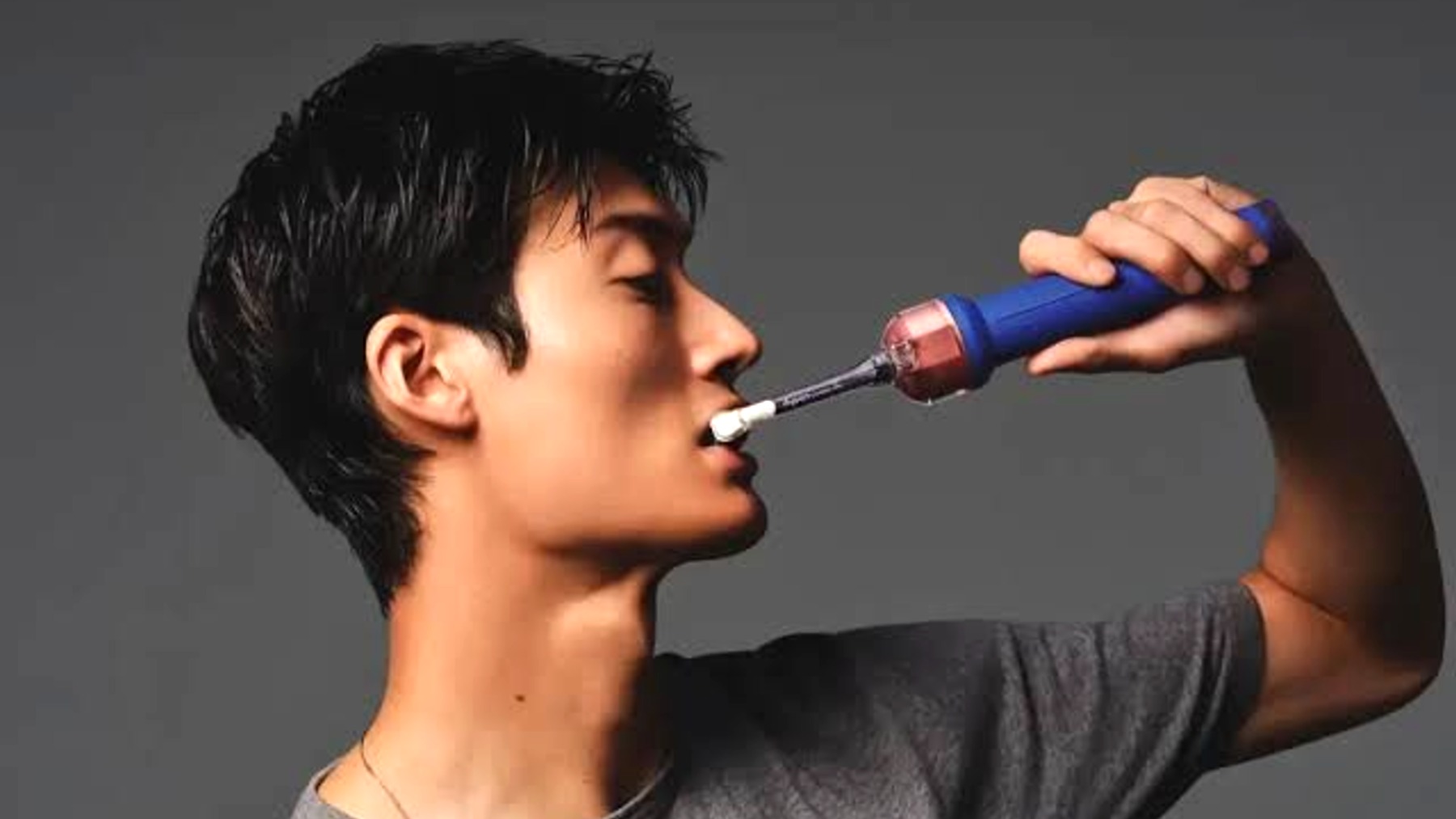
Mouthtrap: Dyson is focussed on the features
Ralph Waldo Emerson never actually wrote, “build a better mousetrap and the world will beat a path to your door”. Or at least there is no evidence he ever wrote those words in that exact form. In an 1855 journal entry, Emerson wrote something rather more long-winded: “If a man has good corn or wood, or boards, or pigs, to sell, or can make better chairs or knives, crucibles or church organs, than anybody else, you will find a broad hard-beaten road to his house”.
It has also survived despite being routinely invoked to explain why the idea behind it is fundamentally wrong. The history of business is littered with technically superior “mousetraps” nobody particularly wanted. Betamax was arguably better than VHS. Concorde was dramatically faster than the aircraft that subsequently replaced it. NeXT built extraordinary computers and still came nowhere close to displacing the beige PCs occupying desks around the world. In each case, the better mousetrap lost.
Being better has never been enough because most people don’t make purely rational choices by conducting objective comparisons of every available attribute. We buy things because they are available, familiar, fashionable, famous, trusted, convenient, beautifully packaged, recommended by somebody we like or advertised by somebody charismatic with great hair. Rational superiority has always had to fight its way through an irrational jungle of human behaviours, biases and impulses.
Enjoying Mumbrella? Sign up for our free daily newsletter.
In some respects, the booming ecommerce era of the past decade perhaps represented the glorious peak of this irrationality. Will the better mousetrap win? Maybe. Will the inferior mousetrap win because it will send a 20% off discount code to anyone who hovers over the checkout button for long enough? More likely.
AI may be about to alter that equation, because more of the process of discovery and comparison is likely to happen through machines capable of doing things human shoppers rarely bother to do. You and I probably aren’t going to compare 73 specifications, read 4,000 customer reviews and examine six independent tests before buying a toothbrush. But your AI assistant or agent happily will.
That doesn’t mean brand marketing will disappear or that humans will suddenly become perfectly rational economic actors. It does mean the value of being a legibly and provably better mousetrap may increase substantially. And yes I hate the language of legibility too, but this AI moment makes the concept hard to ignore.

Which brings us to Dyson’s new $799 CameraJet toothbrush, a product that appears to answer a question nobody except your dentist thought needed asking: what’s wrong with how we all brush our teeth? After all, humanity has been cleaning its teeth with sticks, brushes, bits of string and electrified objects for a very long time. Most of us had mentally filed toothbrushing under “solved”. But not James Dyson.
Dyson says it spent six years developing the thing, deploying hundreds of engineers along the way. Packed inside its little body are cameras, machine learning, a precision water jet, image stabilisation, app-based coverage mapping and an extraordinary quantity of code. Dyson describes it, with a geeky lack of restraint, as a “camera viewing, gap finding, jet washing, liquid flossing, mouthwash dispensing, technique teaching, live streaming, plaque blasting, precision cleaning toothbrush”. Dentistry may yet survive the AI jobs apocalypse, but it’s clearly going to have to work hard for its money.
What interests me about the launch of the CameraJet is not merely the heroic overengineering of the product but the forensic way Dyson constructs the argument that our existing toothbrushing and flossing mousetraps are inadequate.
Traditional brushing misses gaps. Flossing is inconsistent. People don’t know where they have cleaned properly. Therefore the camera finds the gaps, the software tracks them, the jet targets them and the app shows you what you missed.
There is relatively little of the traditional higher-order oral care storytelling about fresh breath, radiant confidence or unleashing the power of your best smile. Instead, Dyson presents a chain of problems and engineered responses. Dyson shows its working and provides its receipts.
It doesn’t simply say, here is our better mousetrap. It spends considerable effort proving both that the mousetrap is better and that trapping mice is harder than we previously thought.
Another challenge
There is a different version of the mousetrap problem in Chanel Contos’s Fix Our Feeds campaign.
Contos first became prominent through Teach Us Consent, taking an issue society had failed to confront adequately and making the scale and urgency of it extraordinarily difficult to ignore. More recently she has turned her attention to the algorithmically-driven social-media feeds she says are amplifying misogynistic, hyper-masculine and otherwise damaging material to boys and young men.
The policy proposition attached to Fix Our Feeds is strikingly simple: give people a meaningful way to switch off algorithmic recommendations and instead prioritise content from accounts they have actually chosen to follow.
What makes the campaign interesting from a mousetrap perspective is that it moves very quickly from a large, complicated problem to a solution most people can imagine working. Recommendation systems, platform incentives, engagement optimisation and algorithmic amplification are technically and politically complex. “Let me turn it off” is not. A choice. An off switch. The solution itself makes the problem more legible.
Inevitably the counterargument has arrived swiftly: perhaps algorithm-free feeds would actually be worse; perhaps users would be inundated by more irrelevant brand content; perhaps we’d all enjoy the experience less. That doesn’t automatically make Fix Our Feeds right and the platforms wrong. But it helps to reveal the second mousetrap challenge, the endlessly circular (and usually self-serving) counter-arguments: even if we agree there might be a mouse (which there isn’t), aren’t our current mousetraps perfectly adequate, and even if they’re not (which they are) can you prove your trap is actually better, and anyway, won’t it actually make the problem worse (not that we have a problem)!
All these calculations may be about to change in an AI-mediated world. Businesses have spent decades wrapping propositions in conveniently meaningless language such as premium, innovative, customer-centric, sustainable and best-in-class, much of which works for them as humans are mostly too busy, distracted or uninterested to interrogate it. They have effectively been marking their own homework, knowing that humans don’t have the capacity to double-check everything. But machines have vastly more capacity for that kind of due diligence.
If your AI shopping agent is capable of comparing products against the criteria that actually matter to you, then brand and product claims will need credible evidence to back them up. Differences will need to be explicitly articulated and proven. The consequence will be not that brand disappears of course. Trust, familiarity, identity, aspiration and emotion will still matter enormously. But businesses will have to get much better at explaining, proving and structuring the reasons they deserve preference in the first place. This is a natural consequence of what Professor Scott Galloway calls ‘weapons of mass diligence’ and the end of the old brand-led era.
The new brand era
Eugene Healey, who has taken an equity stake in Tracksuit as part of a creator partnership, says the move reflects a shift toward long-term value over one-off fees.
The new era for brands is something I have been thinking about a lot recently. I’m fascinated by the work of Eugene Healey, a brilliant brand, creative and cultural thinker who has just launched a course called The New Fundamentals of Brand. Eugene’s starting point is deliberately provocative: much of what we have come to think of as traditional social media is effectively over, and the operating assumptions behind traditional brand-building need to be rebuilt for a world of hyper-fragmented channels, a creator-led entertainment-first content ecosystem and an endlessly-remixed culture.
For a long time, brand strategy assumed a meaningful degree of control and orchestration. Decide what you want to stand for, codify an identity, construct a coherent set of messages, images, behaviours and experiences, distribute them with enough consistency and eventually a reasonably stable collection of associations forms in people’s heads. Eugene likens a brand to a mosaic, an analogy I like a great deal.
That basic idea has not suddenly become useless. But the conditions under which the mosaic is assembled have changed dramatically. Brands still control what they put into the world, but increasingly they have little control over where those signals appear, what sits beside them, who remixes them or the order in which any individual encounters them. The mosaic still exists. The company simply controls fewer of the tiles and little of how they come together in people’s minds.
That makes Eugene’s new brand course interesting because it is not merely trying to build a slightly improved version of the old mousetrap. It is asking whether the nature of the mouse has changed.
If attention is fragmented, if distribution is increasingly algorithmic, if social media behaves more like entertainment than publishing, and if creators, communities and audiences participate in constructing what a brand means, then perhaps some of the things we once considered fundamentals were really just conventions of a particular media age that has now passed. You cannot solve a changed problem indefinitely by simply becoming more accomplished at the old solution.
Sometimes the hard thing about mousetraps is proving there is a mouse at all. Sometimes people accept that mice are a problem but remain unconvinced your trap is genuinely better. And sometimes the most important insight is recognising that the mouse itself has changed. Perhaps AI will make the world slightly kinder to better mousetraps, because machines are much better at rational comparison and much less impressed than humans by empty adjectives. But AI is also accelerating the rate at which problems, behaviours, interfaces and categories change beneath us.
All of which means the challenge for innovators is not simply to build a ‘better’ thing and wait for the sound of footsteps making their way through the woods. Instead, in a world changing faster than ever, we need to keep asking the right questions and getting crystal clear on the answers. Do we really have a mouse problem? Do we really have a better trap? Or has the nature of the mouse changed so much that the smartest thing we can do is stop improving the old mousetrap and start again?
Matt Jones is a brand strategist, author, keynote speaker, and entrepreneur. He has worked in British military intelligence, political strategy and speechwriting, and international brand strategy. He returned to Australia to co-founded Four Pillars Gin. Jones currently chairs the City of Sydney’s Business Advisory Panel and works as a senior adviser to founders, CEOs and business leaders across Australia. His StoryWork podcast is available on all podcast platforms and his substack. See Spotify, Apple, and Youtube to subscribe.
