

Airport | Ancillary | Digital Transformation | On the Ground // Oct 2026
Future Travel Experience spoke with Arthur Reijnhart, Chief Commercial Officer, Royal Schiphol Group, at the recent TFWA World Exhibition & Conference in Cannes. As Schiphol undergoes what Reijnhart describes as the largest transformation of the total airport in its history, the airport is also evolving its approach to commercial activity, with a greater emphasis on quality, satisfaction and the overall passenger experience.
For Schiphol (a Corporate Partner of the FTE Digital, Innovation & Startup Hub), this represents a fundamental shift in thinking. Rather than viewing commercial activity as something separate from the operational passenger journey, the airport increasingly sees retail, hospitality and other experiences as integral parts of how travellers experience the airport.
“The key message I want to share is that commercial success and a positive passenger experience go hand-in-hand,” says Reijnhart. “When travellers value their time at the airport, commercial performance follows naturally.”
That philosophy will be central to Schiphol’s strategy as it moves towards a more passenger-centric model.
Join us at APEX FTE EMEA and Ancillary & Retailing, Dublin, 15-17 June 2027 >>
From volume and efficiency to quality and satisfaction
Schiphol’s approach has been shaped by a broader shift in priorities across the airport. A few years ago, the organisation began moving away from a primary focus on volume and cost efficiency towards a stronger emphasis on quality and satisfaction. That change has also influenced how the airport thinks about commercial activity.
“At Schiphol, we have learned that long-term value starts with putting the traveller at the heart of what we do,” Reijnhart explains. “A few years ago, we shifted our focus across the entire airport from volume and cost efficiency towards quality and satisfaction. This shift has also changed how we think about the role of commercial activity within the airport.”
The underlying idea is that commercial performance should be viewed as a consequence of creating an environment in which passengers feel comfortable, confident and positive about their time at the airport. Rather than treating passenger experience and commercial performance as separate objectives, Schiphol is increasingly looking at how they can reinforce one another.
This is particularly important as airports seek to respond to travellers whose expectations extend beyond efficient processing. The airport experience increasingly encompasses everything from the quality of passenger flows and lounges to retail, food and beverage, wellbeing and the opportunities available to passengers during their time at the airport.
Making retail part of the passenger journey
Schiphol’s ambition is for the airport to feel like a “homeport for world travellers” – a place where people feel welcome, confident and at ease. “We want Schiphol to feel like a homeport for world travellers: a place where people feel welcome, confident and at ease,” Reijnhart says. “That means passengers can expect more from us than simply getting from check-in to the gate. We want their journey to be convenient but also enjoyable.”
This changes the role of retail within the airport. Rather than functioning as a standalone commercial activity, retail becomes one of the elements that contributes to the overall quality and character of the passenger journey. “This changes the role of retail. It is no longer a standalone commercial activity, but an integral part of the overall passenger experience,” Reijnhart explains.
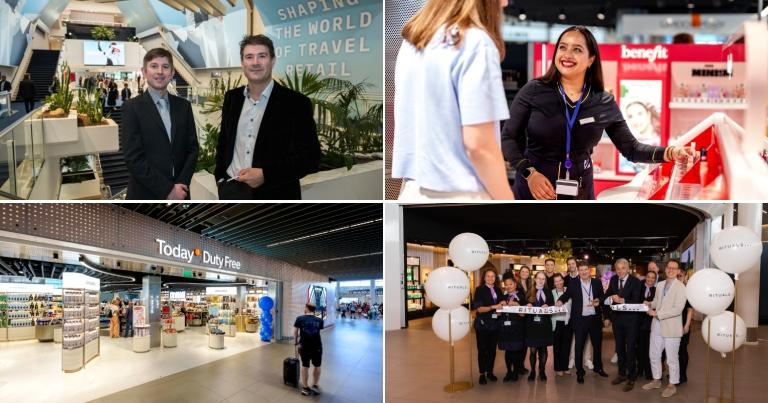
That approach is reflected in investments across the airport, including improvements to passenger flows, new and upgraded lounges, and retail and experiential concepts designed to create greater engagement. Reijnhart points to Today Duty Free and the Rituals Mind Oasis as examples of concepts that contribute to a broader and more differentiated airport experience.
The objective is not simply to increase the number of opportunities for passengers to shop. It is to create an environment in which retail feels relevant to the journey and complements the wider experience.
Moving beyond a price-led proposition
As travel retail considers how to remain relevant in an environment where consumers can increasingly purchase products from almost anywhere, Schiphol sees an opportunity for airports and their partners to focus on the things that make the airport environment distinctive. “Price will always matter, but airports have a unique opportunity to offer something beyond price,” Reijnhart says.
One of the advantages airports have is the mindset of the traveller. Passengers are already in a different environment, with time to explore and discover brands, products and concepts that may not have been part of their plans before arriving at the terminal. “Travellers are already in a different mindset, with time to explore and discover new brands, products and concepts,” Reijnhart explains.
For Schiphol, the opportunity is to use that environment to encourage discovery rather than relying solely on price-based incentives. “For us, it is about creating an environment that encourages people to look around and discover something relevant to them,” he says. “That can make retail a meaningful part of the journey rather than simply another shopping opportunity.”
This places greater emphasis on curation, relevance and the quality of the environment surrounding the commercial offer.
Creating a more connected ecosystem
The relationship between airports, retailers and brands is also becoming increasingly important as the industry looks to create a more seamless journey between travel retail and the wider customer experience. For Reijnhart, airports occupy a distinctive position because they interact with customers at a very specific moment in their journey – one that can often be highly emotional.
“The airport is one of the few places where brands can interact with customers at a very specific and often highly emotional moment,” he says. “That creates an opportunity for airports, retailers and brands to work together to make that interaction more relevant and consistent.”
Greater collaboration and the sharing of insights can help all parties develop a better understanding of the traveller and create propositions that are more closely aligned with their needs. “By sharing insights and understanding the traveller better, we can create more relevant propositions and stronger connections across the journey,” Reijnhart explains.
This requires a collaborative approach in which airports, retailers and brands combine their respective expertise rather than operating in isolation. “This requires close collaboration between airports, retailers and brands, with everyone bringing their own expertise to the table,” he adds.
Relevance, authenticity and experiences
Looking ahead, Reijnhart sees the integration of the total passenger experience as one of the biggest opportunities for travel retail. For a major transfer hub such as Schiphol, this also presents a significant operational challenge. Passenger flows can experience steep peaks during the day, meaning that the airport has to maintain a consistent experience while responding to very different passenger needs.
“One of the biggest opportunities is the seamless integration of the total passenger experience,” Reijnhart says. “In a crowded, busy major transfer hub airport like Schiphol, that has steep peaks during the day, the whole experience needs to remain catered to the individual needs of the passenger.”
The fundamentals still matter. Passengers expect efficient and reliable operational processes, but Reijnhart believes that these basics increasingly need to be complemented by elements that create a more distinctive and engaging experience.
“Travellers are looking for excellent basics in the operational processes, and on top of that authenticity, wellbeing and experiences,” he explains.
This creates both an opportunity and a challenge for travel retail. The opportunity lies in creating experiences that cannot easily be replicated elsewhere. The challenge is ensuring that the offer remains genuinely relevant at a time when consumers have unprecedented access to products and brands through digital channels.
“A big challenge is relevance,” Reijnhart says. “Travellers today have access to almost any product at any time. That means travel retail must offer something they cannot easily find elsewhere, whether that is exclusive products, exceptional service, a strong sense of place or memorable brand interactions.”
Ultimately, he believes the objective should be to create experiences that stay with the traveller after they have left the airport. “It is about creating experiences travellers remember.”
Sharing lessons from Schiphol’s transformation
The transformation underway at Schiphol is the largest transformation of the total airport in its history. As passenger expectations continue to evolve and airports, brands and retailers explore new approaches to digital innovation and customer engagement, Reijnhart sees value in learning from the wider travel retail community. “At the same time, I am equally interested in hearing how others are addressing changing customer expectations, digital innovation and the future of travel retail.”
For Schiphol, the direction of travel is clear: commercial performance is increasingly being considered within the context of the complete passenger experience. By creating an airport environment in which travellers feel welcome, comfortable and engaged, the airport is seeking to build the foundations for longer-term commercial value – with retail playing an increasingly important role within that wider journey.
What’s next – APEX FTE EXPO, Singapore, 18 to 19 November 2026
See the APEX FTE EXPO Agenda Overview >>See the 14 reasons to attend APEX FTE EXPO >>Register for APEX FTE EXPO >>
