

Front page
InterviewJourney Orchestration50m · 15:01 BST · 5 min read
Has Salesforce Bought Its Missing Engagement Engine?
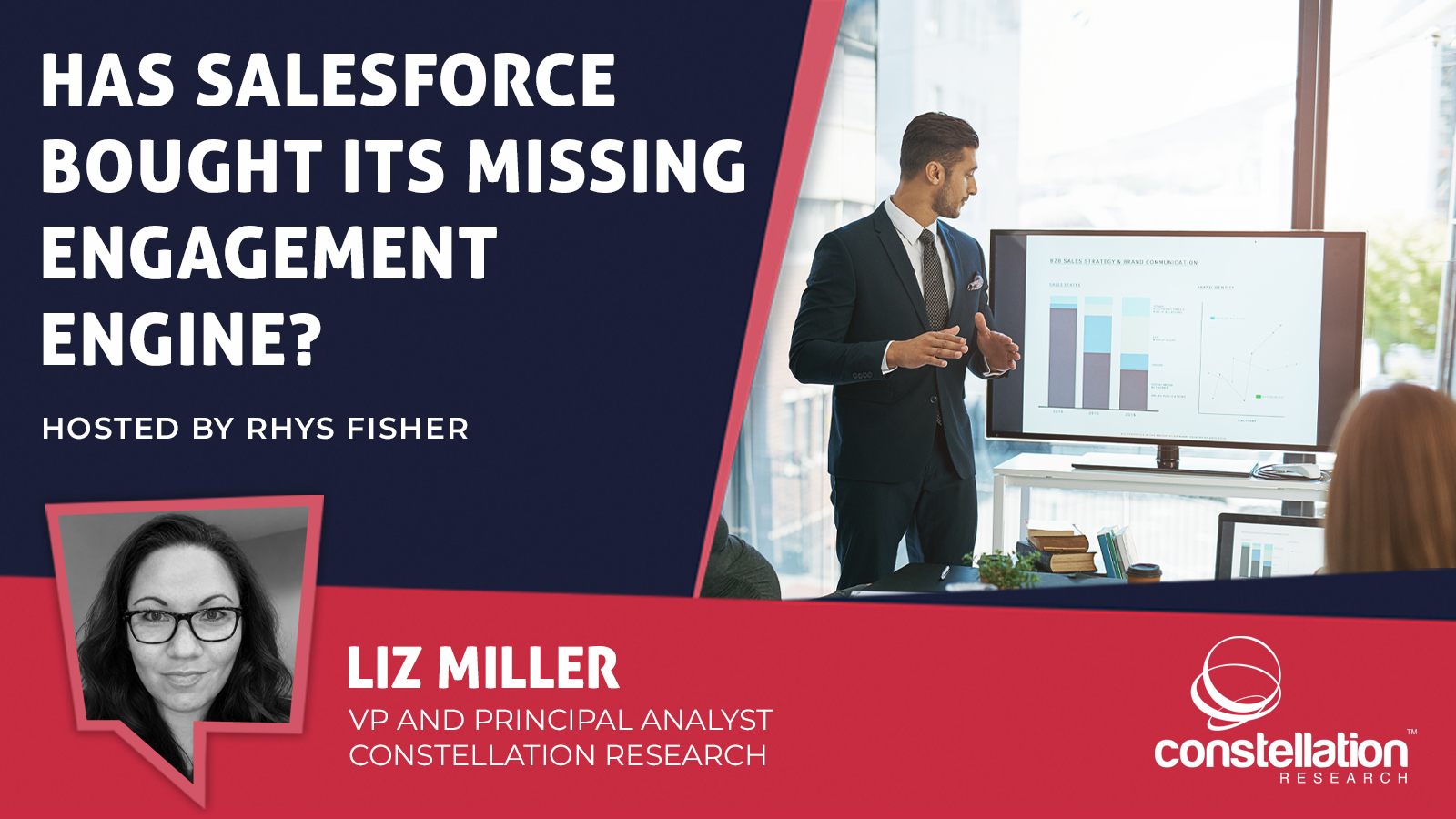
Salesforce has agreed to acquire Braze for $5.66B, adding real-time customer engagement to its CRM, data, AI, and content stack. But Constellation Research’s Liz Miller argues the deal is really about one missing piece: the execution engine that turns customer insight into action.
Salesforce has signed a definitive agreement to acquire Braze for a reported $5.66 billion.
The move is the latest step in the CRM giant’s journey towards perfecting its customer engagement offering, following the acquisition of Contentful earlier this year.
As a customer engagement specialist, Braze’s platform delivers real-time, cross-channel messaging and AI decisioning across email, SMS, WhatsApp, mobile apps, and the web.
Salesforce says the deal will help brands act on live customer behavior with more relevant engagement.
These personalization promises sound pretty familiar to anyone within the CX space, but Liz Miller, VP and Principal Analyst at Constellation Research, believes the Braze deal addresses a more practical Salesforce problem:
“This is Salesforce really being acutely aware that it needed an engine by which it could drive that deployment.”
Data and AI Still Need an Execution Engine
Salesforce already has plenty of customer data tools.
Data 360 is designed to give companies a fuller view of their customers; Agentforce is Salesforce’s growing AI agent platform; and its Customer 360 vision has long promised to bring sales, service, marketing, and commerce closer together.
However, knowing what a customer wants and acting on it are two very different jobs.
“There are two places where the rubber meets the road,” Miller said.
“First, data, so businesses can understand customers, personalize in real time, and operate in the customer’s time, not their own. Second, execution.”
That execution challenge is often overlooked in AI discussions.
Beyond creating a one-to-one customer journey, brands also need to launch products, make major announcements, manage communications across channels, and ensure they do not overwhelm customers in the process.
A retailer may want to send a broad email announcing a new product line. At the same time, it may want to send a different message to a loyal customer who has shown interest in a particular category, while suppressing outreach to someone who has just complained to customer service.
Those are different forms of engagement, with different costs and different commercial goals, as Miller explains:
“We have to do both. There is a brand line that has to introduce, entertain, hit that acquisition, all of those things that marketers know are part of our engagement cycle.”
That is where Braze could prove valuable. Its platform was built around high-volume, event-driven customer engagement, allowing brands to coordinate campaigns and individual customer interactions across channels.
A New Role for Marketing Cloud?
Miller was not surprised that Salesforce made another acquisition. She was more interested that Braze was the target.
The deal follows Salesforce’s move for Contentful, which added a composable content layer to its platform. Together, the two acquisitions could give Salesforce a stronger case for modernizing how its customersbuild, personalize, and deliver content across the customer journey.
In discussing her experience at Dreamforce 2026, Miller said that Salesforce executives repeatedly signaled that a wider transformation was coming. The missing question was how Salesforce would handle “the marketing execution and the engagement execution.”
Braze provides a possible answer.
“Salesforce knows it needed a glow up when it comes to engagement and marketing,” Miller said. “And boy, did it go out and buy one.”
That does not mean Marketing Cloud suddenly becomes simple. Salesforce has a sprawling product portfolio, and marketing has often been a smaller part of many multi-cloud deployments than sales or service.
For some customers, the acquisition could create an opportunity to revisit how they manage engagement. For others, it could create another difficult technology decision.
Salesforce and Braze Customers Have Different Concerns
Salesforce customers may now have to decide whether the new strategy is worth reworking the systems they have already customized.
Many businesses have built workarounds around gaps in their existing marketing tools, connecting different platforms to Salesforce’s stronger sales and service capabilities.
The Braze acquisition may offer a more modern path forward, but moving to it could entail migration work, integration costs, and additional change.
Braze customers, on the other hand, face a different concern.
Miller noted that many chose Braze because they did not want to be Salesforce customers, detailing how they like the interface, modern feel, and the way that Braze is constructed.
For example, Braze’s Canvas journey builder and customer data capabilities have helped it build a reputation for ease of use.
Yet users have also raised questions around reporting, data integrations, and the cost structures that can become more complicated as deployments grow.
Salesforce ownership could help solve some of those data and integration issues, particularly if Braze connects cleanly with Data 360. But it could also bring fears around price, complexity, and whether Braze will retain the product experience that made it appealing.
Despite the possible implications of the deal, Miller still advocates caution, advising customers to “hold tight. Don’t freak out right now.”
The Deal Will Be Judged on Delivery
It is clear that Salesforce believes the acquisition will help the company bring customer data, AI, content, and engagement into a more complete platform.
The hard part comes next.
Salesforce must show that Braze can strengthen its broader customer engagement strategy without becoming another product customers have to stitch into an already complicated stack.
It must also preserve the speed and usability that helped Braze stand out in a crowded market.
Miller does not see the acquisition as a simple play for Braze’s customer base. Instead, she sees a platform gap that Salesforce needed to fill.
“This is a supercharge moment,” she said.
Whether it becomes one will depend on execution, in many ways, the very capability Salesforce has just spent $5.66 billion buying.
rate this storyhelps rank stories across CX Today
Read nextordered by techtelligence · every pick explained
same beat · Journey Orchestration
AI Can Spot the Signal, Who Decides What Happens Next?
24hmatches this topicWhy Customer Engagement Is Still Too Slow to Be Personal16 Oct 2026matches this topicHubSpot Cuts 660 Jobs as AI Strategy Reshapes Business7 Oct 2026
More from the Journey Orchestration desk

Amperity, Treasure AI, and Adobe are giving customer engagement teams more capable AI agents to investigate signals, personalize journeys, and speed up decisions. The catch is that brands remain responsible when an automated next step is poorly timed, irrelevant, or simply wrong.
Why Customer Engagement Is Still Too Slow to Be Personal
Brands have more customer data, dashboards, and campaign tools than ever. Yet turning a useful signal into the right response can still take days, multiple systems, and several teams. Amperity’s new AI agent, Pér, highlights the challenge of acting faster without losing context, control, or trust.
Rhys Fisher · 16 Oct 2026Sponsored · five9
The AI Handoff Problem CX Leaders Need to Fix
Poor AI-to-human handoffs increase customer effort, repeat contact and frustration. Five9 outlines five practical steps that show CX leaders how to measure outcomes, connect context across channels, equip advisors and improve the transfer experience, to build a more reliable handoff model.
Nicole Willing · 16 Oct 2026
