

15 November 2026
10:05 AM
Foreign PolicyMUST READWANAWANA News
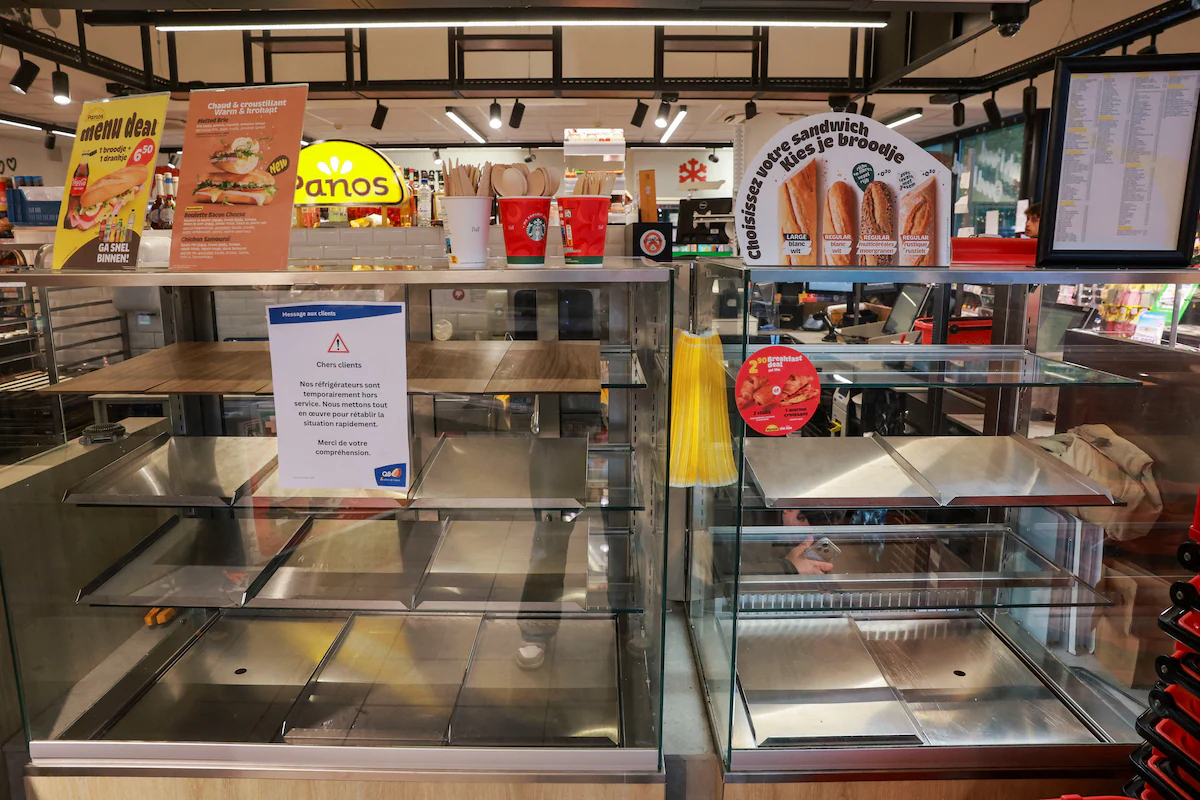
WANA (Nov 15) – Following cyberattacks on the cooling systems and refrigerators of French supermarket chains on October 11 and 12, which resulted in widespread food spoilage and several fires, the French government has recently accused Iran’s Islamic Revolutionary Guard Corps (IRGC), specifically its affiliated cyber units, of carrying out the attacks and announced plans to pursue European sanctions.
On November 9, French Foreign Minister Jean-Noël Barrot announced that Paris held the IRGC responsible for the incident. According to French officials, around 700 retail locations were targeted, with remote manipulation of cooling equipment causing temperatures to rise to more than 50 degrees Celsius and large quantities of food to spoil. In at least 15 cases, the temperature increases reportedly led to fires. Following the announcement, Iran’s ambassador was summoned to the French Foreign Ministry, and Barrot said Paris would seek sanctions at the European Union level.
French cybersecurity authorities have identified the Shahed Kaveh cyber unit as responsible for carrying out the attack, citing technical indicators and infrastructure links. Tehran, however, has rejected the accusation, describing it as baseless and hostile. The central question now is why Paris has chosen to escalate a cyber incident into a diplomatic confrontation and a campaign for new European sanctions against Iran.

French Refrigerator Cyberattacks. Social media /WANA News Agency
Belgium: Signs of Divisions Within Europe
Belgium’s response to the case offers a clear picture of the differences in European positions. Bernard Quintin, Belgium’s interior minister, said in an interview with VRT News on Thursday night that information provided by the country’s security services gave him sufficient grounds to say Iran was probably behind the cyberattacks on the stores.
Belgian Foreign Minister Maxime Prévot, however, took a different position, saying that the available information was insufficient to formally hold Iran responsible for the attacks. He also stressed that the official attribution of a cyberattack to a foreign actor should be made through the foreign ministry.
This disagreement comes as France seeks European support for new sanctions against Iran. When even officials within a European government differ over whether the available evidence is sufficient to formally accuse Tehran, other countries cannot be expected to endorse Paris’s position without conducting their own assessments.
Tehran Warns of a False Flag Operation
Iranian officials have viewed the French accusation as more than a dispute over the attribution of a cyberattack. Brigadier General Mohebi, IRGC spokesperson, described the allegations as an outdated Israeli scenario aimed at fueling Iranophobia and recruiting European support.
Warning Paris against falling into an Israeli false flag trap, Mohebi said: “The ridiculous allegation that Iran attacked cooling systems is an old Israeli scenario designed to fuel Iranophobia and rally support in Europe.”
He also stressed the difference between Iran’s approach and that of the United States and Israel, stating that civilians are not included in the IRGC’s list of targets.
The remarks reflect Tehran’s view that accusing Iran of an attack directly affecting civilians and non-military businesses could be used to create concern among European public opinion and justify further political and economic measures against the country. The possibility of a false flag operation is part of this assessment. Such an operation involves an actor concealing its identity or the actual motive behind an attack and shifting responsibility onto another party in order to steer developments toward its own objectives.
Iranian Foreign Minister Abbas Araghchi also responded to the French accusations, describing Paris’s approach as an attempt to deflect attention from its domestic shortcomings.
In a post, Araghchi wrote: “The French government, which cannot even manage its refrigerators, let alone deal with protests by its own people, is shifting the blame onto others to cover up its failures.”
He continued by drawing a distinction between Iran’s capabilities and how it uses its power, saying: “Yes, Iran is powerful. But unlike France, we do not exercise our power by supporting massacres in Gaza or bombing schools and hospitals.”
The foreign minister’s response links the cyberattack allegations to France’s broader foreign policy and its position on US and Israeli military actions in the region. Tehran argues that Paris is accusing Iran of targeting civilian infrastructure while maintaining a different position toward US and Israeli military operations.
Iran Rejects French Allegations Over Cyberattacks as Baseless
WANA (Nov 10) – Iran’s Foreign Ministry has rejected allegations by the French government that Tehran was involved in cyberattacks targeting retail chains in France, describing them as baseless and politically motivated. In a statement issued on Tuesday, November 10, the ministry strongly condemned recent accusations by French officials linking Iran to alleged cyber […]
10 November 2026
Read More…
Why Is France Seeking to Expand the Case?
To understand Paris’s approach, the issue must be viewed beyond the supermarket refrigerator incident. By making the accusation and pursuing European sanctions, France is seeking to turn what began as a domestic security investigation into a broader foreign policy issue for the European Union. Such a move could pave the way for new restrictions against Iranian individuals and institutions and increase political pressure on Tehran.
In this context, the possibility that the case is linked to Israel’s broader Iranophobia campaign also deserves attention. Israel is facing multiple domestic political and social challenges, as well as the consequences of war and regional tensions. Further confrontation between Iran and European countries could help expand anti-Iran sentiment in the West. From Tehran’s perspective, accusing Iran in a case involving civilian facilities could be part of a broader effort to bring European governments into line with policies aimed at pressuring the Islamic Republic.
Establishing a direct link between Israel and the cyberattacks, or proving that they were part of a false flag operation, would require specific evidence. Nevertheless, Iran’s warning to France about the possibility of such a scenario is noteworthy, particularly given how quickly Paris moved from making accusations to seeking sanctions.
Europe’s Problem Goes Beyond Iran
Alongside the political implications, the spread of cyberattacks targeting cooling systems across Europe has exposed security weaknesses in internet-connected equipment. Similar incidents have been reported in at least 11 European countries, causing food spoilage and disrupting commercial operations at some stores.
The head of the European Union Agency for Cybersecurity has also warned that such attacks could spread from supermarket refrigeration systems to routers and other internet-connected household appliances. He stressed that manufacturers must incorporate cybersecurity measures from the earliest stages of product design, as any device connected to the internet could become an entry point for hackers if it is not adequately protected.
The warning highlights the broader security challenge posed by the attacks, regardless of who carried them out. Industrial and household equipment, supermarkets, food storage facilities and even critical infrastructure increasingly depend on digital networks. Weak security in these systems can lead to consequences far beyond a technical disruption.
However, Paris’s focus on blaming Iran and pursuing sanctions raises a question: Will this incident prompt Europe to address its own cybersecurity vulnerabilities, or will it once again become a platform for increasing political pressure on Tehran?
France has the right to investigate attacks on its infrastructure and identify those responsible. But that right does not replace the need to present evidence and ensure that the accusations are thoroughly examined. European countries should independently assess the technical reports and evidence before supporting calls for sanctions.
Ultimately, the French refrigerator case is no longer just about a cyberattack and financial losses suffered by supermarkets. It has become part of the strained relationship between Iran and Europe. Paris is seeking to use the case to rally European support and increase pressure on Tehran, while Iran is warning about a possible Israeli role and efforts to create a new wave of Iranophobia.
Determining who stands to benefit from turning a cyberattack into a diplomatic crisis requires a careful examination of the evidence and the political motives of the actors involved. What is clear, however, is that Europe’s response could have implications extending well beyond this particular dispute and affect the future of its relations with Iran.
