

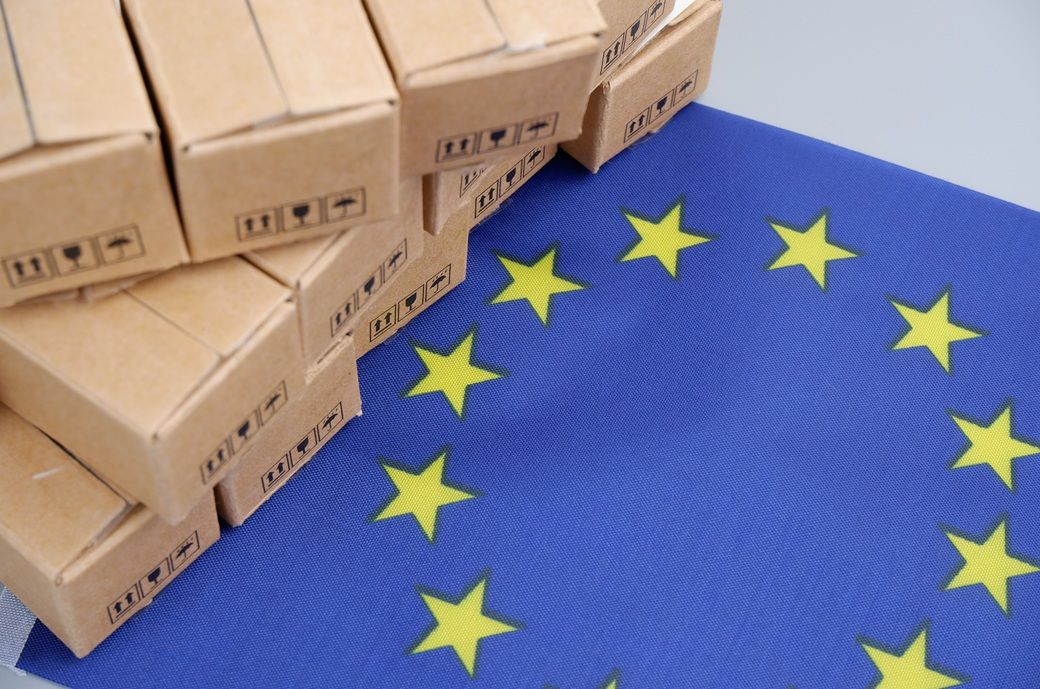
EU Council approves customs reform with tougher e-commerce rules
Insights
- The EU Council has approved a major customs reform introducing tougher e-commerce rules, stronger controls and a new EU customs authority.
- Non-EU platforms will become responsible for customs duties and formalities, while a handling fee on small parcels will begin in November 2026.
- The reforms will also reward highly compliant traders with simplified procedures.
The Council of the European Union (EU) has given final approval to a landmark overhaul of the EU customs framework, introducing tougher e-commerce rules, stronger controls on unsafe and non-compliant goods, and a new EU customs authority to improve enforcement and risk management.
Under the new rules, non-EU e-commerce platforms selling goods into the EU will be treated as the importer and will be responsible for completing customs formalities and paying duties, rather than leaving these obligations to individual consumers.
The reform also introduces a new EU-wide handling fee on small parcels from November 1 to help cover the rising cost of customs monitoring as e-commerce shipments increase. The European Commission will determine the level of the fee before it is applied by EU member states. This is separate from the Council’s earlier decision to remove the customs duty exemption for imports valued below €150 (~$174).
E-commerce operators that fail to meet customs obligations could face tougher penalties. In the most serious cases, fines could reach 6 per cent of the company’s annual import value of goods in the preceding year. Other measures include the withdrawal of certain customs privileges and restrictions on access to online platforms.
The legislation will also establish a new decentralised EU customs authority in Lille, France, which is expected to begin operations in 2027. The authority will oversee an EU customs data hub, a central platform that will analyse import and export data, identify high-risk shipments and help coordinate customs controls and crisis management across member states.
The reform creates a new category of trusted businesses known as ‘trust and check traders.’ Companies meeting strict transparency and compliance requirements will benefit from simplified customs procedures, while the most reliable traders will be able to release goods into circulation without active customs intervention.
For manufacturers, exporters, retailers and e-commerce businesses, the changes will increase the importance of accurate customs data, compliance and supply-chain transparency when selling into the EU.
The EU customs data hub will become mandatory for e-commerce businesses from July 1, 2028 and for all traders from March 1, 2034. The European Parliament is expected to approve the final text later in September before it is signed and published in the EU’s Official Journal.
The reform comes as the EU customs union manages trade worth more than €4.3 trillion (~$5 trillion), representing around 14 per cent of global trade. In 2025, customs authorities handled around 6 billion e-commerce parcels, more than 90 per cent of which arrived from China, along with more than 1.5 billion items in traditional trade.
More Textiles News – Europe…
Popular News
Editor’s Pick

TextilesWill Indonesia’s cotton safeguards reshape Asia’s sourcing map?
6 min read
RetailEurope retail trade falls 0.4%, euro area down 0.6%
3 min read
TextilesVietnam’s industrial production expands 11.9% YoY in Jan-Aug 2026
1 min read
Interviews
View All
Debashish GhoshCre8iveSkill Apparels Pvt Ltd
We transform digital creativity into production-ready…
Avinash ManeLenzing Group
Sustainability woven into innovation – Lenzing threads the…
Raj ManekMesse Frankfurt India Asia Holdings Ltd
Shaping India’s future in technical textiles
Jarrod AdamUnleashed Software
We simplify complex inventory for modern omnichannel…
Patrik FriskReju
Reju leads the shift to circular polyester manufacturing
UmbrashieldArifa Shah
Our UV shields block up to 99.6 per cent of UV rays
Esteemed Clients
‘ +
‘
‘;
}
}
colHTML += ”
“;
}
slideHTML += colHTML + ”
“;
$(‘.client-horizontal1’).slick(‘slickAdd’, slideHTML);
}
$(‘.client-horizontal1’).slick(‘setPosition’);
},
error: function (data) {
console.log(data);
},
complete: function () {
isLoadingClients = false;
}
});
});
