

The traditional shopping mall is undergoing a major transformation as changing consumer habits, online shopping, and competition from big-box retailers force owners to reconsider how they use their spaces.
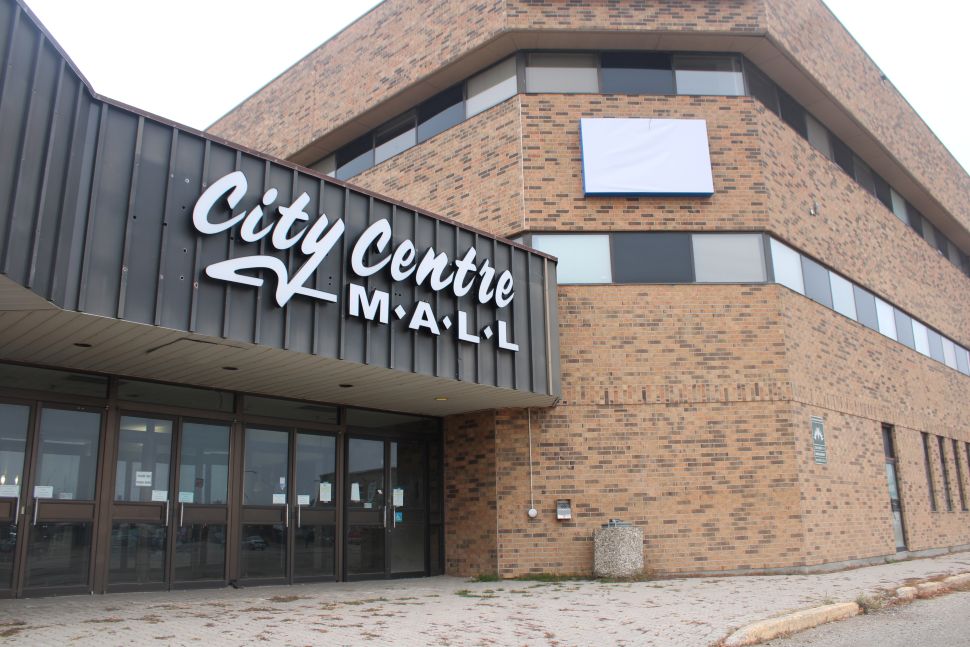
In Weyburn, the local mall sits empty, while neighbouring Estevan has seen its mall renovated, although retail options remain limited.
Across Saskatchewan, other shopping centres are exploring different ways to attract people, including medical services, entertainment, and even residential development.
Golden West business commentator Paul Martin says the changes reflect a broader shift in how people shop and what they expect from retail spaces.
Martin said shopping centres have evolved considerably over the years. What started as outdoor developments with a series of individual buildings eventually transitioned into enclosed malls, where shoppers could move between stores through indoor corridors.
While those traditional shopping centres still exist, he said the way people use them has changed.
One of the biggest shifts came during the COVID-19 pandemic, when consumers became accustomed to ordering products and picking up purchases without entering stores.
“I think part of this came from COVID. I remember when we had to basically shut down retail activity and we would do the stop at the curb for pick up your restaurant meal, that kind of stuff, and people kind of got hooked on that,” said Martin.
He said the result has been less traffic in traditional retail spaces, leaving mall owners looking for ways to bring shoppers back.
Martin noted that larger centres have generally had more opportunities to adapt, particularly where population growth and greater population density provide a larger customer base.
Smaller communities, including Weyburn and Estevan, face a different challenge when it comes to attracting retailers and recapturing the shopping traffic malls once relied on.
Martin said consumer habits have shifted away from the traditional idea of going shopping, where people browse through multiple stores, toward a more targeted approach where consumers know what they want and go directly to purchase it.
Big-box retailers have also changed the landscape by offering a wide range of products in one location.
Martin pointed to Walmart as an example of a retailer that has effectively created its own department store, bringing together product lines that shoppers might previously have visited several different mall stores to find.
“They’ve created a department store of their own and they’ve made it large enough square footage and they carry a wide, wide range of product lines and they become effectively a mall on their own. But it’s all inside one shop, one building, under one name,” he said.
He noted that Walmart has continued to evolve by expanding into grocery offerings, further changing what consumers can find under one roof.
Martin said those changes are ultimately driven by consumer expectations, forcing traditional retailers and shopping centres to reconsider how they operate.
Even small changes can affect retail
Despite the growth of online shopping, Martin said it still represents a relatively small portion of overall retail spending.
He estimated online shopping accounts for about seven per cent of retail spending, although he said that figure has been growing.
That relatively small share can still have a significant impact on traditional retailers, which often operate with very narrow profit margins.
Martin said when customers shift even a small portion of their spending away from physical stores, it can put considerable pressure on businesses already dealing with rising operating costs.
He said rent increases are part of the picture, but property taxes, utilities, and the general cost of keeping a store open also contribute to the financial pressure.
“When you can see a seven per cent shift go from in-person shopping to online shopping, that’s enough to actually put a crimp in the performance of something like a shopping mall,” said Martin.
He said the retail business is particularly challenging because there is little room for businesses to absorb additional costs while also dealing with changes in consumer spending.
The loss of major anchor stores has created another challenge for shopping centres.
Martin pointed to the departure of large retailers such as Sears and Hudson’s Bay, which once occupied substantial portions of shopping malls.
When a major tenant leaves, replacing that space can be difficult. Martin said there may not be another retailer looking to occupy the same amount of square footage, leaving landlords with the expense of renovating the space and potentially losing rental revenue for a year or longer.
He pointed to Regina’s Cornwall Centre as an example, where the former Hudson’s Bay space was reconfigured, with some of the additional floors becoming a call centre.
Martin said the loss of major retailers is part of a broader cycle of tenant turnover that can make it difficult for malls to maintain a consistent retail offering.
Malls look beyond traditional retail
With fewer large retailers occupying traditional anchor spaces, Martin said mall owners are increasingly considering other uses for their buildings.
Some have turned to medical services, food options, entertainment, and community services to attract people who might not otherwise visit a shopping centre.
He pointed to Market Mall in Saskatoon, which has developed into a medical destination, with health authorities taking up space in the building.
In Regina, Southland Mall houses a library branch, while other shopping centres have explored ways to incorporate more entertainment into their offerings.
Martin said the goal is to create reasons for people to visit beyond simply purchasing products.
One of the more interesting possibilities is adding residential development to existing shopping centres.
He pointed to a mall in Prince Albert that has been entertaining the idea of putting residential units on its roof, potentially creating a built-in customer base for the businesses and services operating below.
Martin said this type of development could change the way shopping malls are designed and used.
“We’re not going to be solely a point of purchase for a consumer. We’re going to become effectively a village,” he said.
He suggested future shopping centres could include residential towers alongside grocery stores, medical offices, movie theatres, and traditional retail.
In Saskatchewan’s climate, he said having many everyday needs met within one complex could be particularly appealing.
“I don’t really have to go outside very much anymore, that I’m pretty much self-contained inside this complex where I’ve got my residential needs met, but I’ve also got the ability to go and be entertained and to do my grocery shopping, perhaps buy clothing, make medical appointments,” said Martin.
He said this type of development could also appeal to an aging population.
As baby boomers continue moving into their seventies and beyond, some may reach a point where driving becomes more difficult. Martin said having housing, shopping, medical services, and entertainment in one location could offer greater convenience and accessibility.
Retailers must continue adapting
Martin said the changes facing malls are part of a much larger shift in the retail industry, where businesses have to continually find new ways to connect with consumers.
He pointed to Indigo as an example of a retailer that has evolved beyond its original business model.
While books remain the company’s main product, Martin said the retailer has expanded its offerings to include clothing, home goods, and coffee shop partnerships.
He said those additions give customers other reasons to visit, creating a different experience than simply going into a store to purchase a book.
Martin said retailers will have to find ways to combine the convenience of online shopping with the experience of visiting a physical location.
“It’s being challenged by the big box, it’s being challenged by online, and it’s simply, there’s so much churn, because the margins are so thin that either you hit a home run or else as a retailer, you just, you can’t make it,” he said.
For shopping malls, that means continuing to reconsider what their spaces can offer and how they can remain relevant to consumers.
Martin said the retailers and shopping centres that succeed will likely be those willing to continually rethink their business models.
“If you’re static all the time, you’re probably going to run out of runway,” he said.
