

Abstract
Implant dentistry has undergone a significant transformation with the integration of artificial intelligence (AI) into digital workflows. AI, a branch of computer science that enables machines to simulate human cognitive processes, has demonstrated the potential to improve the accuracy, efficiency, and consistency of dental implant procedures. In guided implant surgery, the design of surgical guides traditionally requires manual segmentation of anatomical structures and alignment of cone-beam computed tomography and surface scan data – a process that is time-consuming and operator-dependent.
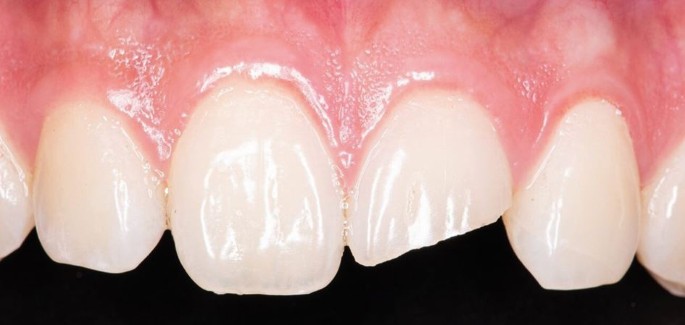
This clinical report presents an AI-powered static computer-assisted implant surgery workflow for a 25-year-old man requiring a single anterior implant. By using deep learning architectures for automated data processing, the digital guide design was completed within 20 minutes. This case demonstrates the application of AI beyond diagnostic support, extending to automated surgical guide design for accurate implant placement and immediate previsualisation in the high-stakes aesthetic zone. While AI-enhanced workflows demonstrate a promising approach to improving predictability, clinicians must maintain rigorous manual verification to mitigate risks associated with data artefacts and algorithmic limitations.
Key points
-
This report highlights how AI serves as a primary design tool for anterior implants, providing the precision required to achieve sufficient primary stability, allowing for immediate, screw-retained previsualisation in the aesthetic zone.
-
Despite the high reproducibility of deep learning models, practitioners must remain the final ‘checkpoint’ to manually verify automated datasets, ensuring that ‘black box’ algorithmic errors or imaging artefacts do not translate into clinical placement errors.
This is a preview of subscription content, access
Access options
- Purchase on SpringerLink
- Instant access to the full article PDF.
Prices may be subject to local taxes which are calculated during checkout
Data availability
The data that support the findings of this clinical report are available from the corresponding author upon reasonable request. The data are not publicly available due to ethical restrictions and the need to protect patient confidentiality.
References
-
Chen Y W, Hanak B W, Yang T C et al. Computer-assisted surgery in medical and dental applications. Expert Rev Med Devices 2021; 18: 669–696.
-
Moufti M A, Trabulsi N, Ghousheh M, Fattal T, Ashira A, Danishvar S. Developing an artificial intelligence solution to autosegment the edentulous mandibular bone for implant planning. Eur J Dent 2023; DOI: 10.1055/s-0043-1764425.
-
Mangano F G, Admakin O, Lerner H, Mangano C. Artificial intelligence and augmented reality for guided implant surgery planning: a proof of concept. J Dent 2023; DOI: 10.1016/j.jdent.2023.104485.
-
Saeed A, Alkhurays M, AlMutlaqah M, AlAzbah M, Alajlan S A. Future of using robotic and artificial intelligence in implant dentistry. Cureus 2023; DOI: 10.7759/cureus.43209.
-
Altalhi A M, Alharbi F S, Alhodaithy M A et al. The impact of artificial intelligence on dental implantology: a narrative review. Cureus 2023; DOI: 10.7759/cureus.47941.
-
Chandrashekar G, AlQarni S, Bumann E E, Lee Y. Collaborative deep learning model for tooth segmentation and identification using panoramic radiographs. Comput Biol Med 2022; DOI: 10.1016/j.compbiomed.2022.105829.
Authors and Affiliations
Contributions
VH drafted the initial manuscript, while EE, JC and PL revised it critically for important intellectual content. All authors have given final approval of the version to be published and agree to be accountable for all aspects of the work in ensuring that questions related to the accuracy or integrity of any part of the work are appropriately investigated and resolved.
Ethics declarations
Competing interests
No competing interest to declare.
Consent to publish
Written informed consent was obtained from the patient for treatment and for the publication of this case, including clinical photographs and radiographs.
Rights and permissions
Springer Nature or its licensor (e.g. a society or other partner) holds exclusive rights to this article under a publishing agreement with the author(s) or other rightsholder(s); author self-archiving of the accepted manuscript version of this article is solely governed by the terms of such publishing agreement and applicable law.
About this article
Cite this article
Hansrani, V., Exarchos, E., Choi, J. et al. Automating surgical guide design for single anterior implants powered by artificial intelligence – a clinical report.
Br Dent J241, 169–173 (2026). https://doi.org/10.1038/s41415-026-9889-y
-
Version of record:14 August 2026
-
DOI
:https://doi.org/10.1038/s41415-026-9889-y
