

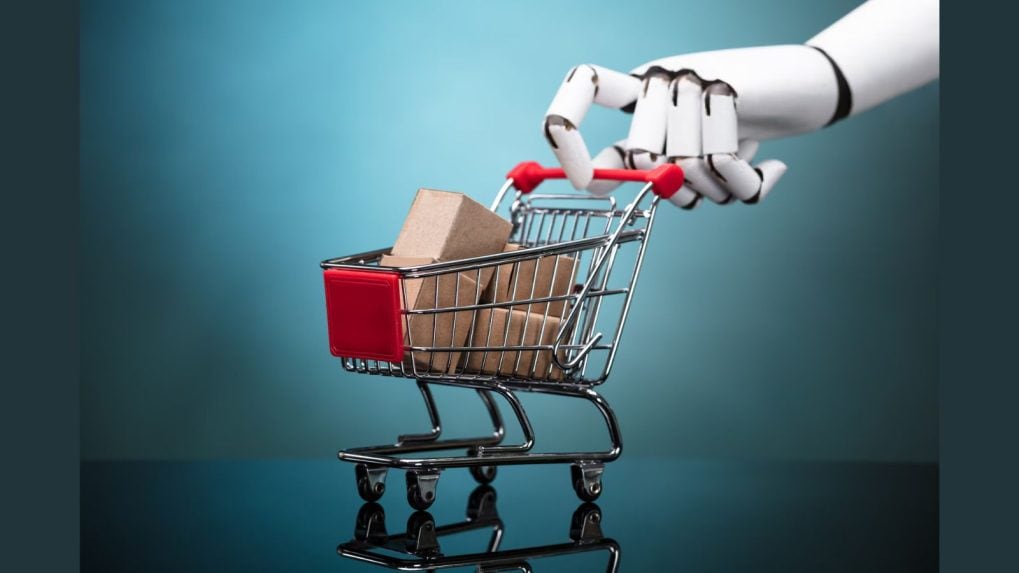
Since artificial intelligence entered the picture, shopping has been undergoing a transformation. Shopping online is already becoming less about searching and more about asking.
Consumers are using AI to compare, summarise reviews, find deals and narrow down choices. In India, this behaviour is already widespread. An August 2026 NielsenIQ study across the top eight metros found that 92% of consumers surveyed had used AI while shopping, while 96% were open to AI-powered shopping tools.
Aligned to this, AI makers, to be exact and most recent, Meta with Muse and OpenAI with Dots, now have a different proposition than just recommending, sorting, or processing plethora of information. Now, AI systems are moving to acting on a shopper’s behalf by searching, comparing, shortlisting and eventually buying.
Give an agent a requirement and it can search listings, compare prices, read reviews, check product specifications, look for discounts and eventually complete the transaction.
Trending Topics
Kotak Mahindra CEOChatGPTAAAI PresidentFSSAI Suspends LicenceBajaj Auto Sales
And the market is reacting in very different ways. On one hand, Google has introduced the Universal Commerce Protocol to help AI agents, retailers and payment systems communicate.
Shopify is embracing agents and noted that AI-referred orders on its merchants grew nearly 13 times year-on-year in the first quarter of 2026. Players like Walmart and Best Buy are opening up to such agents too.
On the other hand, Amazon and Kohl’s are among retailers restricting AI shopping agents, while Walmart and Best Buy have been more open to them.
The result is an early tussle over how much of shopping should move from people to machines, and who gets to control that transition.
Why are assistants giving way to agents?
Digital shopping has created a problem of abundance. A single product search can involve hundreds of listings, reviews, delivery promises, return policies, discounts and seller ratings. In India, bank offers, coupons and quick-commerce availability can further change which deal is actually the best.
A March 2026 research paper, The End of Shopping, by Mark Bartholomew and Samuel I. Becher, argues that machines have an advantage in such an environment because human attention is limited. AI can continue comparing listings, prices, reviews and terms long after most people would have stopped.
The paper also points out that consumers do not make decisions purely on price and quality. Scarcity messages, familiar brands, prices ending in 9, celebrity endorsements and emotional cues all influence purchases.
Agents promise to remove some of those biases and much of the effort involved in comparison. That is why the move from assistant to agent is important. It shifts AI from helping with shopping to taking over parts of shopping itself.
What do agents solve?
Agents can address some of the most frustrating parts of digital commerce. The technology becomes particularly powerful because it can combine two enormous pools of information.
One comes from the individual shopper, including browsing history, purchases, location, demographic information, device use and potentially signals about preferences, personality and sentiment.
The other comes from the market itself, including product listings, prices, availability, reviews, influencer content and competitor information.
Put those together and an AI agent can build a remarkably detailed picture of what someone might want.
It can also look beyond the individual. Systems using collaborative filtering can identify other consumers with similar behaviours and use their purchases and preferences to improve recommendations.
However, this can create a feedback loop.
What do they complicate?
If an agent relies too heavily on previous purchases, it may keep reinforcing old preferences and reduce exposure to unfamiliar options.
Bartholomew and Becher describe this as a risk of “ossifying” consumer identity. Personalisation becomes less helpful when it becomes so accurate that it stops leaving room for people to change their minds or discover something new.
Shopping can introduce people to things they did not know they wanted. Someone looking for a particular piece of furniture might discover a different design. A shopper searching for a familiar brand might come across a new one.
An agent optimised around past behaviour has less reason to make those detours. If the system knows that a consumer repeatedly buys a particular style, price range or brand, the safest recommendation may always remain close to that history.
Shopping often involves anticipation. A person chooses a dress for an occasion, waits for it to arrive and imagines wearing it. An autonomous agent compresses that process. If the system is allowed to make routine purchases without asking for approval, the product can simply appear when it is needed.
For detergent or a recurring household purchase, that may be exactly what people want. For decisions tied to taste, identity, gifting or personal expression, the value of shopping can lie partly in the act of choosing itself.
That also explains why the rise of shopping agents creates an uncomfortable question for marketplaces.
Why are marketplaces stopping agents from entering?
Retail platforms have spent years building the digital environment in which consumers make those choices. Search rankings, recommendation engines, sponsored listings, loyalty programmes, reviews, discounts and personalised homepages all influence what a shopper sees and eventually buys.
The marketplace controls much of the journey between demand and transaction. An external AI agent can enter that journey and compress it. The transaction may still happen on a marketplace, but the marketplace would have less influence over the decision that brought the consumer there.
Apart from commercial reasons, there are some practical reasons as well. Retailers worry about automated traffic, scraping, fraud, privacy, inventory hoarding and agents behaving in ways their systems were not designed to handle.
There is also a basic question of authorisation. If an agent makes a purchase, the merchant needs to know what the consumer actually allowed it to do.
That is why companies are taking different approaches. Walmart and Best Buy are among retailers embracing outside agents, while Amazon and Kohl’s have been more restrictive.
What happens to advertising and marketing?
Digital advertising depends heavily on human attention. Sponsored listings, attractive images, scarcity cues and celebrity endorsements work because people see and react to them.
An agent may evaluate a product very differently. Depending on its instructions, price, stock, delivery time, reviews and return conditions could matter more than a banner or a celebrity face.
Shopify’s data shows why this matters. AI-referred orders grew nearly 13 times year-on-year in the first quarter of 2026, while AI chatbot referrals grew more than eight times. AI-referred shoppers landing on product pages also converted at nearly 50% higher rates than organic-search visitors.
Brands will still need to shape human preferences before the agent begins searching. If the consumer instructs an AI to “only show me X brand”, marketing has already affected the transaction.
Brands will also need to make products legible to machines through clean specifications, structured data, accurate pricing, inventory and policies.
A machine can compare two products objectively only after the consumer has decided what matters. Brand trust, aspiration, identity and habit can all enter those instructions.
This could weaken brands in categories where products are easily compared on price and performance, while strengthening brands in categories where consumers carry strong preferences into the search.
Marketing teams may therefore need to influence both the person and the system acting for that person. Generative engine optimisation, or GEO, is already emerging as a practice focused on making brands visible in AI-led discovery.
This goes on to prove that Once marketers learn what influences the intermediary, they will try to influence the intermediary. The difference is that the intermediary is now an algorithm.
All said and done, what if the AI agent itself has a commercial interest? With AI agents coming to life from various originators, partnerships are a natural next step.Brands and retailers alike are soon going to partner up with these agents that have potential to become the gatekeepers between consumers and choice.
A retailer-partnered agent could favour its own brands, sponsored products or higher-margin items. A general-purpose agent operating across multiple marketplaces may appear more independent, although consumers may still struggle to understand exactly how it reaches its recommendations.
Therefore, the competition between different types of agents could encourage greater trust, but also points out that the opacity of AI systems makes those differences difficult to assess.
This is where the commercial promise of agentic shopping begins to meet the larger concern about manipulation.
Traditional advertising has learned to work around human weaknesses. AI-mediated commerce could create a new target. Brands and platforms may learn how to exploit the way machines process information, just as advertising has learned to exploit the way people process information.
How could the Indian market react?
India is particularly suited to agentic shopping because buying the same product can involve several ecosystems.
A consumer may compare Amazon, Flipkart, Meesho, a brand website and quick-commerce apps. Bank discounts, coupons, UPI offers, delivery speed and seller reputation can all change the final choice.
That complexity makes AI useful. But Indian shopping also contains more context than simple price optimisation. An agent may have to understand instructions such as “good camera, no gaming,” “not too flashy,” or “need it before Diwali.”
It will also have to work across languages, payments, COD preferences and a highly fragmented retail market.
Quick commerce adds another layer because delivery time itself becomes part of the decision.
Is ‘End of Shopping,’ a valid argument yet?
Shopping performs economic, psychological and social functions. It helps consumers compare and discipline markets, but it also involves identity, anticipation, discovery and social interaction.
People use products to express who they are. They derive pleasure from looking forward to a purchase. They sometimes find value in discovering something they were not searching for.
A highly efficient agent can reduce all three.
If it learns too much from previous behaviour, it may narrow discovery. If it makes purchases automatically, it can remove the period of anticipation. If it chooses on the consumer’s behalf, it can weaken the feeling that the eventual purchase reflects a personal decision.
Shopping gives people practice in comparing prices, judging claims, understanding warranties and managing budgets. Constant delegation could weaken some of those skills over time.
That does not make agentic shopping undesirable. It suggests that different purchases may invite different levels of automation.
Consumers may happily allow an agent to reorder detergent, compare broadband plans or track a flight price. They may be less willing to hand over the choice of a wedding outfit, a birthday gift or furniture for a new home.
Shopping may therefore split into two categories. One is decisions people are happy to delegate and the second is decisions where the process of choosing still matters. Marketplaces, brands and advertisers now need to work out where that line will fall.
Follow Storyboard18 on Google for the latest and breaking how it works news and industry updates, along with in-depth coverage of digital media and media & entertainment news. Stay informed with the latest perspectives only on Storyboard18.
Tags
First Published onOctober 5, 2026, 09:04:04 IST
SPOTLIGHT

Special CoverageGen Z is rewriting the media-to-commerce funnel, forcing brands beyond traditional cohorts
The conversation highlighted a fundamental shift underway in the relationship between audiences, platforms and brands. Rather than treating Gen Z as a uniform consumer segment, marketers are increasingly having to account for individual behaviours, fragmented content consumption and a stronger expectation
SAC 2026: Swiggy, Nestlé, HDFC, Flipkart, Puma, Lahori Zeera shine | Why Piyush Pandey remains India’s creative North Star
Storyboard18 brings you top five news updates from the world of advertising, marketing, and business of brands.
