

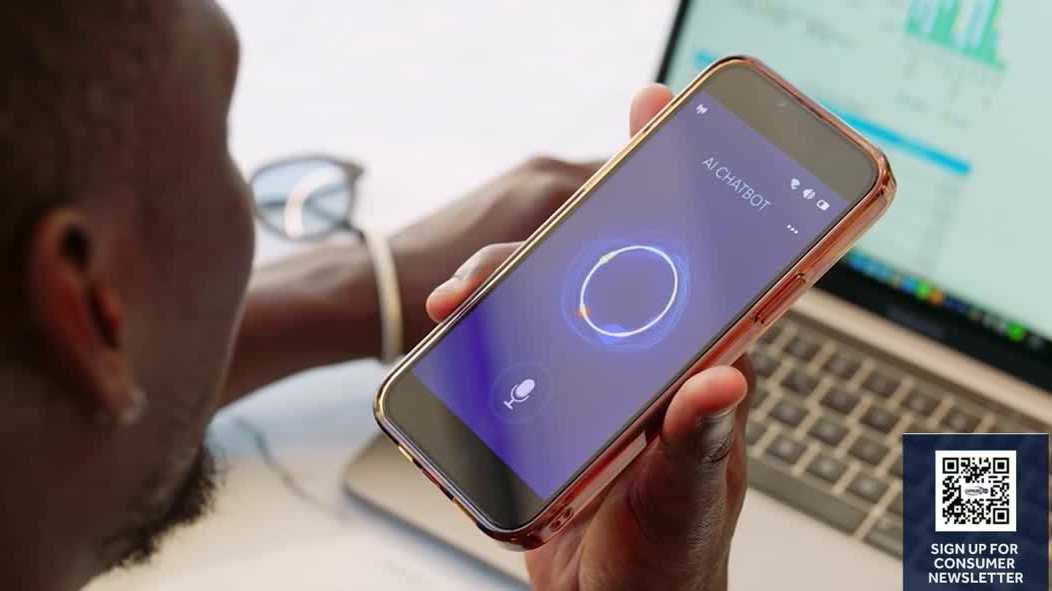

As time goes on, more people are turning to ChatGPT and other artificial intelligence tools for health questions.
One survey found 17% of adults ask AI chatbots health questions at least once a month.
The answers are fast, and they often sound reassuring and trustworthy.
“There are a lot of reasons you might go to a chatbot for answers,” said Kevin Loria, a health reporter for Consumer Reports. “They can be quite good at generating a lot of information, and they’re very comprehensive and easy to understand.”
However, as Consumer Reports explains, they are not always accurate or reliable. The chatbots can make up facts or miss important details while confidently presenting their answers as correct information.
“It’s really hard to know when there are inaccuracies, and these systems do get things wrong. We know that to be true. Fabrications can be hard to detect,” Loria said.
A recent study found people tend to over-trust AI-generated medical advice. Many respondents couldn’t tell the difference between an AI-generated answer and one from a real doctor.
There are privacy concerns, too.
“AI systems are not bound by the same privacy laws as your doctor’s offices,” Loria said.
Any information you tell a chatbot could be used, sold, or even stolen in a data breach.
Consumer Reports advises people to use AI as a starting point for information, not for diagnosis or treatment. Keep your sensitive personal health information private, and verify what you learn using trusted sources such as MedlinePlus, the Centers for Disease Control and Prevention, or a recognized medical organization.
As always, it is important to consult your doctor about your health.
“If you do have questions that are going to affect how you act on your own health, talk to your doctor,” Loria said.
Chatbots should never be used in a medical emergency. For immediate help, call 911.
