

Friday, October 2nd, 2026 – 1:00 am
SHARE:
Ninety-nine percent unaided brand awareness sounds like a marketer’s dream.
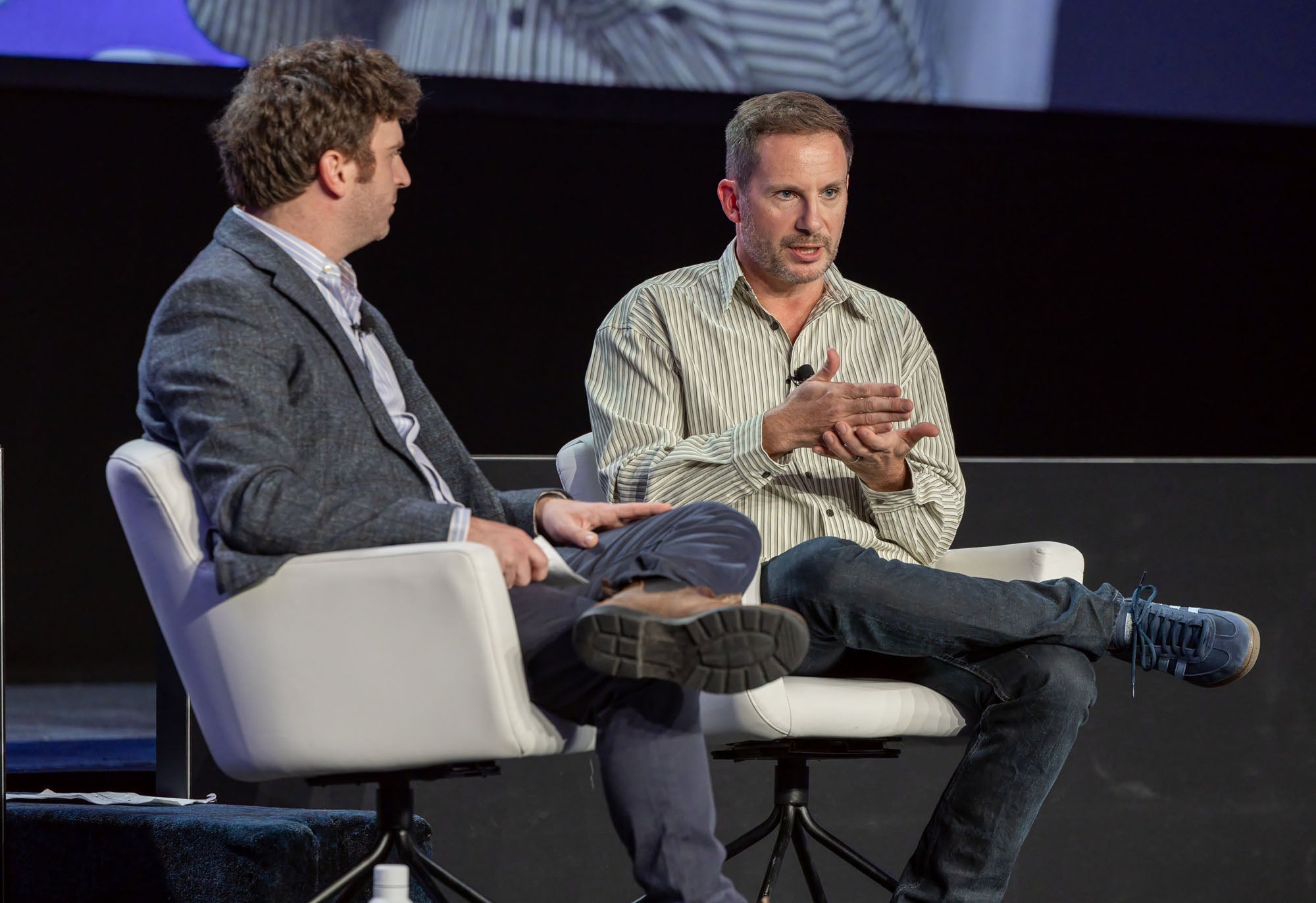
“What a gift,” said Josh Reed, Zoom’s VP of brand and content, speaking at AdExchanger’s Programmatic IO event in New York City earlier this week – before quickly qualifying the statement.
Because it’s a gift, and it also isn’t.
Everyone knows what Zoom is. The problem is they mostly only know one thing about it, which is that it’s the video call app they started using during the pandemic.
Reed calls this the “iceberg” problem – being “well known for that one important thing,” while everything beneath the surface stays invisible.
In Zoom’s case, it’s also got a contact center product, an events platform – which, fun fact, serves as the backstage operational engine for the MLB Draft – a VoIP phone system and a growing suite of AI productivity tools that most users have never heard of.
More than meetings
Landing that message – and surfacing the submerged part of the iceberg, so to speak – is harder than in sounds. And, until recently, Zoom’s marketing organization wasn’t structured to communicate a brand story beyond the core product.
BeforeZoom’s CMO, Kim Storin, arrived roughly 18 months ago, paid media was scattered across multiple business units, each with its own measurement, its own attribution and its own siloed spend.
Since then, Zoom has consolidated its various marketing functions under a center of excellence model and, for the first time, started investing in channels like national linear TV, creator partnerships, affiliate and experiential.
“We’re not just trying totellpeople about the things we make,” Reed said. “We need to do more than that.”
On the creator front, for example, Zoom has been “stair-stepping” its way in, Reed said. It launched its first creator program in Q4 2024, leaning into the wave of office-humor content that had taken over LinkedIn feeds.
And earlier this year, Zoom rolled out theSolopreneur 50, a recognition program for small business owners that drew thousands of applications for the 50 slots. Participants test products, give feedback and evangelize on Zoom’s behalf.
A commission-based model, where creators earn a cut of the sales they drive rather than a flat fee for creating content, is next on the to-do list, Reed said, although Zoom isn’t there yet. He called it “the opportunity yet to come.”
Into the dark funnel
Measurement is also a work in progress.
Zoom still relies primarily on last-touch attribution, but the plan is to move over to a multi-touch approach with Snowflake as its data spine, said Reed, adding that even large enterprises can find themselves further behind on the basics than one might expect.
For instance, the team only recently moved from deck-based campaign reports to live dashboards.
“We’re in the middle of our rebuilding year right now,” he said.
And, honestly, everyone should be hitting reset. It’s wild out there.
Just like other marketers and publishers, Zoom is experiencing the rapid shift from traditional search to referrals from LLMs. In B2B, Reed said, buyers have always done a significant amount of research before making a purchase. What’s changing is that the journey now often starts in an LLM rather than a search engine.
Zoom spent years building a content operation anchored to its own domain, but now it has to flip that model and meet people where they already are. And if they’re doing their research in the “dark funnel” using AI search, then that’s where Zoom needs to be.
“The dark funnel” sounds like it could be the title of a fantasy novel, but it actually refers to the research that buyers do outside of any trackable channel, from word-of-mouth recommendations and Reddit threads to creator podcast mentions and, increasingly, the interactions with AI chatbots that happen long before anyone ever clicks on an ad or visits a company’s website.
So, what’s a marketer to do?
“We want to embrace the dark funnel,” Reed said, “and [every]where people are searching and shopping.”
