

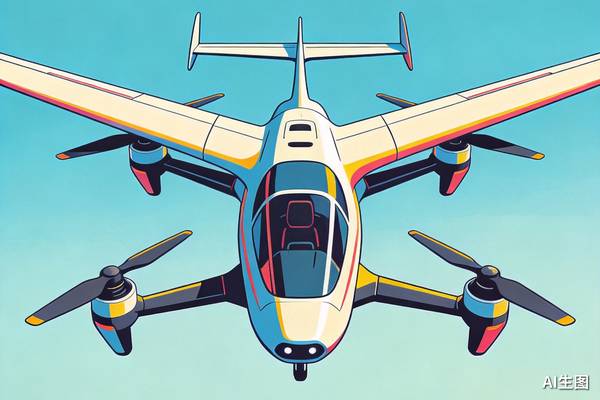
Set a new financing record for hybrid eVTOL.
Investment Circle has learned that Dream Chaser Aerospace Technology has officially closed a Series A+ financing of hundreds of millions of yuan, led by Hangzhou Industrial Group and its subsidiary Hangzhou Low-altitude Economy Co., Ltd., with follow-on investments from Xiaoshan Venture Capital Fund, Caitong Capital, Buhu Venture Capital, Qianhai Ark, and SDIC Taikang Trust; in addition, long-term shareholder Aviation Investment Fund has participated in follow-on investment for the fourth consecutive round, and Xiaochi Capital has made an over-subscribed follow-on investment for the third consecutive round.
This is not only the largest single financing since the founding of Dream Chaser Aerospace Technology, but also sets a new single-round financing record in China’s hybrid eVTOL sector. To date, the total accumulated financing amount of Dream Chaser Aerospace Technology has reached nearly 800 million yuan.
Headquartered in Hangzhou, Dream Chaser Aerospace Technology fills the gap in the field of hybrid tilt-rotor eVTOL. Its leader is a post-90s generation, Cai Wenkuan, who holds bachelor’s and master’s degrees from Tsinghua University and has nearly 20 years of front-line R&D and systems engineering experience in the aviation industry. Under his leadership, Dream Chaser Aerospace Technology has risen rapidly as a dark horse in the low-altitude track in just four years.
This scenario is a vivid portrayal of the explosive growth of the low-altitude industry. As investors firmly believe, “This is the best opportunity in history for China’s aviation industry to achieve curve overtaking.”
Zhejiang State-owned Capital Makes Collective Moves, A Clear Industry Vane Emerges
The line-up of this round of financing is worthy of in-depth analysis.
After sorting out the details, local state-owned capital, industrial funds, and leading market-oriented financial institutions have gathered on the same stage rarely. The investment logics of these institutions with different backgrounds have their own priorities, but they converge on the target of Dream Chaser Aerospace Technology. This scenario is also a typical feature of financing for leading hard technology projects in China at present.
Looking at the lead investor first, Hangzhou Industrial Group is the core local state-owned industrial investment platform in Hangzhou, which has been listed in the Top 500 Chinese Enterprises for 8 consecutive years since 2018. Its wholly-owned subsidiary Hangzhou Low-altitude Economy Co., Ltd. is responsible for managing the special industrial fund for the low-altitude economy, focusing investment on four core tracks: low-altitude manufacturing, low-altitude logistics, low-altitude vision and low-altitude data, undertaking the strategic task of building a low-altitude economic industrial cluster in Hangzhou.
The low-altitude economy is regarded as another commanding height of the industry following new energy vehicles. Leading the investment in Dream Chaser Aerospace Technology this time is undoubtedly a first-mover move for Hangzhou Industrial Group to seize the regional competitive advantage in the low-altitude economy. The synchronous follow-up of local Zhejiang state-owned forces such as Xiaoshan Venture Capital Fund and Caitong Capital further reflects the strong willingness and execution of Hangzhou to build a low-altitude economic industrial cluster.
This is a mutually beneficial partnership. Earlier in June, the headquarters project of Dream Chaser Aerospace Technology settled in Xiaoshan Economic and Technological Development Zone, becoming Hangzhou’s first eVTOL complete aircraft headquarters project. As Cai Wenkuan, founder and CEO of Dream Chaser Aerospace Technology, stated at the signing ceremony: “Xiaoshan has a complete industrial ecosystem, rich application scenarios and efficient government services, which is the optimal choice for our headquarters to settle down.”
In addition, the profile of follow-on investment institutions is also worth analyzing. Specifically, as the pioneer of large-scale commercial fund of funds in China, Qianhai Ark has an investment perspective that leans more towards long-term industrial development; SDIC Taikang Trust is one of the first batch of trust companies in the industry to deploy equity investment in a market-oriented way, focusing on supporting national strategic emerging industries; Buhu Venture Capital is a well-known market-oriented investment institution, which pays more attention to product landing progress, commercialization potential and other indicators.
The continuous increase in positions by long-term shareholders has more reference value in hard technology investment. Aviation Investment Fund, which has participated in investment for four consecutive rounds, as an industrial capital within the civil aviation system, has a deeper understanding of the underlying rules of the aviation industry, and its multiple rounds of capital injection itself has a certain industry vane significance.
There is also Xiaochi Capital, which has made over-subscribed follow-on investment for the third consecutive round. The heavy positions of these long-term shareholders are particularly valuable in the current environment where primary market investment is becoming increasingly prudent.
Looking back on the financing history of Dream Chaser Aerospace Technology, we can see a clear upward trajectory.
As early as the end of 2022, Dream Chaser Aerospace Technology completed a seed round financing of tens of millions of yuan, led by Tengye Venture Capital, with participation from Shuimu Tsinghua Alumni Seed Fund. After that, Dream Chaser Aerospace Technology launched a dense financing rhythm — in February 2025, it successively completed Pre-A and Pre-A+ round financing at the 100 million yuan level, led by Yo Capital, with participation from Chaoxi Capital, Xiaochi Capital, Weixi Venture Capital and other institutions.
Talking about this investment, Bai Zongyi, founding partner of Yo Capital, said at that time, “The founding team has outstanding technical advantages, senior aviation industry experience, verified commercialization models, clear strategic planning and efficient execution. We are optimistic that Dream Chaser Aerospace Technology will quickly grow into a leader in the trillion-yuan low-altitude economy market.”
Later in August of the same year, Dream Chaser Aerospace Technology completed the Pre-A++ round and strategic round financing with a total amount of more than 100 million yuan. Among them, the Pre-A++ round was led by Chaoxi Capital, with participation from Junshan Capital, Mogan Mountain Fund, Haibang Fenghua and other institutions, and long-term shareholder Xiaochi Capital continued to follow on investment; the strategic round financing was exclusively invested by Aviation Investment Fund.
In the view of Chaoxi Capital, eVTOL will not only become the core carrier of future urban air traffic, but also play a greater value in the broader aviation industry. “The technology of Dream Chaser Aerospace Technology enables the aircraft to have excellent characteristics such as no runway requirement, high speed, long endurance and high safety, which can cover many application scenarios for cargo and passenger transportation.”
Four months later, Dream Chaser Aerospace Technology obtained nearly 200 million yuan of Series A financing, led by Aviation Investment Fund, with participation from Deqing Industrial Investment, and long-term shareholders Junshan Capital and Haibang Fenghua made over-subscribed follow-on investment. The gradual increase of financing scale not only reflects the growth of Dream Chaser Aerospace Technology’s valuation, but also the continuous recognition of the capital market on its ability to achieve phased goals.
Looking back at this round of financing, it is not difficult to see a strong signal: the low-altitude economy track is showing obvious Matthew effect, and capital is beginning to concentrate on leading targets.
Founded by a Post-90s Tsinghua Graduate, A Rising Sample of the Low-altitude Track
Cai Wenkuan, born in 1990, planted a seed of aviation dream in his youth. At the age of 16, he was admitted to the School of Aerospace Engineering, Tsinghua University. During that period, the scientific research team he joined participated in the design of the large aircraft C919, and he went to work at the main aircraft manufacturer at the age of 20, accumulating solid front-line engineering practice capabilities.
After that, Cai Wenkuan was responsible for a number of key aviation equipment model tasks, worked in the public sector for many years, successively in charge of model management in the scientific research and procurement departments, and engaged in planning work in the field of aviation equipment in the comprehensive planning department. This compound experience spanning “front-line technology – equipment management – strategic planning” gives him a deep understanding of the full life cycle management of aviation products from R&D to mass production, and also lays a solid foundation for his future entrepreneurship.
Until 2022, Cai Wenkuan made an unexpected decision — to devote himself to entrepreneurship and officially founded Dream Chaser Aerospace Technology, focusing on hybrid tilt-rotor eVTOL, filling the gap in this domestic niche field.
The founding team of Dream Chaser Aerospace Technology also left a deep impression on the public. They came from the high-speed vertical take-off and landing aircraft research group of Tsinghua University, and have obtained nearly 100 million yuan of national scientific research funds to carry out key technology research and principle prototype verification, with R&D experience in various key models such as C919, AG600, Airbus A220, Y-8 and Y-9.
This is a compound team of “aviation + automobile”, and the logic behind it is self-evident: the aviation background ensures a deep understanding of airworthiness standards, safety redundancy and system reliability, while the automobile background brings engineering thinking for mass production manufacturing, supply chain management and cost control.
Investment is about investing in people. In the field of eVTOL where aviation technology and new energy technology are deeply integrated, this compound talent structure itself is a scarce resource.
In the choice of technical route, Dream Chaser Aerospace Technology has its unique strategic judgment. Cai Wenkuan once revealed that as early as 2017, the team had identified the hybrid tilt-rotor direction, and took the lead in launching design research under the support of national projects and the technical empowerment of Tsinghua University. Since its founding, the team has industry-leading R&D technology and engineering capabilities, occupies a leading position in the same field in China, and has reached the international advanced level, forming a hard-to-replicate technical barrier.
As is known to all, pure electric eVTOL is constrained by battery energy density, which leads to a relatively obvious ceiling in terms of endurance and load capacity, making many scenarios unsuitable for entry in the early stage of commercialization. Hybrid power can achieve higher speed, longer range, faster energy replenishment, and less dependence on ground energy replenishment infrastructure.
In addition, Dream Chaser Aerospace Technology’s long-term, high-investment and multi-version iteration in technology foresight and continuous layout is rare in the eVTOL track, which also provides a higher safety margin for its long-term competition.
Different from showcasing concepts and chasing trends, Dream Chaser Aerospace Technology has chosen a more pragmatic path: cargo transportation first, then passenger transportation. From the perspective of business logic, cargo scenarios can complete test flights, certification and commercial verification earlier, so as to accumulate massive flight data, polish the whole system, and then feed back mature technologies to passenger aircraft models.
Relying on the unified hybrid tilt-rotor technology platform, Dream Chaser Aerospace Technology has gradually developed multiple products. Specifically, the first product DF600 “Jinghong” is a ton-class hybrid tilt-rotor unmanned eVTOL, with a full-load range of 1000 kilometers, a maximum level flight speed of 320 km/h, and a maximum endurance of 10 hours. Based on high-barrier markets, it continues to expand application scenarios such as logistics transportation and emergency rescue, and carries out multiple rounds of scenario tests in an orderly manner.
The DF3000 “Youlong” is the world’s first 3-ton high-safety-level hybrid tilt-rotor eVTOL for the passenger market. This model has a maximum take-off weight of 3175 kg, a maximum effective payload of 600 kg, a maximum design range of 1000 km, and an internal space of 7-8 cubic meters. It can not only be used for cross-city high-end commuting, but also undertake medical rescue, emergency search and rescue, and official inspection, effectively getting rid of the dependence of low-altitude travel on dense charging infrastructure.
In April this year, DF3000 ushered in a milestone moment — the engineering prototype, equipped with a 300-kilowatt-class turbo-electric range extender, completed its first flight in hybrid power mode. This is not only an engineering verification of the large hybrid tilt-rotor configuration, but also marks that this technology has moved from concept to practical implementation.
It needs to be clarified that the threshold of the hybrid tilt-rotor route is also very high, which is not a simple accumulation of technology. What is really competed for is the full set of capabilities of a complete engineering system, supply chain management, test verification, and airworthiness supporting facilities. This system barrier is exactly the confidence that Dream Chaser Aerospace Technology can hardly be caught up with in the short term.
As Cai Wenkuan pointed out, for eVTOL to move from R&D to commercialization, airworthiness certification is only the “basic threshold” to enter the market. The comprehensive “product strength” composed of safety, economy and user experience is the key variable that determines the success or failure in the market. He emphasized, “The products of Dream Chaser Aerospace Technology need to achieve a ‘three-level jump’ in safety, economy and experience. Only when the products are safer, more economical and better in user experience can there be a leap in market scale.”
China’s Low-altitude Economy is Booming, Ushering in the Delivery Era
The real watershed is coming.
Around the world, the low-altitude economy is moving from science fiction imagination to industrial reality. According to Roland Berger’s forecast, by 2030, the number of manned eVTOL put into use globally is expected to reach 5000; by 2050, this number will grow to 160,000. Morgan Stanley’s forecast also shows that by 2030, the global urban air traffic market size will reach 55 billion US dollars, and the market size will reach 9 trillion US dollars in 2050.
Behind this magnitude of market expectation is the fundamental judgment on the paradigm change of urban traffic — when ground traffic is increasingly saturated, seeking efficiency from three-dimensional space will become an inevitable choice. More importantly, the low-altitude economy’s integration and driving effect on strategic industrial chains such as aviation manufacturing, new energy, artificial intelligence, communication navigation and new materials makes it go beyond the scope of a single industry and become a new measure of a country’s comprehensive industrial strength.
Back to the domestic perspective, the strategic positioning of the low-altitude economy has also completed a rapid leap in just a few years. First, it was written into the *National Comprehensive Three-dimensional Transportation Network Planning Outline* in 2021; the 2023 Central Economic Work Conference listed it as a strategic emerging industry; then the 2026 Government Work Report clearly defined the low-altitude economy as a national emerging pillar industry and incorporated it into the 15th Five-Year Plan. All these reflect the deepening of the decision-making level’s cognition of the strategic value of the low-altitude economy.
Driven by both policy dividends and market expectations, the logic of industry competition has also undergone a fundamental change: this is no longer a concept competition of early PPT presentation and prototype test flight, but has shifted to a tough competition of airworthiness certification, mass production delivery, scenario implementation and business closed loop.
The inflection point also means the arrival of the industry reshuffle period.
At present, Dream Chaser Aerospace Technology has reached the key node of commercialization realization. After DF600 completed the whole process of tilt transition test flight in 2024, its Type Certificate (TC) application was accepted by the Civil Aviation Administration of China in September 2025 — this is the first domestic similar product whose TC application is accepted, establishing its leading technical position in the niche field.
Airworthiness certification is not a process that can be achieved overnight. It requires enterprises to establish a
