

Data Analytics, Game Development, Grassroots, Women’s Sport3 min read
Women’s Sports Foundation Releases Report on Commercial Growth and Structural Inequities
Written byMOS Editorial Team
Published on6 October 2026
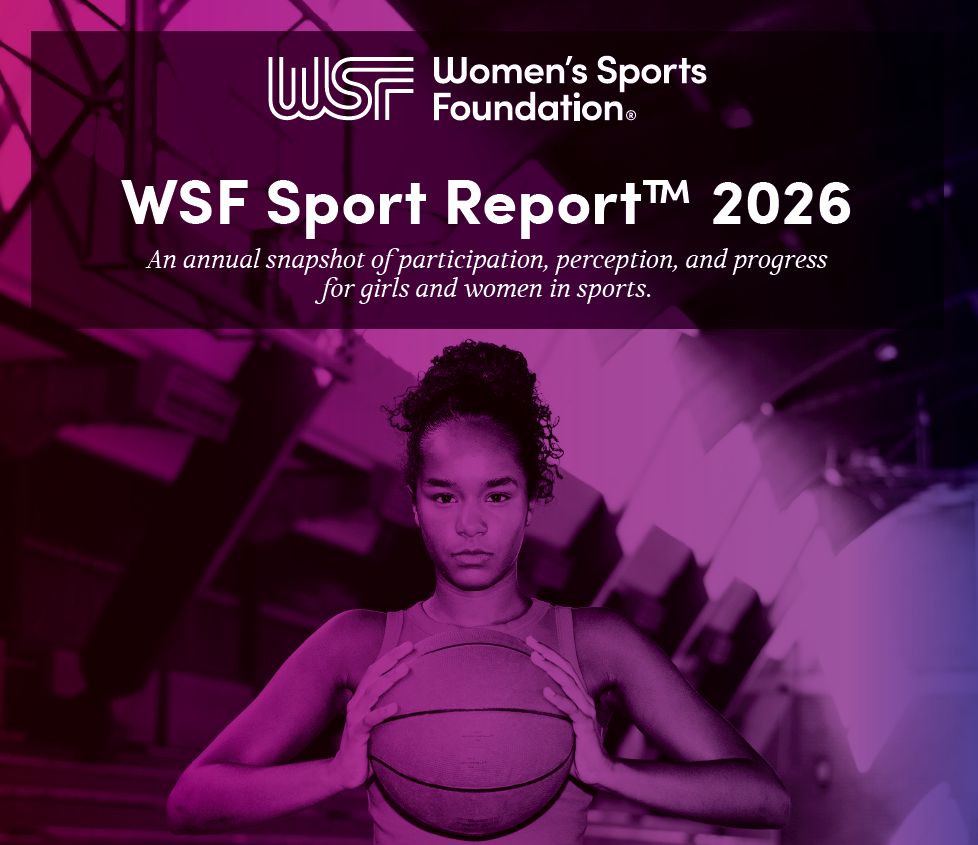
The Women’s Sports Foundation has officially published its landmark 2026 report, revealing a contradiction within the modern sports economy where commercial momentum at the professional level starkly contrasts with persistent grassroots barriers.
Based on extensive survey data covering thousands of children and senior industry leaders, the analysis highlights that while professional women’s competitions continue to shatter audience records and financial valuations, foundational participation pipelines are severely undermined by structural inequities, escalating cost pressures, and inadequate institutional protections.
Industry stakeholders note that while broadcast engagement and corporate investments are surging across elite tiers, foundational access remains restricted by systemic financial hurdles that threaten the long-term commercial sustainability of the broader sporting ecosystem.
The research underscores a profound participation divide, revealing that forty-five per cent of girls currently play organised sports compared to fifty-two per cent of boys, a structural gap beginning as early as age eight.
Addressing the overwhelming demand, Women’s Sports Foundation CEO, Danette Leighton, emphasised the urgent need for structural alignment.
“One finding in particular gives me hope:54% of girls ages 8–18 who have never played organized sports say they want to.”
“Girls are telling us clearly that the desire to play is there.
“Our responsibility is to make sure opportunity meets that demand,” Leighton said..
Despite matching interest levels among youth, lower-income households and minority demographics face disproportionate exclusion, driven by median annual sports costs that impose a twenty-five per cent financial premium on female athletes relative to their male counterparts. Consequently, lower-income girls rely heavily on under-resourced school programs due to prohibitive private club expenses.
Furthermore, adolescent dropout rates climb as young athletes encounter discouraging environments, declining self-belief, and shrinking professional aspirations, with national high school participation figures showing girls retain significantly fewer athletic opportunities than boys.
At the elite and collegiate tiers, structural vulnerabilities threaten future progress, with industry leaders identifying weakened regulatory enforcement and political interference as critical operational risks.
Specifically, seventy-nine per cent of girls and over half of surveyed parents remain entirely unaware of Title IX protections, leaving vital legal safeguards unrecognised precisely when institutional oversight faces mounting challenges.
While professional leagues experience near-unanimous commercial improvements and billions in viewing minutes, experts warn that navigating persistent pay disparities, cultural bias, and leadership representation gaps remains paramount.
Don’t miss out on the latest in sports business – Subscribe today to thefree Ministry of Sport newsletter and stay ahead of the game. For even more exclusive insights, event tickets, professional development and networking events, become a MoS Member today!.
Latest News
Similar Stories

NFL and NFPA to Negotiate on Game Agreements for International Expansion Beyond Ten Games
The National Football League (NFL) and its team owners face a hurdle in…
Theren Bullock on FIBA Foundation’s Digital Push to Honor Women’s Basketball Legends
The FIBA Foundation has revealed a digital and cultural strategy designed to commercialise…
Toyota Good for Footy Raffle Sets Record-Breaking Fundraising Benchmark for Grassroots AFL Clubs
The 2026 Toyota Good for Footy Raffle has achieved a record-breaking financial milestone,…
It’s free to join the team!
Join the most engaged community in the Sports Business World.
Get all the latest news, insights, data, education and event updates.
