

BenchmarksNifty23,755.90-141.8
Precious Metal
Gold (MCX) (Rs/10g.)152,453.00-314.0
Enter search text:
The Economic Times daily newspaper is available online now.
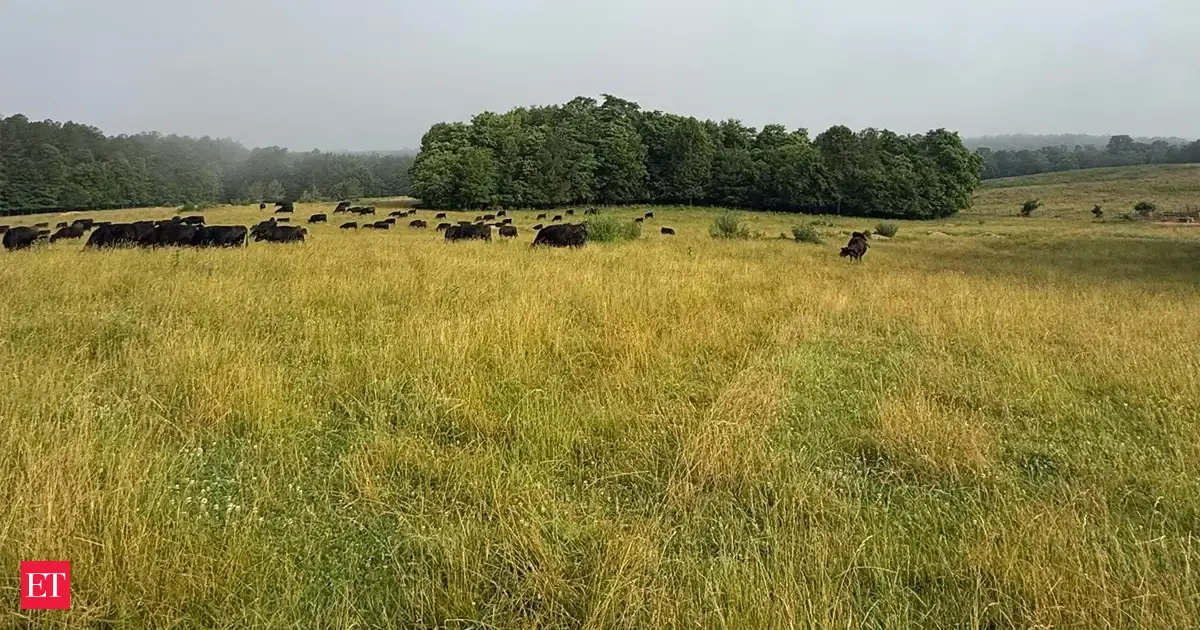
What is Grass-Cast? USDA’s experimental tool uses more than 30 years of historical data to forecast Northern Great Plains grassland productivity, giving ranchers new insight into future forage conditions, drought risks and how much vegetation may be available for livestock grazing
With the introduction of the Grass-Cast forecast, ranchers gain a powerful new aid in assessing the availability of grass for their herds. By analyzing historical and current weather data, the system predicts vegetation growth, thereby enabling informed grazing decisions. While the forecast offers valuable insights into forage conditions, the importance of local knowledge in crafting management plans cannot be overstated.

Every spring, ranchers across the Northern Great Plains face a familiar question: How much grass will be available for livestock during the coming summer? Weather, rainfall and growing conditions can quickly change the answer, making grazing decisions difficult. USDA’s experimental Grass-Cast forecast was developed to reduce some of that uncertainty. Grass-Cast combines more than 30 years of historical weather and vegetation-growth data with seasonal precipitation forecasts. It predicts whether rangelands in individual counties are likely to produce above-normal, near-normal or below-normal amounts of vegetation compared with their historical averages. The tool debuted in May 2018 and is updated every two weeks as new weather information becomes available.
Grass-Cast was created through a collaboration involving scientists from the USDA’s Agricultural Research Service (ARS), the National Drought Mitigation Center, Colorado State University and the University of Arizona. The project was designed to give ranchers another source of information when planning for the upcoming grazing season. The forecast compares expected grassland productivity with more than three decades of historical conditions. Seasonal precipitation forecasts are combined with information about weather and vegetation growth to estimate how productive rangelands could be during the growing season. The forecast is not a one-time prediction. Grass-Cast is updated every two weeks, allowing it to incorporate newly observed weather and changing conditions. According to ARS economist Dannele Peck, director of the USDA Northern Plains Climate Hub, forecast accuracy improves as the growing season progresses.
WHY THE FORECAST MATTERS TO RANCHERS
For ranchers, knowing how much forage may be available can influence important grazing decisions. Grass-Cast can provide an early indication of whether a county could experience above-, near- or below-normal vegetation production. The tool can also offer a broader regional perspective. If drought threatens one area, ranchers and land managers can use the forecast to identify areas where grazing resources may be more plentiful. However, USDA researchers emphasize that Grass-Cast should not replace local knowledge. Ranchers still need to consider soil types, topography, plant communities and other conditions on their own land. There is another important limitation: Grass-Cast does not distinguish between desirable forage species and weeds. Producers therefore need to observe which plants are responding to rainfall and adjust the forecast accordingly.
A FORECAST, NOT A STANDALONE DECISION-MAKER
The Grass-Cast project was funded by ARS, USDA’s Natural Resources Conservation Service and the National Drought Mitigation Center. The first forecast was released in May 2018, marking the beginning of an experimental approach to estimating grassland productivity. Peck served as the project contact and provided insight into how the forecast’s accuracy changes during the growing season. Grass-Cast is ultimately designed to complement, rather than replace, what ranchers already know. Its value lies in combining long-term data with current weather information to provide an earlier look at potential forage conditions.
For producers facing an uncertain growing season, that additional perspective can make it easier to prepare for changing conditions, especially when drought threatens available grazing resources. But USDA stresses that Grass-Cast should never be the sole basis for stocking rates, turnout dates or other management decisions.
Add
as a Reliable and Trusted Newsforage conditionslivestock grazingdrought risksvegetation productivityUSDA Agricultural Research Service
Read More News on
USDANorthern Great Plainsranchersforage conditionslivestock grazingdrought risksvegetation productivityUSDA Agricultural Research Service
Stories you might be interested in
