

As the creator economy continues to evolve, marketers are left wondering if consumers are truly fed up with influencer marketing.

This audio is auto-generated. Please let us know if you have feedback.
In July, a sign hanging in an artisan shop on the Massachusetts island of Nantucket was the subject of a fierce internet debate that found itself all the way toThe New York Times. The message? No influencers.
While John Sylvia, the owner of Four Winds Craft Guild told The New York Times the sign was supposed to be a comedic remark on the rise of influencer culture, the comments under theshop’s Instagram postsuggested not everyone saw it that way. Was the sign a funny decoration? Was it a signal that small businesses are finally standing up to what some see as theincreasingly entitled influencer personality? Or was it discrimination?
“The influencers being mad in the comments is the funniest shit ever,” wrote one user to the tune of over 800 likes.
“All the ‘influencers’ getting offended and commenting here is rich. Touch some grass, take a breath and go do something positive for your community. SMH,” wrote another, also earning more than 800 likes for the input.
“I visited Nantucket for the first time with my family this summer… I thought to myself why would they have that sign on such a beautiful island where I felt magic around every corner. Made me feel bad for being me for a minute but I realized that anyone that would make anyone feel unwelcome is not where I should be. Maybe a no photos or video sign would be a good replacement,” wroteStephanie Hanna, a lifestyle influencer with 440,000 Instagram followers. Hanna’s post received only 335 likes.
Ultimately, the Four Winds Craft Guild found itself, for a brief moment, at the center of the evolving conversation around influencer marketing. The emerging backlash has a term:influencer fatigue.
The term hasbeen in the mediaa lot. People complain that influencers are everywhere, posting the highlights of their all-inclusive, paid-for brand trips on social media for the world to see. And the people are tired of it.
But are they?
Despite talks of fatigue and rising levels of distrust, 72% of adolescents and young adultsfollow influencers on social media. Not only are consumers still following creators, they’re listening to them, with58% of consumers having purchaseda product because of an influencer endorsement.
Marketers continue to find value in the channel. The creator economy is expected to reach $43.9 billion in U.S. ad spending in 2026, per data from theAssociation of National Advertisers.Nearly 80% of brandspartner with anywhere between one and 10 influencersat any given time and the channel has become a fixture of media plans. Creators have been key as marketersincreasingly undertake social-first strategies, with brands such as Crocs and American Eagle investing heavily in the space in an effort to reach young consumers.
This doesn’t mean tension isn’t there. Overhalf of creators with at least 500,000 followersreport a disconnect between brand demands and audience expectations. This tension could be in part what’s fueling influencer fatigue. How many brand posts is too many?
What influencer fatigue looks like
Over 80% of marketers plan to increase their influencer budgets over the next six to 12 months, according todata from Sprout Social. Engaging with influencers has become almost a default for brands as a way to spread awareness in what can be a cost-effective way.
The cost/benefit analysis has started to change. Working with influencers has gotten more expensive, from elaborate PR packages, expensive brand trips and the overall increase in fees charged. The platforms chasing a piece of the influencer pie have only made things more complicated. Meta has rolled out a whole suite ofcreator-focused toolsmeant to help brands match and manage their influencer partnerships.
“So, at a very early point, [influencer marketing] was about great content,” said Hew Loyd, CMO of Whisker, the maker of Litter-Robot. “The platforms and the algorithms themselves have shifted…it has become a business model. And anytime it turns into a business model, it attracts agencies who manage these individuals and broker these deals. And it also becomes an increasingly more expensive place for brands to play.”
Influencers are an important component of Whisker’s marketing strategy. The brand manages the relationships in-house, a rarity in the space.Only 16% of marketers handle such relationships in-house, compared to the 52% who take a mixed approach and the 32% who primarily use external partners, per the ANA.
Despite the rising costs, Loyd says the influencer program makes sense.
“If you think about it from our perspective, giving away a Litter-Robot to an influencer, while that may feel like a large, exorbitant gift, the actual dollars involved there, against what we would pay on another platform, turn out to be not that much in the grand scheme of things when we talk about it at cost,” said Loyd.
However, influencer fatigue is very real who underscores the importance of making a distinction between seeing influencers in person and seeing them in social media feeds to fully understand consumers’ frustration
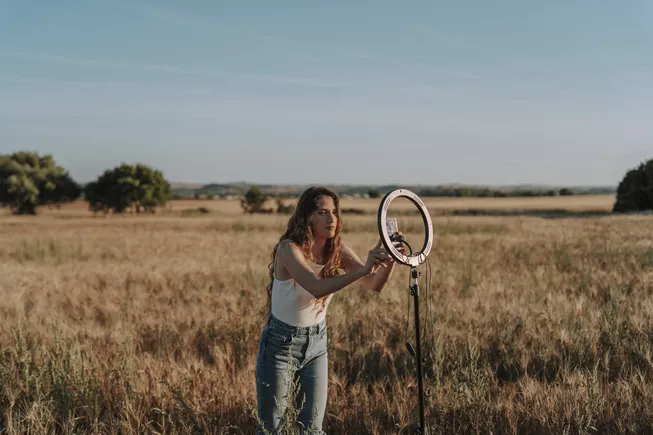
“We were talking about this as a team a while back. What became really obvious is that people had very sharp, very strong feelings about influencers in person,” said Loyd, reflecting on a trip to Tulum, Mexico, a popular location with influencers. “Essentially, when an influencer shows up with a mic and a ring light and talking to their phone, they’re making themselves the main character of your experience, and so it feels rude and obnoxious.”
In-feed is a bit more complicated, per Loyd. The industry has been progressively moving toward interest-based marketing, according to Loyd. This means brands are less likely to partner with influencers just for their follower count, and may instead give more weight to the niche they occupy. The data backs this up:Follower count ranks as the lowest considerationtaken into account by brands when choosing an influencer partner, with suitability ranking at the top. This could actually help alleviate some of the fatigue consumers are feeling.
“If we play that out longer term, people won’t be incentivized by growing large followings,” said Loyd. “They’ll be incentivized by building better content that hits an algorithmic moment of virality.”
Agencies and fatigue
The explosion of influencers has led to similar growth in the number of agencies out there who manage them. These agencies can match brands with creators, facilitate payment and help with the general day-to-day management. But, there is also that extra layer of complication. Onethird of marketerswho in-housed influencer management previously worked with an agency, with cost effectiveness being ranked in the top three reasons for the change.
Social media marketing agency Viral Nation reports influencer fatigue is real, but only when influencer marketing is done poorly. With the right data, and the right partnerships, brands can potentially avoid some of the consumer annoyance co-founder and co-CEO at Viral Nation
For the most part, influencer fatigue isn’t driven by mega creators or those with large, established followings, but from the middle-of-the road creators in terms of follower-count, per Micheli. In order for the economics of the profession or side hustle to work, these creators need to churn out large amounts of branded content, sometimes doing posts for a couple hundred bucks. This can create a lot of noise for viewers.
“Creators, especially at the higher tier, are smart enough to know to not over saturate…a typical micro-creator has to post everything, which means they have anywhere between 30 to 60 pieces on their feed a month, so they obviously have more inventory themselves to post branded content, but their volume is bigger because their check sizes are smaller,” said Micheli.
For the public, influencer fatigue mostly stems from behavior — think ring lights in the background as people are trying to enjoy a fancy dinner. But, from a brand perspective, the influencer channel remains incredibly difficult to measure co-founder and co-CEO of Viral Nation
“In order to make assumptions of fatigue, you have to have a baseline of how it was before…it’s not something that they’ve truly measured correctly to be able to say it’s in decline,” said Gagliese.
The rise of AI influencers is making the whole conversation around influencer fatigue more complicated, per Gagliese. These synthetic online personalities could heighten consumer mistrust.
“My biggest fear in social media… is the consumer starts to value synthetic content the same way we value produced content,” said Gagliese. “If that happens, that’s the soul of the creator.”
The influencer’s perspective
Maria Fernanda Anzures, who goes byMafe Anzureson TikTok, first started receiving PR packages in 2020.
“Influencers were barely even a thing. I remember my first PR package was like from K18, and they were just starting out,” Anzures said.
Permission granted by Viral Nation
Anzures, who now has over 600,000 followers on TikTok, started creating content to promote her clothing brand, which she had for approximately four years. In the years following, she’s carved out a niche in the lifestyle influencer space, posting about her life such as trips and events she attends. She also started a series for aspiring influencers known as “Influencer Bootcamp.” It was that series that really made her content take off.
“When I first posted the first video of ‘Influencer Bootcamp,’ I got 50,000 followers overnight, and then the next few videos, it was another 20,000 followers, 30,000 followers,” said Anzures.
It was at this point that she really started getting noticed by brands and agencies, ultimately signing with Viral Nation. It was with Viral Nation that she went on her first brand trip, which was for the surfer lifestyle brand Roxy.
As Anzures’ content improved, her relationship with brands has evolved. In the early days of her influencer career, she would accept $30 to do a video, just happy people wanted to pay her for her content. Now, a brand deal with her can cost four or five figures.
Influencer fatigue is unique for Anzures. Being an influencer means being self-employed. Her life is the product and producing the amount of content she produces at the quality level she does can be taxing.
“Numbers can consume you, and platforms can consume you, and when all you do is record, edit, and work, you kind of forget about what’s actually important,” Anzures said.
Anzures tries to not let negativity get to her by staying “very far away” from her comment sections, she said. She often donates or gives away PR, which she often opens during unboxing videos. According to her, she posts because she likes it and recognizes the work that goes into it.
“I got to a point where I know that I deserve what I receive because of the amount of time that I really put into the content that I make,” said Anzures. “I can’t speak for all of the influencers, because everyone’s content is different, but I know the amount of time that I spend on my computer, I know the amount of time that I spend editing to receive what I receive, and I also know the amount of value I get back.”
If recentbig brand campaignsare any indication, creators like Anzures are going to continue to be an integral part of marketing strategy, especially as artificial intelligence continues tofavor user-generated content. However, as feeds become increasingly cluttered with branded content and the PR packages become more elaborate, marketers need to ask themselves, what is the tipping point? How much is too much?
Influencer fatigue is not a cut-and-dried issue. Brands, agencies, consumers and even the influencers themselves all have a different take. But, every part of the system has a breaking point. Cheeky signs in artisan craft stores could be a symptom of a larger problem. If that’s the case, the industry needs to ask itself: Is creator marketing heading toward a time when everyone starts saying “no influencers”?
Filed Under:Influencer Marketing
