
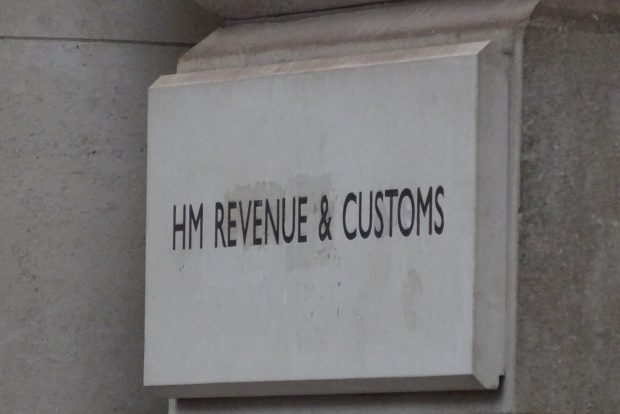
The UK’s HM Revenue & Customs (HMRC) has awarded Salesforce a £2.4bn (US$3.2bn) contract as it seeks to improve its service operations, replace fragmented legacy systems and expand AI-assisted taxpayer services.
The department has signed a deal with the UK arm of the US-headquartered enterprise software giant to replace numerous fragmented and outdated Customer Relationship Management (CRM) systems with a single platform.
“This new modern platform will make it quicker and easier for customers to get the help they need,” an HMRC spokesperson told Global Government Forum’s sister title Global Government Finance. “By bringing customer information together in one place, our staff will be able to resolve queries faster and more consistently, delivering a better service for millions of people.”
“Replacing multiple legacy systems with a single platform will also enable us to better understand and respond to our customers’ needs,” the spokesperson added.
The move comes after a challenging few years for the department’s customer service operations, with the House of Commons public accounts committee (PAC) describing HMRC’s customer service levels as reaching an “all-time low” in 2024. In January 2025 the same parliamentary committee described the department’s “already poor service to taxpayers” as having “become even worse”, accusing HMRC of having “sought to degrade its telephone service to drive taxpayers to digital channels”.
‘Real-time taxpayer insights’
HMRC has previously used Salesforce products and services, but the new deal represents a broader and more significant relationship.
HMRC currently manages customer interactions through systems with limited integration or standardisation, and its new enterprise CRM arrangement with Salesforce will consolidate systems and data sources into a single scalable platform.
As well as case management, customer experience, and AI, additional capabilities to be provided by Salesforce direct orion; anti-fraud; “non-compliance management”; and Secure Digital Exchange Communications (SDEC) – reference to a digital document and communications platform for interactions between HMRC and citizens
HMRC will use an AI agent platform named Agentforce to “automate routine administration, triage inbound queries and route complex cases to the right specialists”.
“Operating within tightly governed workflows, these AI capabilities increase operational capacity while ensuring human oversight from trained HMRC staff remains integral to every taxpayer decision,” Salesforce stated.
Salesforce said that, taken together, its technology will enable a “360-degree view of taxpayer interactions to enable faster, first-contact query resolution” and provide a “single, connected view of each customer’s interaction history across every customer contact channel”.
It said that HMRC’s “legacy systems and fragmented channels have made it challenging to deliver seamless and efficient services to taxpayers”, and that the new system will enable citizens and businesses to access “clearer information through their preferred channels and eliminate repetitive contacts”.
Salesforce’s contract runs to September 2036, with a possible extension to September 2041 according to the contract notice.
HMRC’s Capgemini appointment
Capgemini, in collaboration with NiCE and Route 101, has already been appointed to “consolidate HMRC’s legacy infrastructure and existing products into a unified, cloud native platform”.
The Contact Centre as a Service (CCaaS) platform provided by Capgemini and the enterprise CRM system from Salesforce have different roles but aspects of them are expected to work together over time. This integration will be developed and tested as the programmes move through implementation.
In an update to HMRC’s Transformation Roadmap, published this July, JP Marks, the department’s permanent secretary and chief executive, said: “Together, these will help us to join up customer contact across channels and give colleagues the tools they need to provide a faster, more consistent service.”
Phonelines fightback
HMRC has faced criticism over waiting times on its phonelines for years. The new CCaaS platform featured in a section titled ‘Tackling phone lines’ in the ‘Improving day-to-day performance and the overall customer experience’ chapter of the Transformation Roadmap – Update 2026.
“CCaaS will include embedded AI capability, which will be delivered incrementally,” it explained. “This will help HMRC better manage call queues, provide accurate wait times, and offer intelligent digital assistant support. This will allow HMRC to deliver a more responsive and personalised service, both over the phone and through digital channels.”
HMRC will “continue to use technology to support customers calling HMRC helplines, for example through the use of call summarisation, information messages to provide customers with the details they need, and voice biometrics where appropriate,” it added.
A longer version of this article was first published by Global Government Forum’s sister title Global Government Finance. Read it here.
About Ian Hall
Ian is Global Government Finance editor. He has formerly held roles including UK director of Euractiv (2011-2018), editor of Public Affairs News (2007-2011) and news editor of PR Week (2000-2007). He was shortlisted for ‘Editor of the Year’ at the British Society of Magazine Editors (BSME) Awards in 2010. He began his career in the Balkans at English-language weekly the Sofia Echo (Bulgaria: 1998-1999).
