

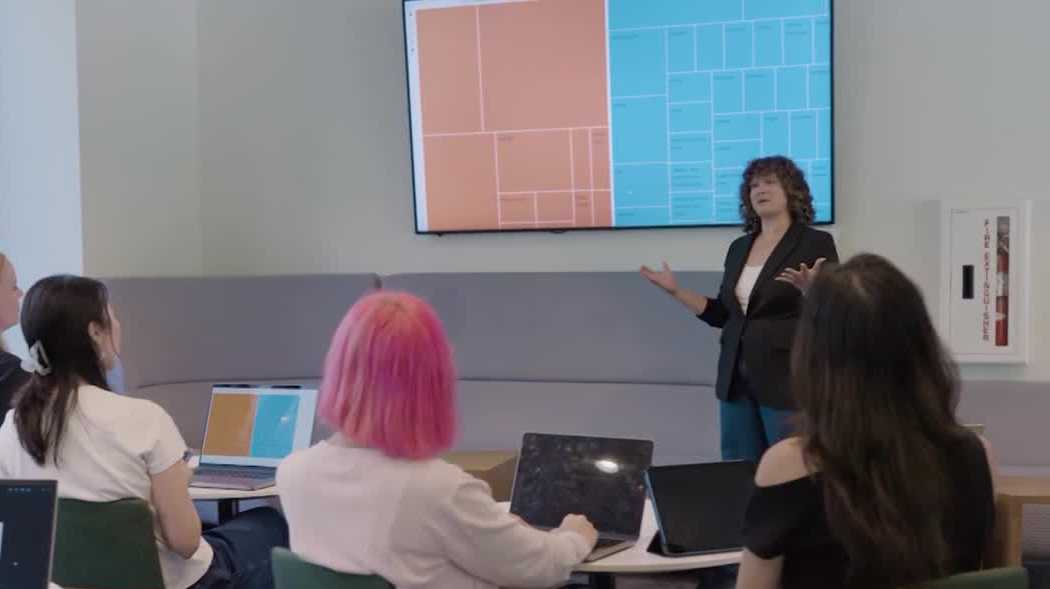

UCLA is now the first university in the United States to launch a digital humanities department, combining humanistic studies with the exploration of artificial intelligence and other emerging technologies.
Students will get a deep understanding of computational tools and technologies, from the perspective of fields including culture, society, languages and history. Through the lens of those academic disciplines, students will look at how the technology is developed and used.
Dr. Todd Presner, co-creator of the department, said the new department is being launched at a critical time for the development of artificial intelligence.
“This is something that is really front and center as we think about ethical issues, where these technologies came from, how they’re being used,” Presner said during a live interview on California Tonight. “But even more broadly than that, it’s also what it means when our cultural record becomes digitized as a human species.”
In addition to addressing fears surrounding AI, the department encompasses a wide range of subjects. Examples include using 3D modeling to recreate ancient cities, design work, and social media analytics. Presner’s HyperCities Project looks at t`he history of cities over time, including a tool that can map the lives of Holocaust survivors. His students worked on projects in conjunction with Holocaust Museum LA. “It was a way of memorializing these stories in digital formats,” explained Presner.
This field has grown significantly at UCLA, evolving from a smaller program into a full-fledged department. Graduates will earn bachelor’s degrees in digital humanities, preparing them for various career paths.
“The hope is you’ll have computer scientists and software engineers who really have that historical, humanistic, cultural, linguistic competence. So certainly they’ll work for start-ups, they’ll certainly work in AI,” said Presner. He said other students in the creative industries will graduate with an understanding of how technology can be used and abused, for instance with questions of authenticity.
“Whether digital humanities will save human beings I can’t tell you, but I think will certainly create technologists and scientists who are much more informed about the real deep ethical issues,” said Presner.
Click here to learn more about the new department.
See more coverage of top California stories here|Download our app|Subscribe to our morning newsletter|Find us on YouTube here and subscribe to our channel.
