

Add preferred source
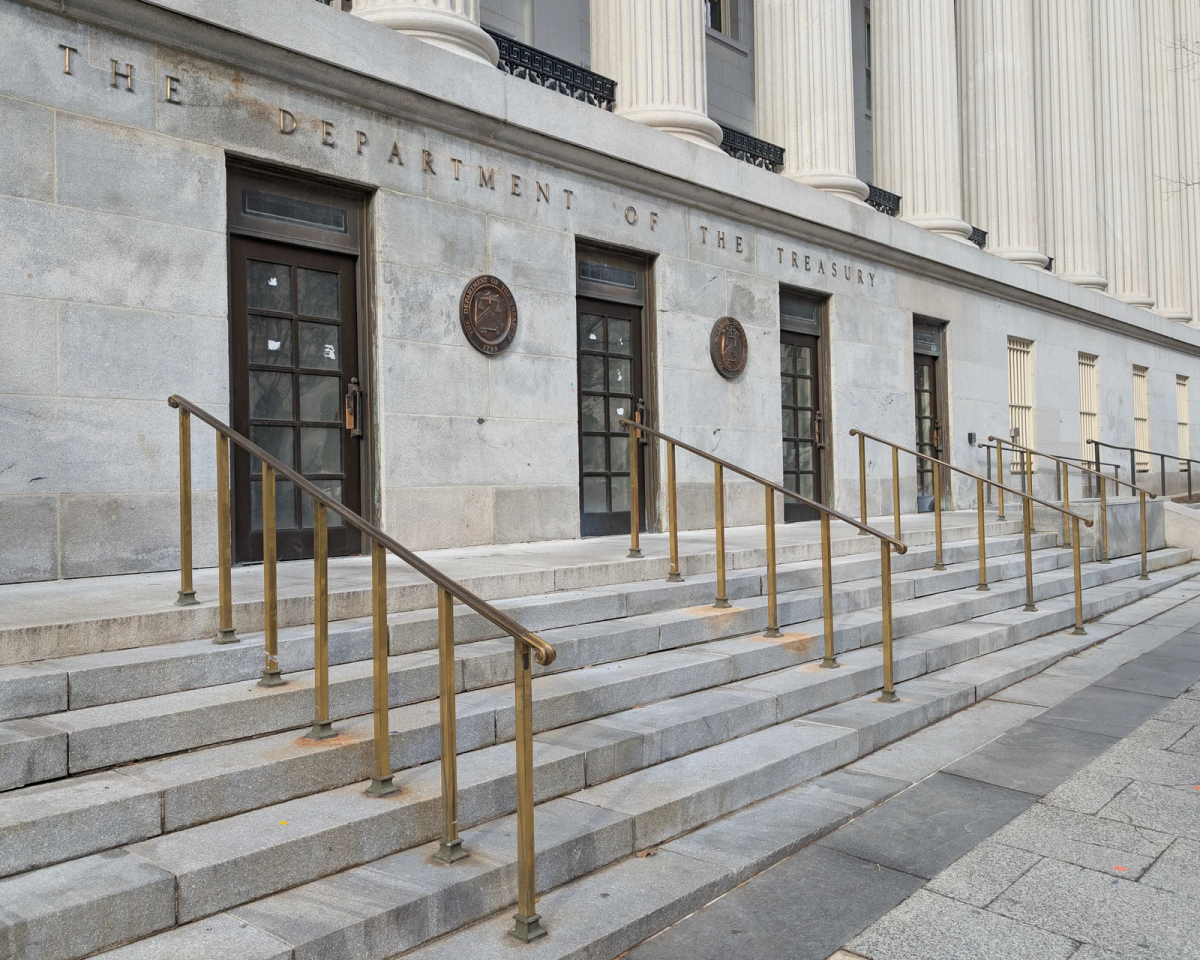
The U.S. Treasury Department has added biotechnology as a new regulated sector under its proposed rules for the Comprehensive Outbound Investment National Security Act (COINS Act), moving to restrict equity investments and joint ventures in Chinese biotech companies. The scope covers pharmaceutical compounds, cell and gene therapies, gene sequencing, and lab automation. However, ordinary new drug licensing deals paid for in cash are excluded. Because the definition of a joint venture is vague, contracts that combine cost-sharing with profit-sharing face uncertain treatment. Chinese biotech stocks such as GenScript plunged in Hong Kong trading right after the announcement, and the Biotechnology Innovation Organization (BIO) warned that overly broad restrictions could weaken U.S. competitiveness.
Key Elements

The U.S. Treasury Department has unveiled proposed rules restricting equity investments and joint ventures in Chinese biotech companies. Deals to license new drugs are excluded from the regulations, but uncertainty is expected to grow over whether complex transactions combining equity investment and joint development fall under them.
The Treasury Department announced the proposed rules for the Comprehensive Outbound Investment National Security Act (COINS Act) on Oct. 22 (local time), adding biotechnology as a new regulated sector after semiconductors and artificial intelligence (AI). The public comment period runs through Dec. 7, with the final rule and effective date to be set afterward.
The proposal classifies pharmaceutical compounds as “prohibited technology,” covering small molecules, polymers, vaccines, blood products, allergy treatments, cell and gene therapies, monoclonal antibodies and recombinant therapeutic proteins, and delivery systems. Brain-computer interfaces (BCIs), gene sequencing, bioinformatics tools, and laboratory automation technology also fall within the regulatory scope.
Transactions targeted by the Treasury Department include equity acquisitions, loans with equity conversion rights or specified rights, greenfield investments and business expansions, establishment of joint ventures, and certain limited partner (LP) investments. The intent is to block channels through which U.S. capital flows directly into the technology development and business expansion of Chinese biotech companies.
Ordinary technology licensing contracts, by contrast, fall outside the regulations. In a Q&A document, the Treasury Department said activities that do not meet the definition of a covered transaction are, in principle, not subject to the rules. This includes arrangements that pay upfront fees, milestone payments, and sales royalties in cash while securing rights outside China.
Still, the vague definition of a joint venture leaves room for interpretive disputes. The Treasury Department said it does not require the creation of a separate legal entity, defining a joint venture as “both parties contributing capital and assets and sharing profits and losses.” Some observers expect joint development contracts that share development costs and split profits could be captured under this definition.
A representative case is Pfizer’s deal this year with Innovent Biologics, worth up to $10.5 billion, to license and jointly develop 12 cancer drug candidates. Although no separate joint venture was established, the structure involves global co-development of four programs and sharing of development costs and U.S. and European profits, so whether the regulations apply could become a point of contention. Pfizer’s $100 million equity investment last year when it licensed 3SBio’s bispecific antibody would be prohibited under the proposed rules.
Bristol Myers Squibb’s contract with Hengrui Pharma, worth up to $15.2 billion for 13 early-stage programs, appears to avoid the regulations because, based on disclosed details, it is a pure licensing deal. The “NewCo” model, in which venture capital licenses Chinese assets to launch a new U.S. company, is also not covered under current law if the Chinese side’s stake is below 50%, but under circumvention provisions, future deals involving equity stakes could face additional review.
The market reacted immediately. In Hong Kong trading on Oct. 23, GenScript shares fell as much as 14% intraday, while Insilico Medicine and Duality Biologics dropped 5.2% and 3.9%, respectively. The declines reflect concerns that Chinese biotech companies’ fundraising and overseas partnership channels could narrow.
U.S. industry warned that overly broad regulations could undermine American competitiveness. John Crowley, president of the Biotechnology Innovation Organization (BIO), said in a statement that while the group recognizes the strategic importance of biotech, “broad restrictions risk increasing uncertainty for innovative companies and investors and weakening U.S. biotech competitiveness.” He said “regulation cannot be the path to success” and called for careful calibration of the detailed design.
The Treasury Department said it will also seek industry input during the comment period on whether the scope of pharmaceutical compounds should be narrowed more precisely to advanced and frontier technologies. The move is seen as an effort to account for collateral damage to public health and normal business activity.
The proposed rules create a dual structure: they raise the bar for joint development deals that combine U.S. venture capital investment in Chinese biotech with equity stakes, while keeping the door open for pure licensing contracts. Global pharmaceutical companies’ strategies to secure Chinese innovative assets are likely to continue, but regulatory risk will hinge on how deals are structured.
