

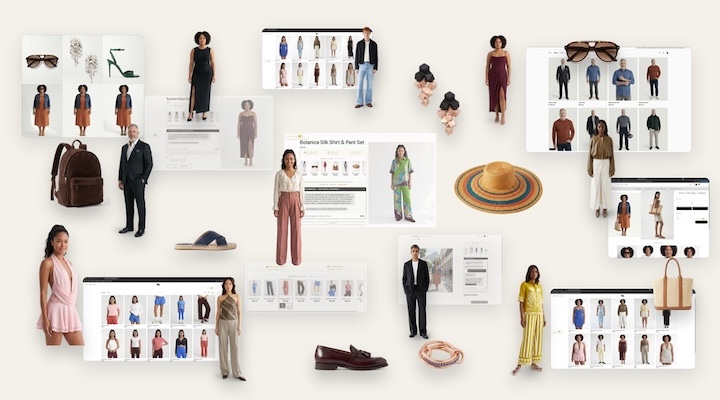
Australian entrepreneur Lukas Cervenan has created a hyper-personalisation platform for fashion retail that completely reimagines the shopping experience. Shoppers see themselves in every product image, styled into complete outfits, with a digital identity that follows them from brand to brand – one of 17 tools on the platform.
Virtue Mirage takes a different approach to conventional virtual try-on technology, extending personalisation beyond individual products to the entire online store. As Cervenan explains, Virtue Mirage creates a “digital twin” of the shopper, either from photos or based entirely on actual measurements typed into the platform, with no images required. When the customers upload their images, AI reads their measurements automatically and stores them for the size advisory when shopping. Or, they type their measurements and create an avatar based on their preferences, including look and hair colour.
From there, the platform spans what Cervenan describes as “a full website transformation”, where the shopper replaces the model in imagery across every product page and gallery.
“That twin carries their real measurements and real look,” Cervenan told Inside Retail. “To our knowledge, we are the only platform in the world that is transforming entire websites. So a size-16 shopper is never looking at a professional size-6 model; she sees her real size, on her real body, in every image across a brand’s entire store.”
The virtual twin retains the outfits and sizes shoppers have tried, along with their preferences and engagement, across participating stores.
“You create your twin once; it travels store to store along with your preferences, and each store is more personalised because of the last as the platform learns what you try, what you like, what you dislike and ultimately, what you buy. Imagine what a shopper-owned identity network means for Australian brands competing with marketplaces,” says Cervenan.
Shoppers have a dashboard where they can update their measurements, see the other stores in the network, and maintain their ‘My Looks’ profile – a personal cross-brand lookbook of every look they create.
The platform also shows real-time stock status for each item they view.
Once they find a look they like, the platform’s ‘Shop this look’ function takes them straight back to the store with in-stock pieces added to cart in one tap. Virtue Mirage includes a fit advisory function that recommends size and provides detailed garment-by-garment fitting from real measurements, plus ‘shop the moment’, which places the shopper and their outfit into the location or event they’re shopping for.
New arrivals in stock at a store can be automatically pre-rendered, styling new product drops for every twin before shoppers arrive, so they see themselves in the new collection instantly.
The platform’s semantic search functionality looks at what actually goes with products a shopper is browsing across its entire catalogue, then styles it onto the shopper. The common question of apparel shoppers – “What goes with this?” – is answered visually, not with a grid of thumbnails. Shoppers can even match pieces with accessories or alongside items they already own.
Virtue Mirage is platform-agnostic, running across Shopify, BigCommerce and other e-commerce platforms. “The twin doesn’t care what the store runs on.”
The cross-brand network — which Cervenan believes is the first of its kind in the world – means that once the shopper has created their twin, it travels to every participating store. “Each brand inherits ready-to-shop customers,” says Cervenan.
Cervenan is the founder of both Virtue Mirage and Virtue Creative Studios. The latter has built a thriving business over the past decade, shooting campaign and e-commerce imagery for more than 500 Australian and international brands. “So we understand the challenges retailers and shoppers are facing from both the craft and technology sides,” he explains.
Naturally, Virtue Mirage relies heavily on AI. With agentic commerce, AI assistants are becoming a real shopping surface, and discoverability is commoditising, explains Cervenan. “The differentiator is what the assistant can show – including the shopper wearing the product.”
Virtue Mirage is also designed to help shoppers using AI assistants discover a brand’s products. The platform is semantic and agentic-ready by design, with the storefront readable by AI assistants and agentic search. “Brands can get discovered, and chosen, in the new era of shopping.”
Reducing return rates
While the obvious benefits of shopper engagement are clear, Virtue Mirage aims to address a real problem for online retailers worldwide: Rising return rates, where shoppers buy items online only to find they do not fit.
“This is a problem we set out to fix for retailers: Research from ZigZag Global in 2024 shows that 43 per cent of UK shoppers are bracket-buying multiple sizes to return the ones that do not fit. Cervenan cites Inside Retail reporting showing that more than $20 billion worth of online purchases are returned each year in Australia, with fit cited as the biggest cause.”
Last year, a study by commerce company Criteo found that 76 per cent of shoppers say they find online shopping unexciting. “E-commerce sites that promote their personalisation functions still show every shopper the same models’ bodies,” says Cervenan. “We deliver a genuinely personalised experience for every single shopper – their body, their size, on every image.”
“Shoppers don’t buy a dress, they buy a wedding, a race day, a holiday. Imagine the impact on those 76 per cent who find online shopping unexciting of seeing yourself in the outfit in the moment you’re actually shopping for.”
