

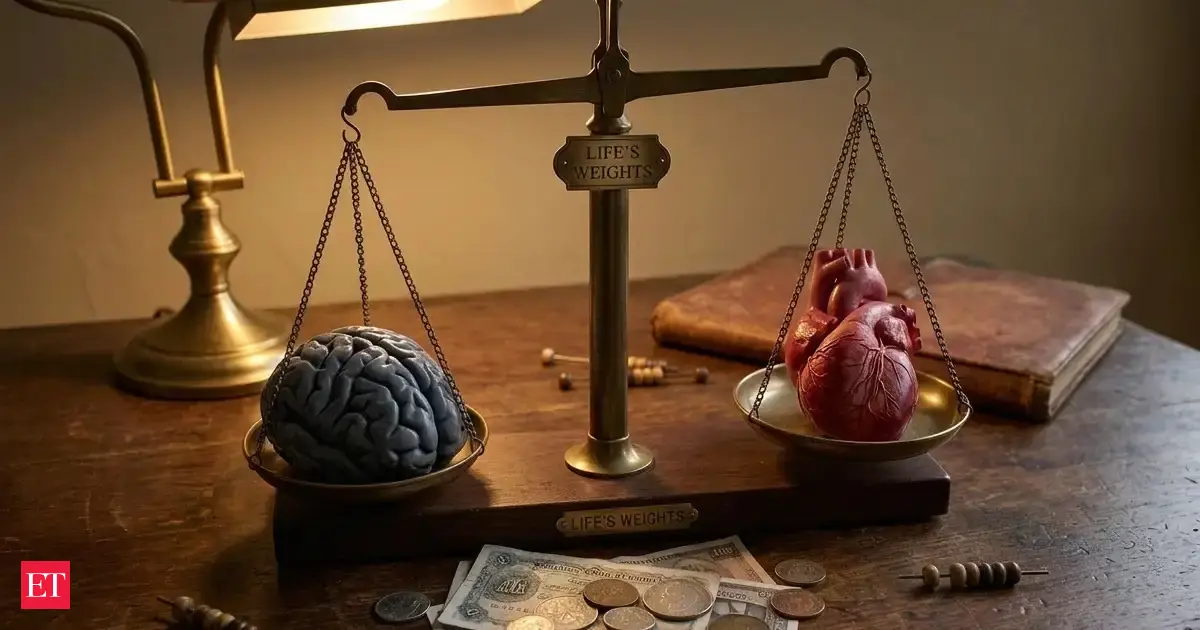

Think about the person who always checks the numbers before making a decision. They compare prices, however minuscule they may seem, calculate risks and rarely let emotions get in the way. Then, every once in a while, they make a choice that makes absolutely no financial sense, but feels completely right.
Perhaps it is helping a friend when they need money, buying something for someone they love or choosing a less practical path because it matters personally. Life often puts logic and emotion on opposite sides of the same decision. The real question is whether a person has to choose between the two.
Kate Seredy captured that tension with humor and honesty in a line about money, intelligence, emotion and the surprisingly complicated way people make choices.
Quote of the Day by Kate Seredy:“I make money using my brains and lose money listening to my heart. But in the long run my books balance pretty well.”
Why Kate Seredy’s quote on money and emotions matters today
Money decisions are often presented as mathematical problems. Spend less. Save more. Invest carefully. Avoid unnecessary risks. But for most of us, real life doesn’t work that neatly. People spend money on experiences they value, help family members when they need support, and sometimes make decisions driven more by affection than by financial logic. These choices may not always make sense on paper, but they can still carry personal value.
Seredy’s quote recognizes that contradiction without judging it. There is room for both careful thinking and emotional generosity. A person can make financially sensible decisions most of the time while occasionally allowing the heart to have a say.
What Kate Seredy’s quote means in real life
The first half of the quote draws a simple contrast. The “brains” represent calculation, discipline and practical thinking. The “heart” represents emotion, compassion and the personal connections that can influence decisions.
Someone might negotiate carefully at work but spend freely when buying a gift for a loved one. Another person might build savings over the years but choose to help someone close to them during a difficult period. These decisions may look irrational from a purely financial perspective, but they can reflect values that money cannot measure.
The final idea, that the “books balance” in the long run, makes the quote more nuanced. Seredy is not arguing that emotional decisions are always wise or that financial discipline does not matter. Instead, she suggests that a meaningful life can contain both. Sometimes the choices that cost us financially can give something back in happiness, relationships or personal fulfillment.
Who was Kate Seredy?
Kate Seredy was a Hungarian-born American author and illustrator of children’s books. She was born on November 10, 1899, in Budapest and grew up in an environment that encouraged her artistic interests.
During World War I, Seredy served as a nurse and developed pacifist beliefs. She studied art at the Academy of Arts in Budapest and later traveled through Europe to further her artistic education before moving to the United States in 1922.
Her early years in America were not easy. She faced a language barrier and worked on different artistic projects before establishing herself as an illustrator and author. Her first major book, The Good Master, was published in 1931 and drew heavily from her experiences and memories of Hungary.
Kate Seredy’s legacy
Seredy went on to write and illustrate several children’s books, combining storytelling with vivid artwork and cultural detail. Her best-known works include The Good Master, The Singing Tree and The White Stag.
The Singing Tree, published in 1939, is a sequel to The Good Master. Set against the backdrop of Hungary and the upheaval surrounding World War I, the story follows young characters as their community faces economic hardship and emotional challenges.
Seredy’s work often explored courage, family, hardship and human relationships. Her ability to present complicated ideas through accessible stories helped establish her as an important figure in American children’s literature.
The White Stag won the Newbery Medal in 1938, further cementing her place in children’s literature. Seredy continued writing and illustrating until her death on March 7, 1975.
Her quote about money and the heart carries the same sense of balance found in much of her work. It acknowledges that people are not purely rational creatures, and perhaps a life measured only by its financial ledger would leave out some of the things that matter most.
Add
as a Reliable and Trusted Newsp channel)
Read More News on
Kate Seredy quotemoney and emotionsfinancial decisionsfinancial wisdomimpact of emotions on spendingemotional generositychildren’s literaturelife choices and moneyNewbery Medal
(Catch all the US News, UK News, Canada News, International Breaking News Events, and Latest News Updates on The Economic Times.)
Download The Economic Times News App to get Daily International News Updates.
