

Add preferred source
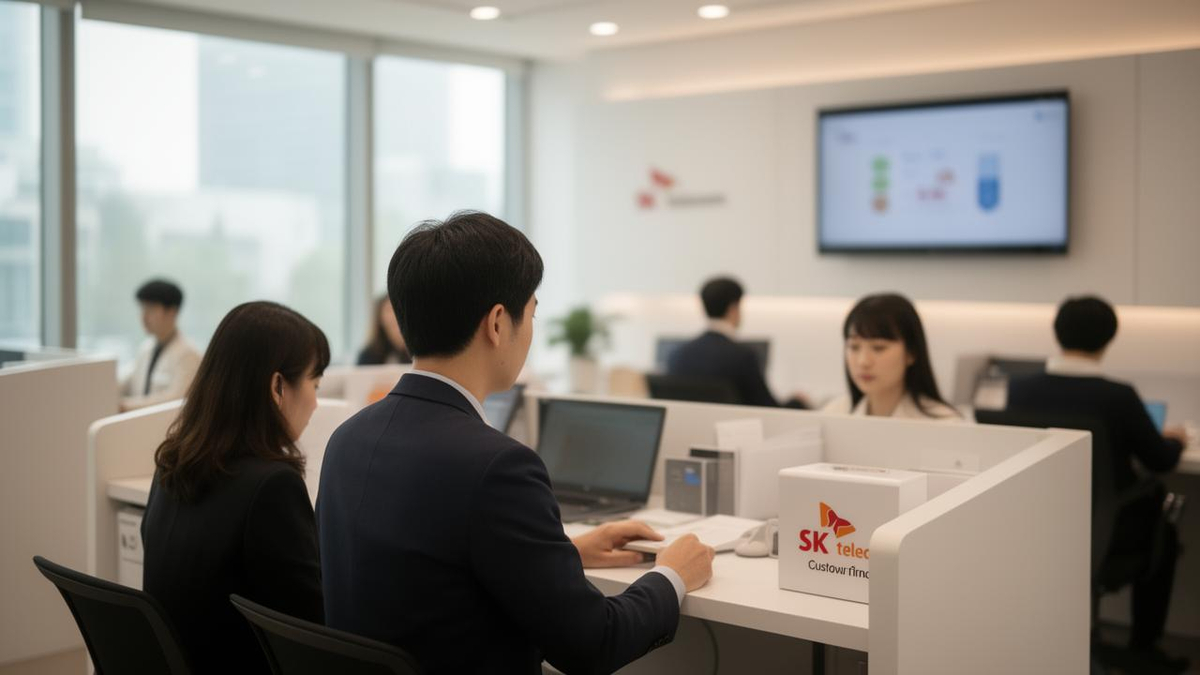
SK Telecom has reclaimed the No. 1 position in the mobile communications category of the 2026 Korean Customer Satisfaction Index (KCSI), completing a sweep of all three major customer satisfaction surveys in South Korea. The achievement comes one year after the company lost the KCSI title it had held for 27 consecutive years due to a cyber intrusion incident. The company conducted 730 on-site customer experience activities across 87 cities and counties nationwide, while operating a customer advisory panel and a Customer Trust Committee to restore confidence. SK Telecom is leveraging AI to analyze customer feedback and incorporate it into service improvements, as well as using AI for message review and telecom demand forecasting. CEO Jung Jae-heon pledged to continue the customer-first principle and AI-driven enhancement of customer experience.
Key Elements

SK Telecom (017670.KS) has swept all three major customer satisfaction surveys in South Korea, marking a successful recovery of customer trust. The company reclaimed the No. 1 position in the mobile communications category of the Korean Customer Satisfaction Index (KCSI), which it had lost last year due to a cyber intrusion incident.
SK Telecom announced on the 30th that it ranked first in the mobile communications category of the 2026 KCSI survey conducted by Korea Management Association Consulting. The company had already secured the top spot in the National Customer Satisfaction Index (NCSI) in April and the Korean Service Quality Index (KS-SQI) in July, completing a clean sweep of South Korea’s major customer satisfaction evaluations this year.
The KCSI title carries particular significance as the company had held the position for 27 years through 2024 before losing it last year in the aftermath of the cyber intrusion. In this year’s survey, scores for key metrics—including long-term customer benefits, call and data quality, and rate plan satisfaction—all rose compared to the previous year.
SK Telecom CEO Jung Jae-heon has publicly committed to reorganizing the entire business around a customer-centric approach since taking office. “This KCSI No. 1 ranking is both an evaluation of our efforts to strengthen customer trust and a directive to serve customers at an even higher standard,” he said. “Through our unwavering customer-first principle and AI-driven enhancement of customer experience, we will create changes that customers can feel in their daily lives and build even greater trust.”
On-Site Customer Engagement and Trust Recovery
SK Telecom has significantly expanded field-based customer engagement since the cyber intrusion incident. This year, the company conducted a total of 730 on-site customer experience (CX) activities across 87 cities and counties in South Korea, including a “door-to-door service” program reaching approximately 35,000 elderly customers. The cumulative travel distance reached 200,000 kilometers—equivalent to five laps around the Earth.
The company designated its founding anniversary as “the day to stand before customers once again,” with the CEO, all executives, and the Customer Trust Committee visiting customer service centers, retail networks, airport roaming centers, and welfare facilities for people with disabilities to gather on-site feedback and identify improvement initiatives.
Channels for incorporating customer feedback into management have also been expanded. The company operates a customer advisory panel composed of 100 customers and a Customer Trust Committee with participation from external experts. Recently, the company held a “2026 Insight Day” with these groups, developing trust indicators based on actual usage behavior and firsthand experience rather than simply asking customers whether they trust the company.
The “CX Campus” project, which incorporates feedback from younger customers including university students into services, is also underway. The project has already translated ideas into actual services, such as T Membership benefits centered on coffee and desserts timed to exam periods, and running-related marketing initiatives.
AI-Driven Customer Service Enhancement
SK Telecom is accelerating customer service improvements powered by artificial intelligence (AI). The company uses AI to analyze voice-of-customer (VOC) data received at its call centers, identifying not only complaints directly raised by customers but also latent pain points that have yet to surface, and incorporating these insights into product and service improvements.
Messages sent to customers are also reviewed by AI to screen out information errors and social sensitivity issues in advance. Through this process, the company has maintained a record of zero customer communication incidents for eight consecutive years, according to company officials.
At large-scale events that draw massive crowds, SK Telecom uses its AI operations system “A-One” to forecast telecom demand and position base stations where they are needed most. This measure ensures stable service even during temporary traffic surges, such as fireworks festivals or cherry blossom festivals.
SK Telecom’s sweep of all three major customer satisfaction surveys is notable as an achievement made in the process of restoring customer trust damaged by the cyber intrusion incident. However, with competition in the telecom industry ongoing, whether AI-based service enhancement and customer-centric management will translate into future market share gains and <a href="https://bitcomme.com/evrima-plc-half-year-financial-report/” title=”Evrima Plc – Half-year Financial Report”>financial performance remains to be seen.
Once added, BigGo Finance appears first in Google Search Top Stories, so you get the broadest, most up-to-the-minute, and most comprehensive global financial news first.
