

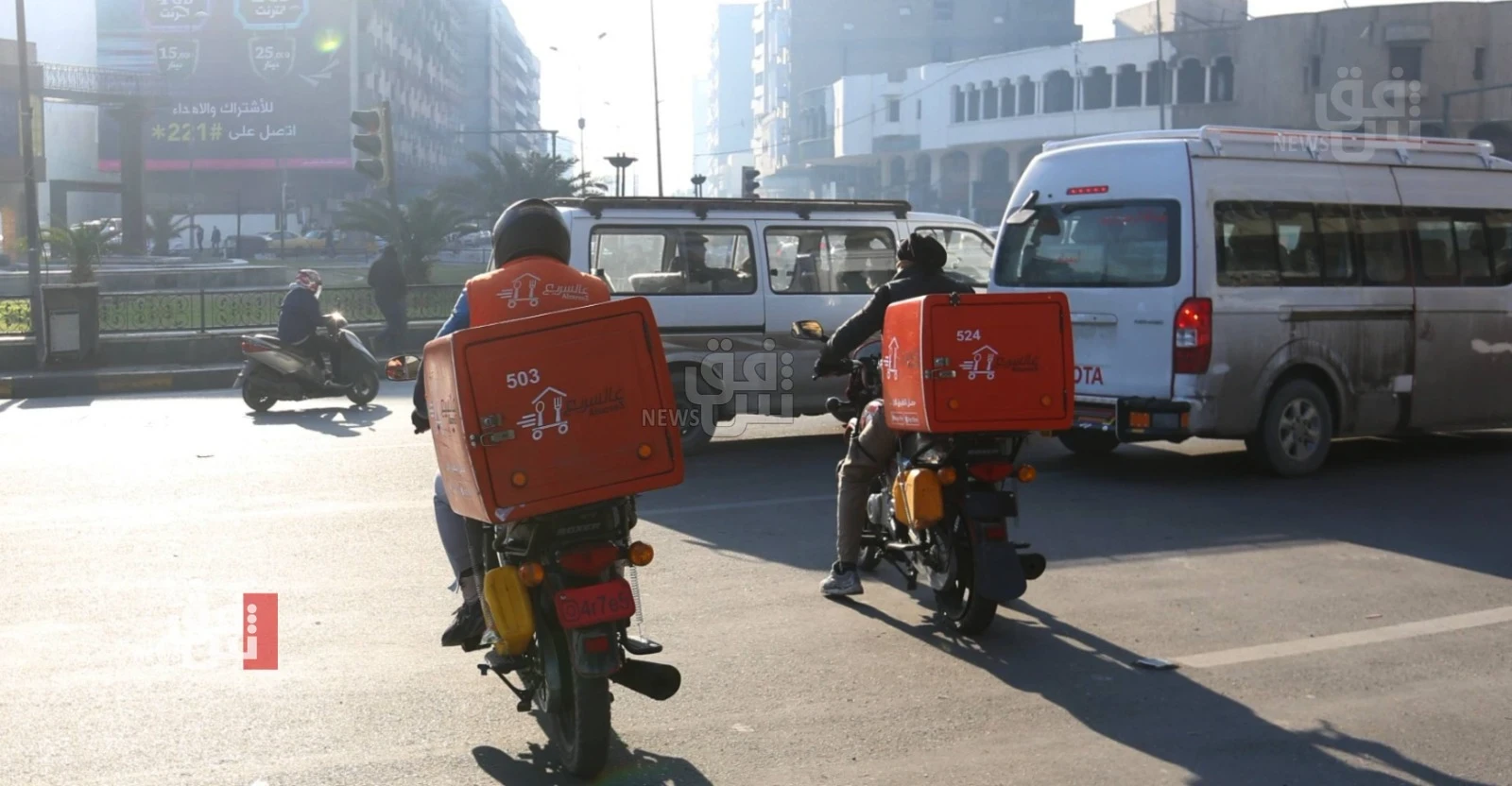
Delivery fees between Iraqi provinces have risen by 60%, from 5,000 to 8,000 dinars per order, prompting complaints from consumers and online retailers, while courier companies blame additional customs charges at checkpoints for rising costs.
Customers and business owners told Shafaq News that the increase, which coincided with a rise in the dollar exchange rate, has discouraged online purchases and placed growing pressure on small businesses.
Karim al-Saadi said he canceled an order for a 16,000-dinar shirt from Erbil after discovering that delivery would cost another 8,000 dinars, equivalent to half the item’s price.
Adila Ghani, who runs an online clothing store, said she had raised prices by several thousand dinars per item to absorb part of the increased shipping costs, resulting in fewer customers.
Customs charges under scrutiny
Courier company owners accused authorities of imposing additional customs charges on shipments moving between Iraqi provinces, including goods that had already cleared customs at border crossings.
Mohammed Hassan Ali, a delivery company owner, said vehicles transporting customer orders from Erbil were being treated like shipments entering Iraq from abroad.
He alleged that checkpoints in Kirkuk imposed charges without a clear legal framework or standardized valuation system, with payments often ranging from three million to four million dinars (approximately $1,974-$2,632) per shipment.
Another company owner, Rahim al-Shammari, said he imported goods from Turkiye through the Ibrahim al-Khalil border crossing, paid customs duties there and completed further procedures in Mosul before storing the shipments in Kirkuk.
Despite holding official documents and payment receipts, he said vehicles carrying the goods to Baghdad were stopped at the Al-Husseiniya checkpoint and referred to Abu Ghraib Customs, where additional payments were demanded.
Jabbar Hassan, a courier company owner in Al-Anbar, reported a similar incident involving a vehicle transporting returned customer orders to Baghdad.
He said security personnel stopped his vehicle and four others at a checkpoint in Baghdad’s Al-Ghazaliya district and referred them to customs authorities, where he paid 3.5 million dinars (about $2,300) in additional charges.
According to Hassan, officials cited a directive from the prime minister requiring customs fees on individual orders, although he questioned the legal basis for charging goods moving between Iraqi provinces.
Sources familiar with the procedures told Shafaq News that checkpoints on the Kirkuk–Al-Sulaymaniyah and Kirkuk–Erbil roads collect official fees of 250 to 500 dinars (approximately $0.16–$0.33) per order under Iraqi government decisions.
The sources linked the additional charges to recent measures addressing differences in tax and customs procedures between federal Iraq and the Kurdistan Region, alongside logistical costs.
Economic expert Mustafa al-Faraj said the reported 60% increase in delivery charges warranted closer examination of the fees imposed on courier companies and their impact on consumers and businesses.
“The government had the right to regulate commercial activity and collect legally authorized revenues,” he stressed, but warned against measures that could undermine delivery companies and the small businesses that depend on them.
Al-Faraj noted that courier services support e-commerce, create jobs for drivers and delivery workers, and enable small and home-based businesses to reach customers across Iraq.
He urged authorities to introduce transparent procedures and involve officially registered delivery companies in developing regulations that protect government revenues without imposing excessive costs on consumers. “Economic diversification required supporting private businesses and digital commerce rather than relying solely on additional fees.”
