

Novel litigation accusing Roblox Corp.
of exploiting underage game developers is set to test how decades-old child labor laws apply to a digital era where kids increasingly go online to play, learn, and allegedly work.
The mother of a 13-year-old Georgia boy claims her son’s activity on Roblox’s platform was illegal child labor. He built games for two years, teaming up with adult-led development groups and working over 40 hours weekly without pay, according to the complaint.
Child labor restrictions were written mostly pre-internet with physical workplaces in mind, aiming to promote education and keep minors away from potentially hazardous work like factory jobs, construction, and mining. Congress didn’t contemplate children developing online games from their bedrooms in 1938 when it passed the Fair Labor Standards Act.
More recent pushes to boost enforcement or strengthen laws also focus on traditional teen jobs. Child labor violations cited by US government agencies mostly involve fast food, retail, or amusement businesses. Online work largely flies under the radar.
“The legal landscape hasn’t really kept up with the digital landscape,” said New Jersey State Rep. Heather Simmons (D), who helped craft a new law to require that online child performers get a share of any earnings from their work.
A handful more states have passed similar laws focused on performers such as video bloggers and kid influencers, without regulating other online work.
Digital child labor isn’t clearly addressed in US law nor in international policies, according to a February brief by the United Nations Children’s Fund.
The report lists monetized game-building among types of online activities that could cross the line from play into child labor under some circumstances, for example when it involves “sustained hours, structured obligations, or exploitation,” or interferes with school.
Roblox allows game developers to earn virtual currency, Robux, that can be converted to real-world dollars. But restrictions on the process and a low conversion rate prevent most underage developers from ever earning money outside of Roblox’s closed virtual economy, according to the Georgia parent’s lawsuit.
The company denied it violated federal child labor and minimum wage law or California law when the complaint seeking a collective action was filed in May in the US District Court for the Northern District of California.
Roblox’s platform is intended primarily for entertainment and learning basic coding skills, not to make money, the company said, adding it uses robust parental controls to protect children.
A Roblox spokesperson declined to comment further.
‘Playbour’?
The line between work and play can be fuzzy, as UNICEF acknowledges in its report. It notes that some researchers describe online activities like game building as “playbour”—a hybrid between work and play that might or might not implicate child labor laws.
The ambiguity stretches beyond game design on Roblox. Participation in competitive esports, livestreaming, and creating marketing videos can be considered work that risks child labor abuses, according to the UNICEF brief.
There’s nothing explicitly in the FLSA to exclude game design or online work from child labor restrictions, said Debbie Berkowitz, a fellow at Georgetown University’s Kalmanovitz Initiative and former Occupational Safety and Health Administration official.
The FLSA bans employers from hiring workers younger than 14 in nearly all jobs and limits the number of hours worked and types of jobs deemed too hazardous for teens between 14 and 17.
When children spend hours each day building games for a platform that profits off them, it’s hard to defend the model as purely fun and educational, she said.

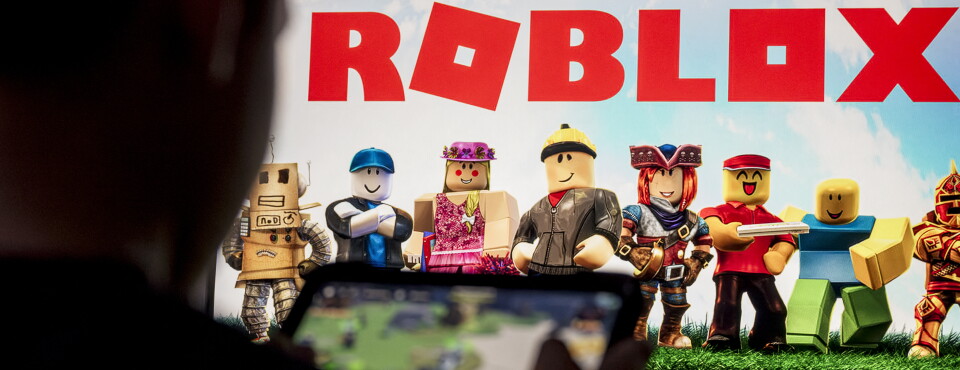
A child is seen playing a game on the Roblox platform.
Photographer: Hannah Peters/Getty Images
“If this was just like ‘come to my birthday party and we’ll all make cupcakes and then we’ll eat them,’ that’s one thing,” Berkowitz said. “But if this was ‘come to my house every day from 3 to 7 and we’ll make cupcakes and then I’ll sell them,’ that’s something different.”
The mother suing Roblox points to the company’s financial success as evidence that it isn’t merely an education-focused platform. Her son spent so much time building games because he saw Roblox marketing messages that promoted it as a money-making opportunity, she said in the complaint.
“This system produces predictable outcomes: psychological harm, economic deprivation, and normalized exploitation for as many as millions of children, while Roblox generates billions in annual revenue,” she said.
The California lawsuit accuses Roblox of failing to obtain parental consent and verify the ages of children who sign up.
The company in 2025 began launching a new age verification system and recently started offering age-based Roblox Kids accounts.
Limited Enforcement Resources
It’s rare for workers to allege child labor violations via litigation, said Nina Mast, policy and economic analyst at the Economic Policy Institute. Violations are most often addressed by state or federal agencies, which often struggle to adequately enforce even traditional child labor restrictions, much less those involving newer technologies, she said.
Given funding cuts and limited staff in the US Labor Department’s Wage and Hour Division, “I would be surprised if they had the resources or specialized training to deal with cases like this, since it is so new,” Mast said.
The DOL renewed its focus on child labor enforcement under the Biden administration, even tapping rarely used powers such as disgorgement of profits for violators. Simultaneously, several Republican-majority state legislatures passed laws softening restrictions in the name of encouraging youth work experience and addressing restaurant and retail industry labor shortage concerns.
While states have made incremental progress in policing digital child labor with kid vlogger laws like New Jersey’s, the Roblox case highlights the likely need for more legal protections, Simmons said.
“We need to do a better job as lawmakers and public policy professionals of trying to stay on the cutting edge of it,” she said. “Traditionally we’re not very good at that.”
The case is Doe B.D. v. Roblox Corp., N.D. Cal., No. 4:26-cv-04405.
