

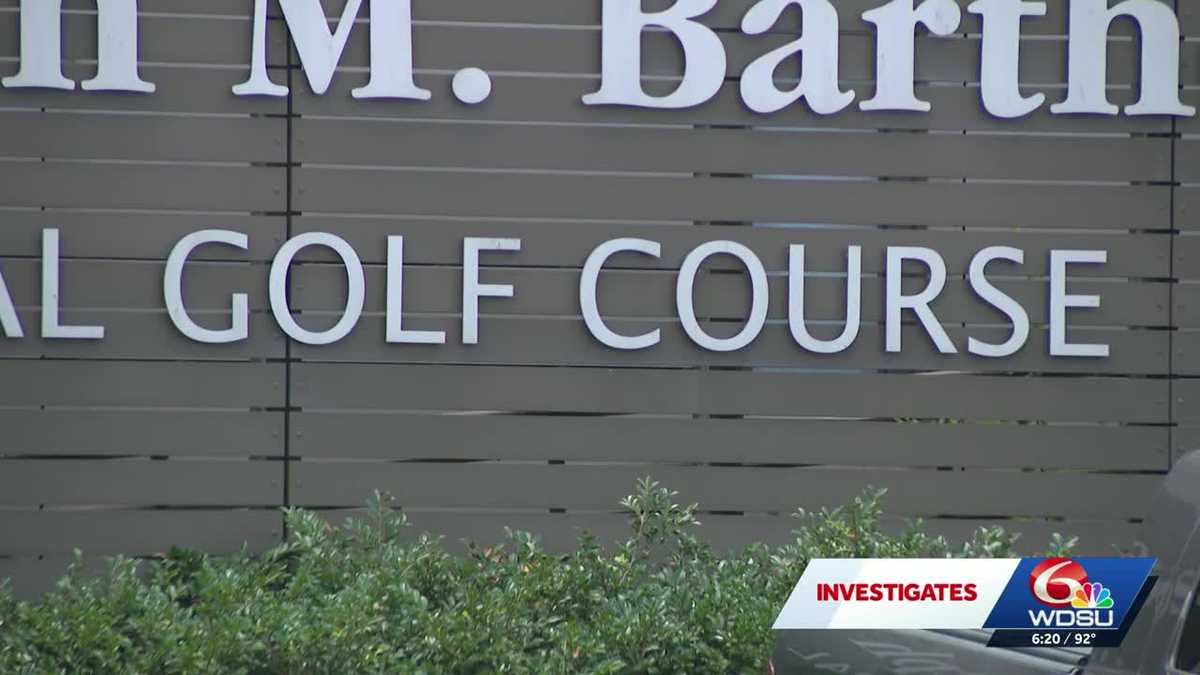
The Joseph Bartholomew Municipal Golf Course in New Orleans is under scrutiny for missing cash deposits and annual losses exceeding $500,000, prompting city officials to take action.

The Joseph Bartholomew Municipal Golf Course in New Orleans’ Pontchartrain Park is facing scrutiny over missing cash deposits and annual <a href="https://bitcomme.com/river-city-data-breach-exposes-financial-and-health-information/” title=”River City Data Breach Exposes Financial and Health Information”>financial losses of more than $500,000, raising concerns from city officials.
Pontchartrain Park, a historic Black neighborhood built in the 1960s and rebuilt after Hurricane Katrina, is home to walking paths, a baseball stadium, play areas, and the golf course.
The course, named after Joe Bartholomew, the first African American inducted into the Greater New Orleans Sports Hall of Fame, originally opened in 1956 and underwent renovations in 1979 and after Katrina in 2005.
Mayor Helena Moreno’s Communication’s Director, Jonah Gilmore, said, “Over the last four years, the facility has generated an average of $985,881 in annual revenue, while annual expenditures have averaged $1,486,897.” Gilmore added, “In alignment with a citywide mandate, department and course leadership are actively working to increase revenue and expand tournament and event programming. These efforts are intended to move the course closer to the national benchmark for public agency golf facilities, approximately 75% of which operate at or near revenue neutrality.”
Councilman Matthew Willard, who previously represented the area in the state legislature, said, “We’re going to prioritize it. We just have to make sure the revenue and expenses get there, and we will do that in short order.”
The city directly manages the golf course through its Parks and Parkways Department, which oversees operations and financial responsibilities.
This differs from other public golf courses in New Orleans, such as Bayou Oaks Golf at City Park, which is managed by the nonprofit Bayou District Foundation, and Audubon Golf, which is run by the private nonprofit Audubon Nature Institute.
In addition to the financial losses, a police report obtained by WDSU Investigates revealed concerns about missing cash deposits at the course.
The report stated that in September of last year, city officials became aware of “missing cash deposits” and “late deposits” from August and September.
Cashiers reportedly placed cash deposits in a safe at the end of their shifts, but discrepancies arose.
The report detailed that the golf course’s former deputy director admitted to taking approximately $21,000 in cash deposits, expressing a desire to return the money and discuss his resignation.
Michael Karam, head of Parks and Parkways, told investigating officers he “wants to handle the incident in-house if possible unless he is advised to press charges for theft.”
The police later reclassified the incident from “theft” to a “miscellaneous incident.”
Both the New Orleans Police Department and City Hall declined to comment on the report, leaving it unclear whether charges will be filed or if the money was fully returned.
Councilman Willard said changes are coming to improve the golf course.
“We can’t continue to operate at a loss but at the same time need to make sure it’s a beautifully maintained facility for everyone who plays golf there,” he said.
In response to the cash deposit concerns, the Moreno administration has implemented a cashless policy for all events, golf, and meals at the course.
