

ERP industry solution for recipe and process-oriented production

Ultra pure water for precise laboratory analyses and reliable
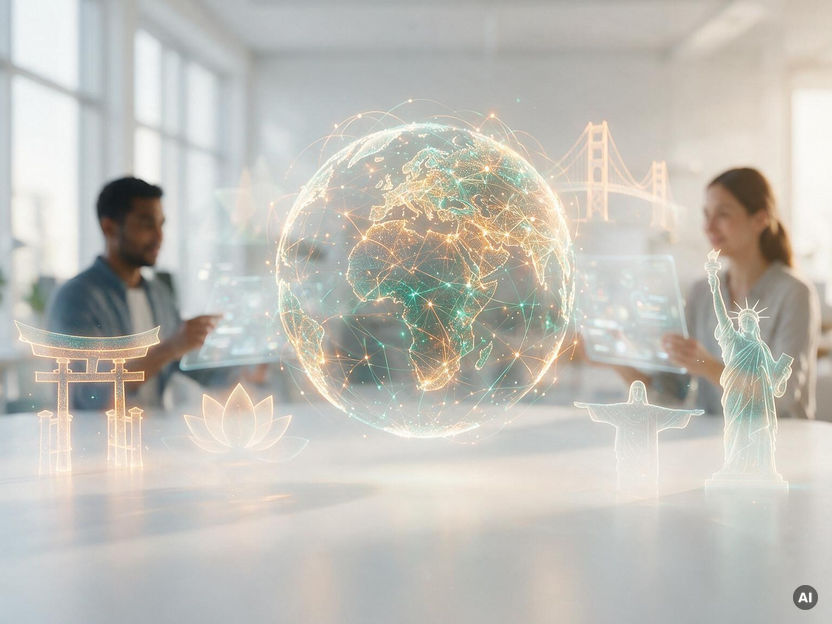
Through a pilot program housed within the Network of German Houses of Science and Innovation (DWIH), the German Academic Exchange Service (DAAD) supports students, researchers, and teams from science-based startups interested in launching a business as they further develop their business ideas. The “DWIH Innovate” program is designed to help grantees gain international practical experience and forge connections with leading innovation ecosystems worldwide. The BMFTR is funding the program through the end of 2029 with an initial allocation of just under three million euros. The program is being implemented in collaboration with the five DWIHs funded by the Federal Foreign Office in Brazil, India, Japan, and the United States.
“Germany’s innovative strength as a hub for science and business thrives on excellent research, entrepreneurial thinking, and international networking. With ‘DWIH Innovate,’ we are providing scientific talent and startup teams from Germany with initial access to key innovation ecosystems worldwide. The experience, skills, and networks gained there are intended to help accelerate startup initiatives in Germany and strengthen innovation activity here at home,” said DAAD President Prof. Dr. Joybrato Mukherjee.
Modules for Startups and Early-Career Researchers
“DWIH Innovate” is aimed at future founders and members of research-based startups at German universities and research institutions. Master’s students, doctoral candidates, and postdocs from German universities are also eligible to participate. The pilot program offers two funding modules for different target groups.
Short-term stays in startup hubs
In the “Networking and Skill Building” module, founders and startup teams have the opportunity to explore the world-renowned innovation and startup scenes at the DWIH locations in New Delhi, New York, San Francisco, São Paulo, and Tokyo. Stays of up to two weeks are designed to help recipients ease into the respective innovation ecosystems. While there, they will meet mentors, visit incubators and innovation centers, and connect with local startup communities. This is intended to provide them with inspiration for the further development of their startup projects in Germany. Interested individuals can already apply for the DWIH locations in New Delhi, San Francisco, and Tokyo. Additional locations will follow.
Internships at Innovative Companies
The “Internships” module enables master’s students, doctoral candidates, and postdocs to undertake two- to six-month placements at technology-oriented startups or innovation centers in Brazil, India, Japan, or the U.S. During this time, participants gain practical experience at the intersection of science, entrepreneurship, and technology development. They expand their knowledge of knowledge transfer from universities and research institutions and establish international contacts that can prove valuable for future ventures. Interested individuals can apply for the module starting in January 2027.
Note: This article has been translated using a computer system without human intervention. LUMITOS offers these automatic translations to present a wider range of current news. Since this article has been translated with automatic translation, it is possible that it contains errors in vocabulary, syntax or grammar. The original article in German can be found here.
https://www.chemeurope.com/en/news/1189632/pilot-program-for-students-researchers-and-teams-from-science-based-startups-interested-in-starting-a-business.html
Other news from the department science
Breakthrough for Future-Proof Cement Production
The technology is designed to capture up to 90 per cent of CO₂ emissions from exhaust gases
Turning CO₂ into fuels: Chemists solve a key scaling problem
LIKAT Technical Center produces catalyst on kilogram scale for the first time for a pilot plant
New plastic turns into a gas when heated – then reforms once cooled
A novel polymer could simplify the application, removal and recycling of materials by eliminating several of the complex processing steps currently used
Light-Based 3D Printing: Innovative “Ink” Enables a Closed-Loop Material Cycle
Research team develops a polymer material that can be broken down into its individual components and reused
New building block combines proteins with other molecules
Artificial molecular building block links proteins and synthetic molecules to form complex nanostructures
Oxygen vacancies turn a poor ion conductor into a good battery material
Enhanced ion transport demonstrated by combining conductivity and nuclear magnetic resonance (NMR) spectroscopy
Charging ahead with sustainable zinc-iodine battery development
Biodegradable oligosaccharides solve a key problem
From Scrap and Used Parts to High-Performance Materials
Fraunhofer IWU Opens New Circular Pathways for Aluminum Foam
NMR reveals hidden electrolyte states for better batteries
Battery electrolytes are not fixed formulations, but evolving liquid states
A New Approach to Drive Batteries: Safe, Repairable, Sustainable
Electrochemical impedance spectroscopy is set to detect micro-short in future before they lead to battery fires
Nature’s original bioplastic is food for animals
A new study provides unexpected insights into how biodegradable PHA plastics are broken down in nature
Rice researchers show graphene nanowrinkles can reshape electricity
Inspired by butterflies: smart propulsion for the robots of the future
Magnetically controllable vanadium pentoxide microscrolls can move 30 times their own weight
An energy storage device that’s designed to be recycled
The compact, rechargeable supercapacitor can be taken apart and reused, offering a step toward more sustainable electronics
How cement plants can remove CO₂ from the atmosphere
New life-cycle analysis shows how calcium-looping DAC can reduce the climate impact of cement production by 78 percent
Laser spectroscopy helps reveal hidden nuclear properties in fermium
First high-precision measurements of the fermium-255 nucleus validate modern nuclear models and advance the search for superheavy elements
Scientists turn one of the world’s most hated plastics into premium lubricant
They uncovered something far more promising than a recycling method
Energy-efficient electric drying with superheated steam
Drying process saves significant amounts of energy and eliminates the need for natural gas
New cathode material brings aqueous zinc-ion batteries closer to reality
The researchers used ball milling as a cost-effective way to engineer oxygen defects in electrolytic MnO₂
How Carbon Accounting Rules Shape Incentives for Hydrogen Production
More from the department science
Most read news
Three-dimensional molecules through “domino cascade”
Chemists develop light-driven triple catalysis
Energy Transition: Electrify First—Then Use Methanol Instead of Hydrogen for the Rest
Wearable patch vibrates when it detects environmental hazards
Biosensor detects nanoplastics in water within minutes
Peptide-based biosensor enables direct detection of polystyrene nanoparticles
KAIST develops ultra-precise inspection technology to prevent electric vehicle battery fires
How Magnetic Nanoparticles Remove “Eternity Chemicals” from Water
New solutions to the PFAS problem
Research team develops methods for breaking down “forever chemicals”
<img src="https://img.chemie.de/Portal/News/6a634acddb581_7W1eaJnlo.png?tr=w-1015,h-761,cm-extract,x-215,y-0:n-xl,l-image,i-Portal%2Fai-label_mPx4Q_Shs.webp,lx-N14,ly-N14,w-25,q-100,l-end" alt="Beyond the paddle-wheel mechanism” loading=”lazy”>
Beyond the paddle-wheel mechanism
Elucidating the microscopic lithium ion transport in solid-state electrolytes for next-generation batteries
Germany Breaks Its Own Record for New Startups: More Than 3,000 New Startups in Just Six Months
“Germany is seeing more startups than ever—now we need to scale up”
New sample environment allows glimpse into thermocatalytic processes
“This development is a significant milestone, particularly for soft X-rays…”
Scenarios for a New “Iron Age”: Iron Complements Hydrogen as an Energy Source
Study Shows the Potential of Iron Powder for Long-Term Energy Storage, Energy Transmission, and the Use of Existing Power Plant Infrastructure in the Energy System of the Future
More news from our other portals
Is artificial intelligence revolutionising chemistry?
Something is happening in the chemical industry …
This is what true pioneering spirit looks like: Plenty of innovative start-ups are bringing fresh ideas, lifeblood and entrepreneurial spirit to change tomorrow’s world for the better. Immerse yourself in the world of these young companies and take the opportunity to get in touch with the founders.
Discover start-ups now
More from the department scienceSubscribe to newsletter
