

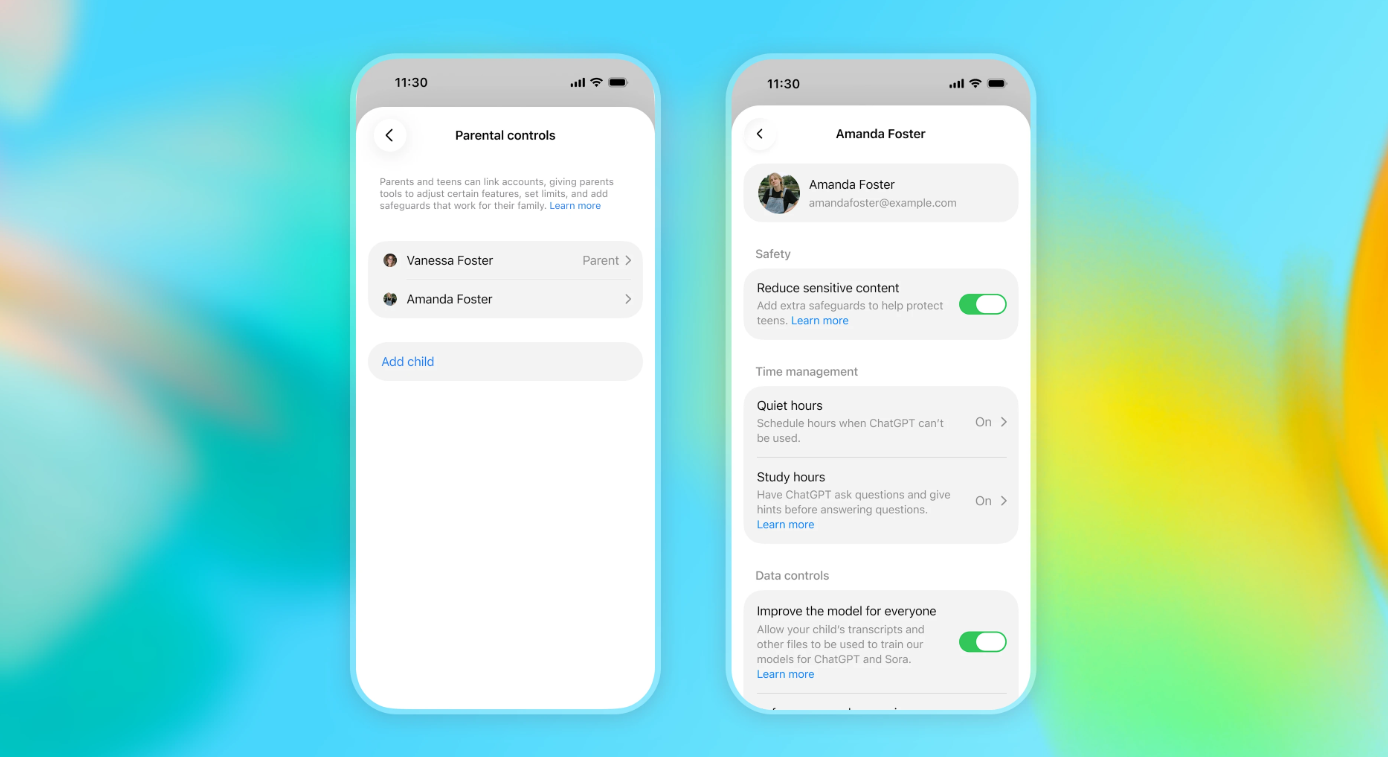
OpenAI Group PBC today announced it’s rolling out a stricter version of its ChatGPT chatbot created for younger users.
The announcement of “ChatGPT for Teens” follows scrutiny over how generative artificial intelligence, whether the products of OpenAI or other AI firms, can be misused by younger users. OpenAI itself is currently fighting a number of lawsuits where it’s alleged its chatbot gave advice that proved to be unsafe.
The new model for children aged 13 to 17 has been built with guardrails to prevent troublesome conversations around the topics of violence, self-harm, sex and mental disorders. If the child attempts to engage the chatbot in what might be considered a restricted topic the bot can alert the parents if they have parental controls turned on.
OpenAI asks all users to state their age when they sign up but not every person in honest about their age. The company, however, doesn’t use an age-verification tool, instead analyzing the user’s inputs to detect age. If the chatbot ascertains the user is young, it will now automatically switch on teen mode.
On a brighter note, the teen version of ChatGPT includes a “Study Mode” in which the young person can take quizzes and study visualizations based on what subjects they are studying. Parents can utilize the “Study Hours” feature that will let them know how long their child is grinding out school work.
“Teens should be able to use AI to learn, create, and explore,” OpenAI said in a press release. “But that access should come with protections that reflect their developmental stage, reinforce real-world relationships, and support healthy use over time.”
Studies have shown how as much as 70% of young users turn to chatbots for companionship. This can be problematic for teenagers whose brains may be more vulnerable to acting on bad advice or believing synthetic media is actually conscious. OpenAI Chief Executive Sam Altman has said his company is currently studying “emotional overreliance” with an emphasis on young users. It’s already well-publicized that people can form unhealthy attachments to AI.
“We designed ChatGPT for Teens to support real-world relationships and healthy habits, with break reminders that encourage teens to step away, and product cues that consistently identify ChatGPT as AI,” said the company.
Image: OpenAI
A message from John Furrier, co-founder of SiliconANGLE:
Support our mission to keep content open and free by engaging with theCUBE community. Join theCUBE’s Alumni Trust Network, where technology leaders connect, share intelligence and create opportunities.
- 15M+ viewers of theCUBE videos, powering conversations across AI, cloud, cybersecurity and more
- 11.4k+ theCUBE alumni — Connect with more than 11,400 tech and business leaders shaping the future through a unique trusted-based network
Are you an AWS customer? Support SiliconANGLE financially by buying your AWS services from ourMarketplace portal page and links:https://siliconangle.com/aws-marketplace/
About SiliconANGLE Media
SiliconANGLE Media is a recognized leader in digital media innovation, uniting breakthrough technology, strategic insights and real-time audience engagement. As the parent company of SiliconANGLE, theCUBE Network, theCUBE Research, CUBE365, theCUBE AI and theCUBE SuperStudios — with flagship locations in Silicon Valley and the New York Stock Exchange — SiliconANGLE Media operates at the intersection of media, technology and AI.
Founded by tech visionaries John Furrier and Dave Vellante, SiliconANGLE Media has built a dynamic ecosystem of industry-leading digital media brands that reach 15+ million elite tech professionals. Our new proprietary theCUBE AI Video Cloud is breaking ground in audience interaction, leveraging theCUBEai.com neural network to help technology companies make data-driven decisions and stay at the forefront of industry conversations.
