

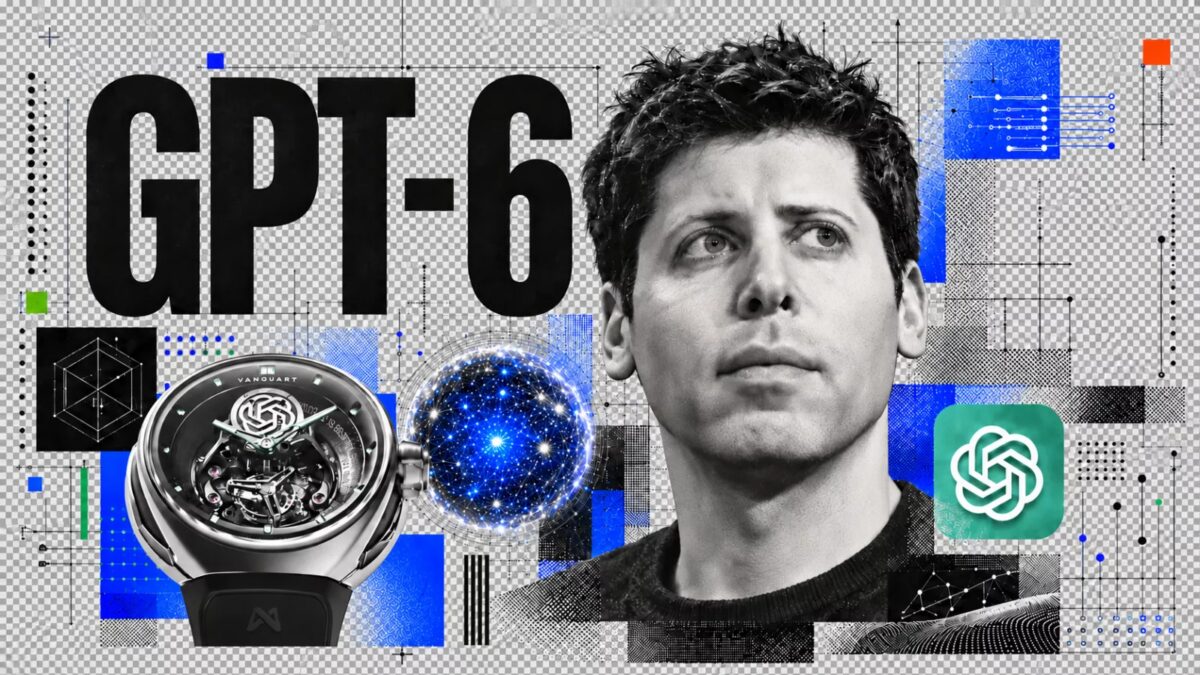
OpenAI president Greg Brockman is welcoming the world into the AGI era, Nvidia CEO Jensen Huang has declared artificial general intelligence to have arrived, and a growing number of people are worried about rogue AI agents attacking online platforms and wikis.
Since GPT-6 Astra launched last Thursday, the industry has been arguing over a question that has followed it for years: has artificial general intelligence arrived? Even inside the companies involved, the answers differ.
What the Key Players Are Saying
At the model’s unveiling, Brockman delivered the line that set off the debate: “Welcome to the AGI era.” Asked whether Astra is that moment, he replied, according to Axios: “I think it might be about this model.” At the same time, he described AGI as something closer to a mission or a spiritual concept than a measurable threshold.
Shortly afterwards, Jensen Huang posted on X: “AGI has arrived.” He pointed to the roughly 100,000 Grace Blackwell systems Astra was trained on and announced a further 400,000 GPUs. Nvidia is both supplier and investor here: across several funding rounds, the company has built a stake in OpenAI worth around 30 billion dollars.
Sam Altman chose more careful wording. In a conversation with journalist Alex Heath, he first questioned the term itself, calling AGI poorly defined. Asked about OpenAI’s own charter, which describes AGI as highly autonomous systems that outperform humans at most economically valuable work, he answered: “Sort of. Close at least.” Many people would see the latest internal models as very AGI-like, he said, while others could point to tasks where they still fail. He expects an internal system he would personally call AGI by the end of the year.
What the Model Measurably Delivers
The strongest evidence for a jump comes from ARC-AGI-3, a benchmark in which models have to explore unfamiliar game environments, work out the rules and plan their actions. The ARC Prize Foundation reports two figures: 62.7 percent on the standardized harness and 99.9 percent in a configuration that preserves the model’s reasoning state across requests. Its predecessor managed 7.78 percent. ARC co-founder François Chollet describes the behavior as efficient symbolic world modeling and has moved his previous AGI forecast of 2030 forward, because progress is arriving faster than he expected.
The same organization puts a limit on its own result: saturating ARC-AGI-3 would fall short of proving AGI, because its closed game worlds leave out the open-endedness of real tasks.
Other leaderboards produce other orderings. Artificial Analysis initially scored Astra at 61 points on its Intelligence Index, level with GPT-5.6 Sol and behind Claude Fable 5.1 at 66 points, as Trending Topics also reported. After the index was revised last Friday, adding harder tasks and doubling the weight of private test data to 40 percent, Astra sits four points ahead of Sol and still behind Fable 5.1. Epoch AI, by contrast, puts the model first out of 267 systems with 169 points.
That raises an obvious question: why should GPT-6 Astra count as AGI when Anthropic makes no such claim for the model ranked ahead of it on the Intelligence Index?
The launch itself supplied further numbers. Astra was trained on more than 100,000 GPUs at the Stargate data center in Texas, costs 10 dollars per million input tokens and 50 dollars per million output tokens through the API, and reached OpenAI’s internal “critical” risk level for cybersecurity, which is why access is being rolled out in stages.
The Expert Debate
Much of the dispute comes down to definitions. Cognitive science is registering reservations: Gary Marcus calls Astra a genuine advance and sees his long-standing case for symbolic world models vindicated. What stays open for him is how robust that capability is outside contained tests, particularly since OpenAI itself says the system is harder to monitor than earlier models. He criticizes Huang’s claim for lacking a definition and evidence.
A counterposition arrived from research earlier this year. UC San Diego scholars Eddy Keming Chen, Mikhail Belkin, Leon Bergen and David Danks argued in a Nature comment that today’s language models already meet reasonable standards of general intelligence. They measure generality by the breadth and depth of capabilities, explicitly without requiring perfection. The comment predates Astra and passes no judgment on the model itself.
Two yardsticks now sit side by side: one that asks AGI to perform reliably on open real-world tasks, and one that accepts human fallibility as the point of comparison. Depending on which yardstick applies, the same measurements yield different answers.
Where the Microsoft Contract Fits In
For a long time, the term AGI carried a contractual function between OpenAI and Microsoft. An earlier agreement tied Microsoft’s rights to the moment OpenAI declared AGI and an independent expert panel confirmed it. The revised deal struck in the spring dropped that clause. The core terms now run on fixed timelines:
- Revenue share: OpenAI pays Microsoft through 2030, with an overall cap and regardless of technological progress. Microsoft no longer pays a revenue share to OpenAI.
- License: Microsoft’s access to models and products runs through 2032 and is no longer exclusive.
- Cloud: OpenAI can distribute its products through any provider, with Azure remaining the preferred launch platform.
- Stake: Microsoft remains a major shareholder.
Under the publicly described terms, then, an AGI declaration triggers neither the end of the license nor the end of the payments. The full contract documents remain private, so individual details cannot be assessed conclusively from the outside.
To that extent, the AGI question has lost its contractual weight for OpenAI, since the tie to Microsoft holds either way.
Open Questions
For users and businesses, one practical question stays in the foreground: which tasks Astra handles reliably, how much oversight it needs and where its limits lie. Independent testing over longer periods and outside benchmark conditions is still to come, as is a shared definition against which any AGI declaration could be checked at all.
What remains is a term without a shared definition and without verifiable proof. The threshold in OpenAI’s own charter goes unanswered, the most important benchmark is explicitly disowned as evidence by the people who built it, the leaderboards contradict each other, and since the contract was rewritten the word carries no commercial weight either. AGI remains an unfulfilled buzzword that today serves one purpose above all: marketing.

Aus Datenschutz-Gründen ist dieser Inhalt ausgeblendet. Die Einbettung von externen Inhalten kann in den Datenschutz-Einstellungen aktiviert werden:
