

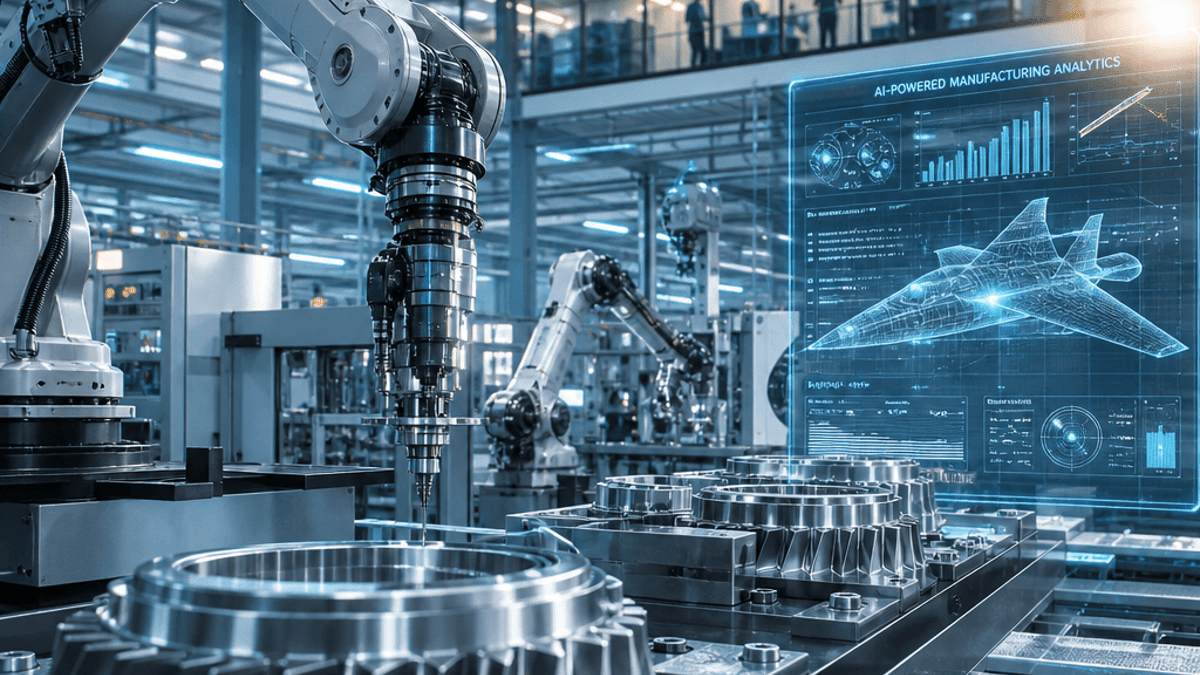
Defense tech startup Hadrian just crossed into near-unicorn territory with a fresh funding round that values the AI-powered manufacturing company at nearly $8 billion. The massive valuation signals a dramatic shift in venture capital as investors pile into defense technology startups riding President Trump’s military modernization push. It’s the latest sign that defense tech has moved from niche bet to mainstream VC obsession, with Hadrian joining a growing cohort of startups pulling down nine-figure rounds to reimagine everything from weapons production to logistics.
Hadrian just became one of the most valuable defense tech startups in the world. The company closed a funding round that values it at nearly $8 billion, CNBC reports, marking one of the largest venture bets on next-generation defense manufacturing to date.
The eye-popping valuation reflects a seismic shift happening across Silicon Valley and beyond. Defense tech, once considered too slow-moving and bureaucratic for venture capitalists, has become one of the hottest investment sectors. Hadrian’s rise tracks closely with the Trump administration’s aggressive push to modernize U.S. military capabilities, creating a gold rush mentality among investors hunting for the next Palantir or SpaceX.
Hadrian uses AI and advanced automation to manufacture precision components for defense applications, aiming to solve one of the Pentagon’s most pressing problems – an aging, slow industrial base that can’t keep pace with modern threats. Traditional defense contractors often take years to produce parts that Hadrian claims it can manufacture in weeks using its automated factories.
The funding comes as defense tech startups are collectively raising billions. Companies like Anduril, which builds autonomous weapons systems, and Shield AI, focused on AI pilots for fighter jets, have all closed massive rounds in recent months. The sector pulled in over $33 billion in venture funding last year alone, more than triple the amount from five years ago.
What’s driving the frenzy? The convergence of several factors – geopolitical tensions with China, the war in Ukraine exposing gaps in Western manufacturing capacity, and breakthroughs in AI that promise to revolutionize everything from logistics to targeting systems. The Trump administration’s stated goal of expanding military spending by $200 billion over the next decade only adds fuel to the fire.
For Hadrian specifically, the nearly $8 billion valuation suggests investors believe the company can capture significant share of the Pentagon’s roughly $400 billion annual procurement budget. That’s a bold bet considering Hadrian is still a relatively young company competing against entrenched giants like Lockheed Martin and Northrop Grumman.
But the startup playbook has proven effective in adjacent spaces. SpaceX disrupted launch services by undercutting traditional contractors on cost while moving faster. Palantir became indispensable for intelligence work by building software the legacy players couldn’t match. Hadrian and its peers are betting they can do the same for manufacturing – using AI, automation, and Silicon Valley speed to outmaneuver the old guard.
The risks are considerable. Defense contracts involve years-long sales cycles, intense scrutiny, and regulatory complexity that has crushed many startups. There’s also the question of whether these companies can actually deliver at scale – building a few prototypes is vastly different from producing thousands of components that must work flawlessly in combat conditions.
Yet the money keeps flowing. Venture firms that once avoided defense tech are now fighting for allocation in hot rounds. The calculus has shifted. What was once seen as a moral gray area is now framed as patriotic necessity. What seemed like a decades-long slog to profitability now looks like a fast track given government demand and budget priorities.
Hadrian’s near-$8 billion valuation also reflects broader trends in how the Pentagon is trying to work with commercial tech companies. New procurement vehicles like Other Transaction Authorities allow the military to buy from startups without the traditional bureaucratic overhead. That’s opened doors for companies like Hadrian that can move quickly but couldn’t navigate legacy contracting processes.
The company joins a handful of defense tech startups valued at over $1 billion, a club that barely existed five years ago. Anduril is reportedly valued above $14 billion. Shield AI has crossed the $2 billion mark. These valuations would have been unthinkable in the previous decade when defense was considered venture capital poison.
Hadrian’s nearly $8 billion valuation is more than a single company milestone – it’s a signal that defense tech has arrived as a major venture category. The combination of geopolitical pressure, Pentagon modernization efforts, and AI breakthroughs has created a perfect storm for startups promising to rebuild America’s defense industrial base. Whether these companies can deliver on their sky-high valuations remains to be seen, but the capital is clearly betting they will. For now, investors are treating defense tech like the next frontier, and Hadrian just planted one of the biggest flags on the hill.
