

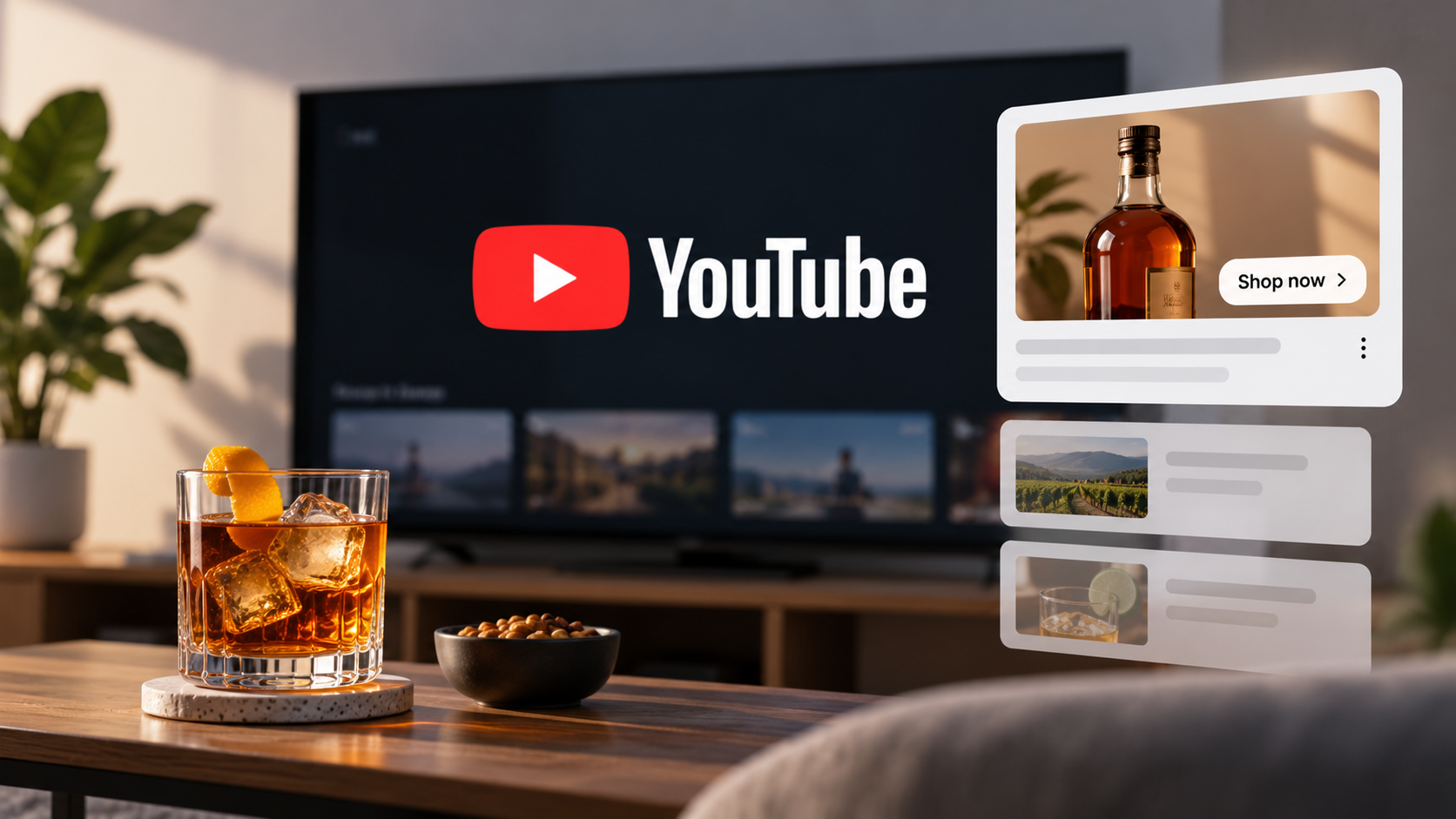
Google will allow personalized alcohol advertising on YouTube starting Oct. 30, in markets where local laws permit.
Google will allow advertisers to run personalized alcohol ads across YouTube inventory beginning Oct. 30th, where local laws permit.
The policy change opens personalized targeting on YouTube to a category that had previously been restricted, covering alcohol, alcohol-related products and alcohol alternatives.
Driving the news. Google said it is updating its personalized advertising policy for YouTube in response to growing advertiser interest, emerging categories and improvements to its controls and data protections.
The change means eligible alcohol advertisers will be able to use personalization when reaching audiences on YouTube rather than being limited to non-personalized advertising.
Why we care.Alcohol brands will be able to use personalized targeting on YouTube starting Oct. 30, where locally permitted. That gives eligible advertisers more control over who sees their campaigns, while expanding the types of alcohol and alcohol-alternative products that can use personalization — with existing age, sensitive-interest and geographic restrictions still in place.
The details. The update covers alcohol, alcohol-related products and alcohol alternative beverages. But the rollout isn’t global. Personalized alcohol advertising will remain unavailable in Egypt, India, Indonesia and Poland under the October update.
All alcohol ads will also remain subject to Google’s existing advertising policies and applicable local laws and regulations.
The guardrails: Google says its existing protections around sensitive targeting will remain in place. Advertisers will still be prohibited from targeting people based on health information related to alcohol, which falls under Google’s Health sensitive interest category.
Age restrictions will continue to apply, sensitive categories remain restricted and Google says it does not personalize ads for minors.
Users can also manage their advertising preferences through My Ad Center, including choosing topics and brands they want to see fewer ads about.
The big picture. The change gives alcohol brands access to more of Google’s personalized advertising capabilities without removing the restrictions the company applies to sensitive data, age and regulated products.
For advertisers, the immediate change is specific to YouTube. Google said it will provide more information as additional surfaces become available.
What’s next. The updated policy takes effect Oct. 30, with availability determined by local regulations and Google’s country-level advertising policies.
Search Engine Land is owned by Semrush. We remain committed to providing high-quality coverage of marketing topics. Unless otherwise noted, this page’s content was written by either an employee or a paid contractor of Semrush Inc.
About the Author
Anu Adegbola has been Paid Media Editor of Search Engine Landsince 2024. She coverspaid search, paid social, retail media, video and more.
In 2008, Anu started her career delivering digital marketing campaigns (mostly but not exclusively Paid Search) by building strategies, maximising ROI, automating repetitive processes and bringing efficiency from every part of marketing departments through inspiring leadership both on agency, client and marketing tech side.Outside editing Search Engine Land article she is the founder of PPC networking event – PPC Live and host ofweekly podcast PPC Live The Podcast.She is also an international speaker with some of the stages she has presented on being SMX (US, UK, Munich, Berlin), Friends of Search (Amsterdam, NL), brightonSEO, The Marketing Meetup, HeroConf (PPC Hero), SearchLove, BiddableWorld, SESLondon, PPC Chat Live, AdWorld Experience (Bologna, IT) and more.
${fullHTML}
`;
const collapseEl = document.getElementById(collapseId);
const truncatedWrap = bioEl.querySelector(‘.authorTruncatedBio’);
const lessLink = bioEl.querySelector(‘.authorReadLessLink’);
// If Bootstrap’s Collapse is available, wire it up. Otherwise, a tiny fallback.
const hasBootstrap = typeof bootstrap !== ‘undefined’ && bootstrap.Collapse;
if (hasBootstrap) {
collapseEl.addEventListener(‘show.bs.collapse’, () => {
truncatedWrap.classList.add(‘d-none’);
});
collapseEl.addEventListener(‘hide.bs.collapse’, () => {
truncatedWrap.classList.remove(‘d-none’);
});
collapseEl.addEventListener(‘shown.bs.collapse’, () => {
if (lessLink) {
lessLink.onclick = (e) => {
e.preventDefault();
bootstrap.Collapse.getOrCreateInstance(collapseEl).hide();
};
}
});
} else {
// Minimal JS fallback if Bootstrap isn’t present
const moreLink = bioEl.querySelector(‘.authorReadMoreLink’);
moreLink.addEventListener(‘click’, (e) => {
e.preventDefault();
collapseEl.style.display = ‘block’;
truncatedWrap.style.display = ‘none’;
});
if (lessLink) {
lessLink.addEventListener(‘click’, (e) => {
e.preventDefault();
collapseEl.style.display = ‘none’;
truncatedWrap.style.display = ”;
});
}
}
}
// Initialize all author bio blocks on the page (supports multiple posts/cards)
document.querySelectorAll(‘[id^=”authorBio”]’).forEach(initAuthorBio);
})();
