

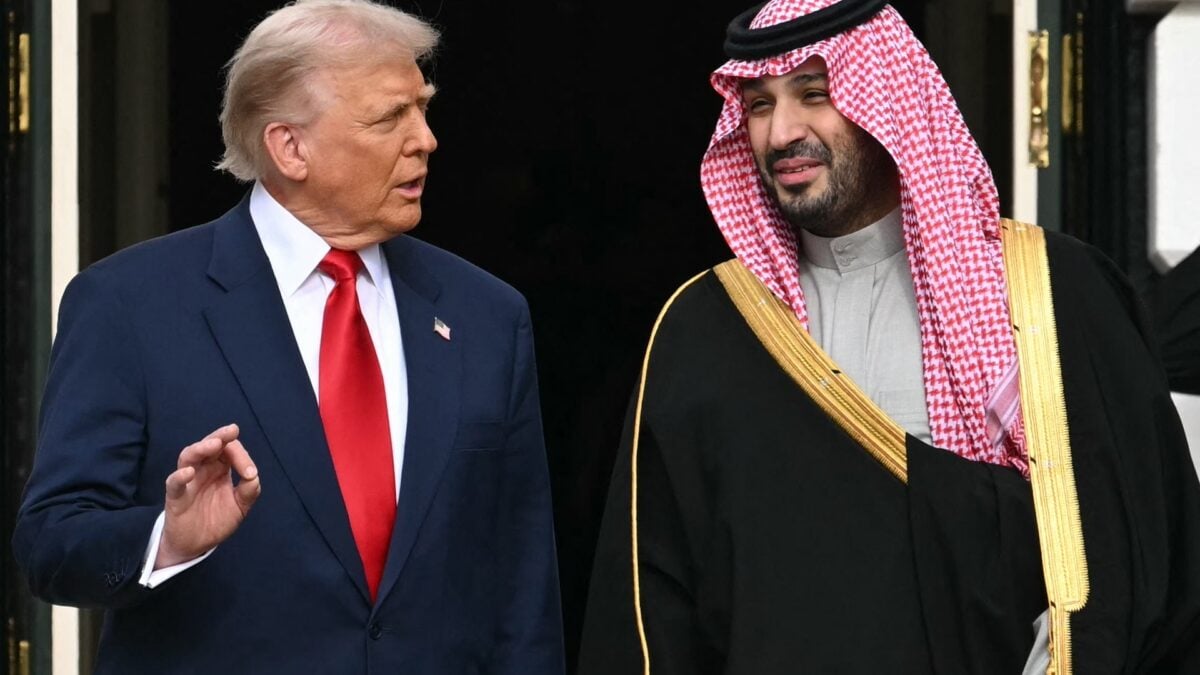
Americans’ hatred towards AI data centers is big business for the Kingdom of Saudi Arabia.
San Francisco-based tech startup Together AI<a href="https://www.businesswire.com/news/home/20260831746233/en/Together-AI-and-HUMAIN-Form-Strategic-Partnership-to-Accelerate-AI-Infrastructure-and-Cloud-Services-in-Saudi-Arabia” rel=”nofollow noopener” target=”_blank”>announcedon Monday that it’s partnering with Humain, the Saudi Arabian AI company founded last year by Crown Prince Mohammed bin Salman. The deal will give Together AI access to 250 megawatts of electricity from data centers located inside Saudi Arabia.
It’s the Kingdom’s latest move to cement itself as an epicenter for the AI industry and expand its investments beyond oil, which turned it into a global financial powerhouse. (Those ambitions appear to be unhindered by the U.S. War in Iran, which has resulted instrikes against Amazon Web Services (AWS) data centersin the United Arab Emirates and Bahrain.) “We are strengthening the region’s position as a global hub for AI infrastructure, cloud capabilities, and next-generation AI services,” Humain CEO Tareq Amin said in a statement.
To that same end, the Kingdom has also been strengthening its ties with the U.S. In May 2025, the Trump administration signed a $600 billion agreement with the Saudi government, through which the latter agreed to spend $20 billion on new data centers within the U.S. in exchange for “state-of-the-art warfighting equipment and services from over a dozen U.S. defense firms,” according to astatementfrom the White House.
For Together AI, the deal with Humain is a convenient way to skirt growing opposition to data centers back at home. Close to half (48%) of Americans “strongly oppose” new data centers being built in their area, according to aGallup pollconducted in March, compared to just 7% who said they “strongly favor” construction.
The power-guzzling facilities supplying the energy for the AI boom have become a political flashpoint in recent months. AI developers have gone on the defensive, promising big job growth for communities who embrace data centers and reductions in water usage. Trump has tried to dismiss the widespread and well-documented backlash as a foreign psy-op hellbent on derailing American supremacy in the AI race and naivete on the part of disgruntled communities, while the EPA is trying to scrap a decades-old public disclosure requirement that would make it easier for developers to start building new data centers without alerting communities at all.
“More and more, local communities don’t want data centers in their backyards, and there are a lot of cancellations and moratoriums, so U.S. capacity is becoming even more constrained,” Vipul Prakash, Together AI’s CEO and cofounder, told the New York Times in areportpublished Monday. Humain has additional partnerships withAWS,xAI(now SpaceXAI), and—as of last week—<a href="https://news.microsoft.com/source/emea/2026/08/microsoft-and-humain-announce-long-term-strategic-collaboration-to-enable-ai-transformation-in-saudi-arabia-and-beyond-2/” rel=”nofollow noopener” target=”_blank”>Microsoft. The Saudi Arabian AI company has also signed a deal with American startup Applied Intuition, aimed at “deploying thousands of autonomous trucks across key Saudi logistics corridors by 2030,” according to apress releasepublished Monday.
As the Brookings Institute pointed out in a report published earlier this month, the construction of new data centers in Saudi Arabia at a time of escalating conflict throughout the surrounding region raises serious risks and could ultimately backfire. “The consequences could extend beyond commercial losses and may result in degrading U.S. technological advantage,” the report reads, “accelerating rivals’ capabilities—especially China—and potentially undermining the integrity of AI systems on which critical functions depend.”
