

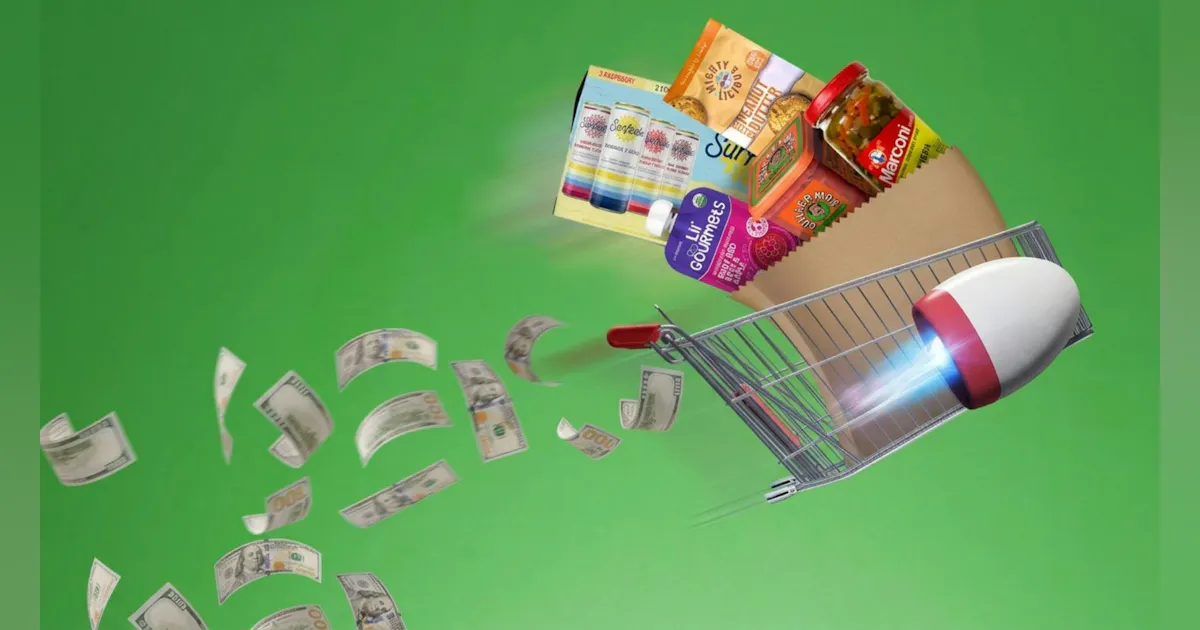
The food & beverage industry may seem loaded with mega companies that set the pace for the category. But it’s often the mid-sized and small companies and brands that disrupt, push the envelope, change the game — and hopefully find success.
Entrepreneurs push traditional categories into new territory, bucking the status quo and making people notice untapped potential. Sometimes, those entrepreneurial companies don’t make it. Plenty of them, however, find their niche and sometimes create demand for products consumers didn’t fully realize they wanted.
The Food & Beverage Entrepreneurs that we’ve chosen to feature this year have found success, but they’ve blazed their trails in different ways. Entrepreneurial companies aren’t always “new,” as Marconi Foods shows us this year (it has been around for more than 125 years) — but they can find success in a very short time, as Guillermo’s Salsa (which is less than a year old) also demonstrates.
All of them have found ways to thrive, typically by changing the game within their category, or even creating an entirely new category. And each one of the five we have highlighted this year holds lessons from which anyone in the industry can learn and use to rocket to success.

Guillermo’s Salsa
The Story, from Chris Kirby (co-founder & CEO), Guillermo Rodriguez (co-founder & “salsapreneur”) and Leo Chris Kasuya (co-founder & president) of Guillermo’s Salsa
In many ways, Guillermo’s could only have been built in America. Chris Kirby went from being a chef to building one of the country’s growing refrigerated food brands: Ithaca Hummus. He spent years proving that consumers were hungry for fresher food made with real ingredients and uncompromising quality. Meanwhile, Guillermo Rodriguez immigrated from Mexico and built a life in America through hard work, humility and an infectious sense of humor, ultimately becoming one of America’s most loved late-night television personalities. Food has always been central to his life because of what it represents: family, celebration and belonging.
Together, they saw an opportunity hiding in plain sight: Salsa is one of America’s most consumed condiments, yet much of the category had become a sea of products engineered for shelf life rather than flavor. They believed salsa deserved better. But turning that vision into a company required more than a great idea. This led Chris and Guillermo to partner with Leo Chris Kasuya, whose experience in building and scaling food brands helped turn that idea into a company built for national growth.
What were some of the early challenges for the company?
For the first four months, [Leo] was essentially the company’s only full-time employee. [Leo] could be pitching a retailer one minute and reviewing packaging, solving a manufacturing issue, answering consumers or building financial models the next. At first, that’s energizing. But eventually, it becomes the biggest risk to the company, because no business scales when every important decision flows through one person. And so our biggest challenge has been building the infrastructure to support our growth without losing the agility that got us here.
What’s a recent challenge the company overcame?
This ties back to the last question, but over the past several months we’ve added leadership across operations, finance, sales, insights, customer support and community management, all while building a network of agency partners, brokers and specialists around them. We still operate with the speed of a startup, but we’re no longer trying to prove how much we can endure. Our goal isn’t to build the biggest team. It’s to build the right one, so that we can deliver for our consumers, retail partners and one another for years to come.
What’s the next big thing we should expect from your company?
If our first chapter was proving consumers wanted a fresher, better salsa, the next is making sure they can find it. This fall, Guillermo’s is expanding nationwide with Kroger, bringing our salsa to more than 2,500 stores across 35 states. This expansion coincides with Guillermo’s debut on “Dancing with the Stars,” creating an exciting opportunity to introduce the brand to millions more people.
Lil’ Gourmets
The Story, from Shibani Baluja, founder and CEO of Lil’ Gourmets
Lil’ Gourmets was born out of both my life experiences and medical research. My long struggle with infertility led me to eliminate all processed foods from my diet. Once I became a mom, I realized the baby food aisle was filled with the same over-processed foods. At the time, I was a director of mergers & acquisitions at Kraft Foods.
My role in strategy provided me with knowledge and data. As a mom, I understood the struggle to find any convenient options that I felt good about feeding my kids. As a strategist, I saw whitespace and an incredible opportunity for disruption and to elevate a category. As a seasoned professional in the food industry, I knew we could and should do better for our youngest eaters.
When we launched, fresh baby food was less than 1% of the baby food category. There was no consumer or retailer awareness. Retailers didn’t have clear decision makers, so finding the right person to sell to took time and often internal alignment. And in-store placement was sometimes in Produce and sometimes in Dairy, making findability an issue for parents.
What’s a recent challenge the company successfully solved?
Over the past year, we found ourselves short on organic cauliflower, which is the primary ingredient in our Cauliflower & Carrot flavor. There were no prospects of supply with our primary supplier for months on end. Further complicating the situation, our co-packer has requirements on the format they can work with. We had to get creative to maintain our high standards, leaning hard on our supplier relationships and building new ones to secure the ingredients we needed and get them to the specification that our co-packer required. We unfortunately did have to go out of stock on this flavor, but have since solved it, and it’s now back on shelves.
Do you have any goals for the company or product line?
With the early introduction of veggies, we strive to change kids’ perception of veggies from something they have to eat to something they love to eat. And by introducing global flavors and cultures early on, we strive to increase acceptance and appreciation of diversity and a curiosity of the world. Today, 60% of children’s calories come from ultraprocessed foods. We’re working to drive systemic change by reducing our addiction to processed foods, which will reduce childhood obesity and diet-related disease. To drive that systematic change, we need to greatly increase our accessibility, both in points of distribution and in price.
Marconi Foods
The Story, from Jeff Johnson, president of Marconi Foods
Our founder, Vincent Formusa, came to Chicago from Sicily in 1892, and worked in watch-making. He helped other Italians immigrate to Chicago and saw growing demand for Italian food products, so he began importing olive oil, pasta, produce and other specialty items to sell to the Italian community. In 1898, he established his company, V. Formusa Co., and as the years went by the focus of the business went from importing to packing and distribution.
When my grandfather (Vincent’s oldest son), Peter, took over the business upon Vincent’s death, he continued to grow it all over Chicago. Peter had four daughters, one of which is my mother, Sue. She married my father, Robert Johnson, who began to work for Peter. Peter unexpectedly passed away in 1976, my parents took ownership of the company and it grew exponentially. The popularity of Marconi giardiniera began to grow, and as the foodservice business grew, so did the retail business. Today, my parents are both still very involved in the business. I run the day-to-day operations with my sister, Joey, but Mom and Dad still spend plenty time here, even after 50-plus years.
How does your company’s primary product stand out?
What we are best known for today is our line of giardiniera products. The biggest stand-out point for our giardiniera is that we are the original Chicago-style. We have been doing it the longest and have the most consistent product available. We work very hard to ensure that every jar our customers grab delivers the same great flavor and crunch, no matter where they find it.
Giardiniera continues to grow in popularity. On its own, it is an amazing product. But the offshoots that can happen with giardiniera and other uses (beyond Italian beef) are limitless. We have a number of new innovative products and “collabs” in the hopper. Different sauces, spreads and seasonings are all on the horizon. Each with its own unique spin, using giardiniera as the backbone.
What’s the best advice you can give other food & beverage entrepreneurs?
The food business can be a wild place. The number of gimmicky marketing tactics, trend analyses, focus groups and all other types of information out there to garner sales can be staggering. A company with a history as vast as ours has seen countless trends come and go. So, my advice is stay true to your brand and product. Trying to stay on top of trends just to make a few extra dollars may seem like a good idea in the short term, but in order to build a legacy, people look for consistency. That’s what we’ve always tried to provide in a brand people can count on.
Mightylicious
The Story, from Carolyn Haeler, founder and CEO of Mightylicious
In 2012, I was diagnosed with celiac disease, and as a lifelong foodie and baking enthusiast, I found many gluten-free products on the market to be uninspiring when it came to taste and texture. In 2017, I left a lucrative job in finance at JP Morgan and spent four months baking 15 hours a day, looking to create the perfect gluten-free cookie.
That resulted in development of a rice flour blend that worked for baking (most at the time were manufactured for cooking applications and did not work well for baking). By 2020, I had applied that flour blend to my grandmother’s 100-year-old family recipe to create a vegan, gluten-free oatmeal coconut cookie for Whole Foods. The product took off, and today, Mightylicious offers seven gluten-free cookie varieties, and three gluten-free flour blends and baking mixes, across 43 states in the U.S.
Were there any challenges with creating new varieties or lines that you’ve rolled out?
Developing new varieties has presented some unique challenges, particularly with maintaining the taste, texture and quality that customers expect, while keeping the products gluten-free. Gluten-free formulations can be more sensitive to ingredient ratios and baking conditions, so introducing new flavors often requires additional testing and adjustments. We’ve spent time refining recipes to make sure each new variety delivers the same delicious, high-quality experience as our existing cookies. While the development process can take longer, it has also allowed us to be creative and continue expanding the Mightylicious line.
Continuing to grow the brand while expanding the ways people can enjoy our cookies. We’re always exploring new flavors and opportunities to bring our gluten-free products to more customers, but we’re also very intentional about growing at the right pace and maintaining the quality that has always been at the heart of Mightylicious. For me, the most exciting part is continuing to innovate — creating delicious gluten-free cookies that surprise people with just how good gluten-free can be.
My best advice is to be patient, stay true to your product and never underestimate how much there is to learn. Building a food company takes time, and there will inevitably be challenges with production, costs, distribution and getting your product in front of the right customers. I also believe it’s important to listen to your customers, your retailers and the people around you. Some of the best ideas and improvements come from simply paying attention to what people are telling you. Most importantly, make sure you genuinely believe in what you’re creating. There are going to be difficult days, and when you’re passionate about your product and your purpose, that belief helps you keep moving forward.
Stateside Brands (Surfside)
The Story, from Clement Pappas, co-founder and CEO of Stateside Brands
In 2013, Matt and Bryan Quigley had the idea to create an ultra-premium American vodka from Philadelphia. In 2014, I met them and by 2015, my brother Zach and I joined them. We spent the next few years building Stateside Vodka, and in 2020, we created Stateside Vodka Sodas, our first foray into the RTD category.
Then, Matt began noticing all the empty iced tea bottles and cans discarded around the city. Iced tea is everywhere in Philadelphia. With that key insight, we felt strongly about the opportunity for a great tasting vodka iced tea beverage. So, we developed one that we would like to drink ourselves: Surfside. Since launching in 2021, Surfside has experienced a meteoric rise from a beloved hometown RTD brand in Philly to the spirits-RTD Hard Tea and Hard Lemonade category leader.
We hear time and time again from our fans how much they love the taste of Surfside and all our flavors. We take enormous care in always crafting the best tasting liquid possible, as well as being recognized as the best tasting iced tea and lemonade RTD brand in the market. The Surfside product, brand name, design and packaging are all new-to-world and authentic, which has created a powerful consumer proposition that resonates with people who live an active lifestyle.
The launch of our new RTD brand Super Lyte has proven to be an excellent challenge and wonderful success story. We set out to lead this new and emerging vodka + ade category, and decided to expedite the initial launch as well as the national launch. All four flavors — Blue Chill, Lemon Lime, Orange and Fruit Punch — have been a tremendous hit with our target consumer. Super Lyte has already depleted over 1.4 million cases in just more than five months and only 24 states (as of presstime in mid-August). With that success, the challenge we faced was to scale production even faster than anticipated. Our entire team worked diligently to meet this challenge as we take the brand national this fall.
Stateside Brands will continue to grow and lead the RTD spirits category through continued penetration of the Surfside brand both nationally and internationally. Our new Super Lyte brand has tremendous upside. We believe the Stateside Vodka brand has the opportunity to play a true challenger role in the premium vodka category, and exciting plans are on the way. The broader Stateside Brands portfolio will continue to grow and evolve as we assess strong market opportunities. We remain committed to being a best-in-class organization, with a relentless focus on driving leadership and innovation in the RTD spirits category.
