

EU makes product IDs mandatory for e-commerce imports
Insights
- The European Union made product identifiers mandatory for goods sold online and declared for customs from November 1, 2026, to improve traceability and detect unsafe or non-compliant imports.
- Declarations must include merchant, non-standardised manufacturer and standardised product identifiers.
- The rules apply across all 27 member states, with more comprehensive data requirements planned for July 2028.
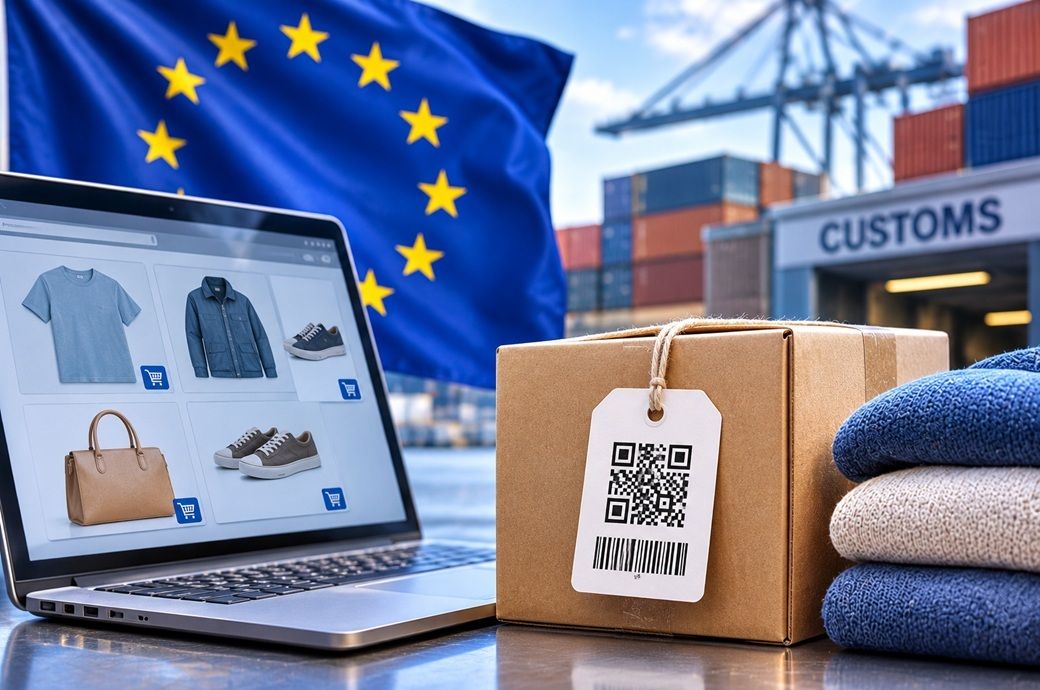
Product identifiers are now mandatory for goods sold in distance sales and declared for EU customs, adding product-level traceability requirements for e-commerce imports into the bloc from November 1, 2026.
The requirement is intended to help customs authorities detect non-compliant and dangerous products more effectively and at scale, protecting EU citizens, the environment and the Single Market from harmful products. It also aims to support fairer competition for EU businesses that comply with EU rules, the European Commission said in a press release.
EU-wide customs control actions by customs authorities across all 27 Member States, together with market surveillance authorities, showed that numerous low-value goods bought online from outside the EU do not comply with EU product requirements and safety rules, according to the Commission.
The new identifiers build on traditional tariff classifications and product descriptions by allowing customs authorities to identify specific products more precisely and scale up controls. When one product is found to be non-compliant or dangerous, customs can extend that control result to all products presenting a similar risk, including those sold by other sellers or on other platforms.
For each product in the customs declaration, declarants must provide a merchant product identifier, or M-PID, which gives customs the product reference on the website, marketplace or platform where it is offered for sale. The M-PID, set by the online seller, marketplace or platform, allows customs to trace the specific product and offer and is unique on that platform.
Declarations must also include a non-standardised manufacturer product identifier, or NS-PID, which links the product to its manufacturer and model so that customs can find the same product on different platforms. This is the manufacturer’s own reference, such as a model, part or style number, and does not follow an international format.
A standardised manufacturer product identifier, or S-PID, must identify the exact product internationally and can usually be verified publicly. It follows an international standard and is usually printed as a barcode, such as an EAN, UPC or ISBN number. If the product has no S-PID, this must be indicated in the declaration using a specific exemption code.
The Commission said the identifiers generally already exist in the supply chain, including in product listings, invoices or on packaging, so no new data needs to be created. Online platforms and manufacturers pass them on along the supply chain, while the declarant, such as an IOSS holder or customs representative, reports them in the customs declaration.
Operators were able to start providing product identifiers voluntarily from July 1, 2026, without penalties. The requirement became mandatory and enforceable on November 1, 2026, and more comprehensive product data requirements are scheduled to follow in July 2028, once the EU Customs Data Hub for e-commerce is deployed.
More E-commerce News – Europe…
Popular News
Editor’s Pick

E-commerceEU makes product IDs mandatory for e-commerce imports
3 min read
Apparel/GarmentsBangladesh RMG sector: Can it stay on course amid challenges?
4 min read
TextilesNetherlands’ factory output prices rise 8.3% in September
1 min read
Interviews
View All
Chen GangGuangzhou Allallinfo Co., Ltd.
We aspire to be a full-chain enabler that helps enterprises …
Andreas RassZIMMER AUSTRIA
Our technologies cover the full spectrum of carpet…
Raj ManekMesse Frankfurt India Asia Holdings Ltd
Shaping India’s future in technical textiles
Archana ChaudharyPomcha Jaipur
Our goal is not to chase fashion trends, but to create…
Krutika Bhupta9shines Label
We don’t change the nightie’s purpose, only how it feels…
Allon CohneNoble Biomaterials CMO
Ionic+ allows for flexibility in all end use applications
Esteemed Clients
‘ +
‘
‘;
}
}
colHTML += ”
“;
}
slideHTML += colHTML + ”
“;
$(‘.client-horizontal1’).slick(‘slickAdd’, slideHTML);
}
$(‘.client-horizontal1’).slick(‘setPosition’);
},
error: function (data) {
console.log(data);
},
complete: function () {
isLoadingClients = false;
}
});
});
