

The first team to launch a kilobit-scale tensor network solver
This article is about 2700 words, with a recommended reading time of 6 minutes
36Kr has learned that Entropy Function (Shenzhen) Technology Co., Ltd. (hereinafter referred to as “Entropy Function”) has recently successfully completed tens of millions of yuan in angel round financing. This round of financing is led by GSR Ventures, followed by institutions including Wofu Ventures, Shuimu Capital, Hainfinity, Lingyi Ventures and other institutions. The raised funds will be mainly used for the core capability building of the quantum computing power operation platform, talent recruitment, accelerating the implementation of industrial-grade quantum computing power, and improving the service capability for scientific research institutions and industrial users.
Entropy Function was founded in 2023, focusing on providing quantum computing and quantum simulation solutions for scientific research and industrial customers under large-scale systems. The company was co-founded by Ma Guoqiang and Gu Zhengcheng. Ma Guoqiang holds a doctorate in physics from Nanjing University, has started three businesses in total, with two companies acquired by A-share listed firms and one acquired by a Nasdaq-listed firm, and he won the Second Prize of National Award for Progress in Science and Technology. Gu Zhengcheng is a professor at the Chinese University of Hong Kong, whose research direction is quantum many-body physics, and he has published more than 70 papers. The two have a clear division of labor: Ma Guoqiang is in charge of commercialization, and Gu Zhengcheng leads the technical R&D.
At present, quantum computing is on the eve of moving from the laboratory to industrialization, but there is an awkward reality: the demand on the industrial side has begun to be released, but the commercially available, large-scale and stably output quantum computing power is almost in a blank state.
The bottleneck of quantum hardware is difficult to break through in the short term, and the number of stable and usable logical qubits is still single-digit or small dozens. What the industrial side really needs is the computing power at the kilobit level. In the fields of advanced materials such as high-temperature superconductivity, nuclear fusion energy storage materials, high-entropy alloys, and solid-state battery interfaces, the solution of many key mechanisms relies on this scale.
The strategy of Entropy Function is “simulation first, hardware grid-connection, integration and collaboration“. Before quantum hardware matures, tensor networks are used to provide available commercial quantum computing power, and after the hardware is gradually iterated, it will be seamlessly connected to form an integrated computing system of “classical computing power + quantum simulation + real quantum hardware”. This route greatly advances the industrialization timeline of quantum computing.
Different from traditional quantum computing companies that focus on hardware R&D, Entropy Function’s idea is “no hardware, focus on software” — using tensor network algorithms to simulate quantum computing capabilities on CPU/GPU clusters.
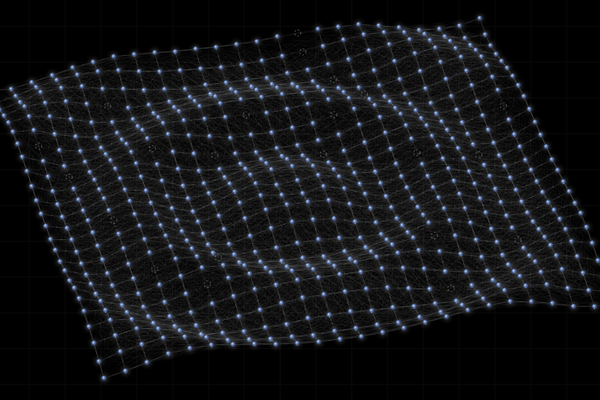
What is a tensor network? In popular terms, it is an “efficient translator” for quantum states — it can accurately extract effective information from a chaotic and complex quantum system, filter out invalid noise, and optimize the characterization efficiency of quantum states.
At present, Entropy Function is the first team in the industry to launch a tensor network solver for two-dimensional quantum systems. Previously, most tensor network solvers were designed for one-dimensional systems, and to simulate a quantum computer (whose interior itself is a two-dimensional quantum system), this limitation must be broken through. On this basis, Entropy Function further realized the capability of tensor network-driven general quantum circuits this year, making it functionally completely equivalent to quantum computers.
Specifically, the company’s self-developed Entropec quantum computing engine does not require dedicated quantum hardware, and can complete quantum simulation computing tasks for quantum circuits with up to thousands of qubits and less than 100 layers in a moderately entangled system through a classical supercomputing cluster, with a relative error better than 1e-5. It has obvious advantages in computing scale, accuracy and quantum circuit depth, and can promote the rapid implementation of quantum computing in cutting-edge R&D scenarios oriented to quantum effects such as quantum computer manufacturing, drug molecules, superconducting materials, battery interfaces, and high-entropy alloys.
On August 3, at the 5th CCF Quantum Computing Conference, Guangdong-Hong Kong-Macao Greater Bay Area (Guangdong) Quantum Science Center, National Supercomputing Shenzhen Center and Entropy Function jointly released the Entropec quantum computing power platform. It was revealed that the Entropec platform will be fully open for commercial operation in October 2026.
Relying on the “Lingsheng” supercomputing system of the National Supercomputing Shenzhen Center, the platform deploys an industrial-grade tensor network engine, and stably outputs quantum simulation and quantum circuit computing capabilities at the kilobit scale on a classical supercomputing cluster, without relying on any quantum hardware. This is the first time in China that quantum computing power has been pushed to this order of magnitude.
According to Ma Guoqiang, Entropy Function’s commercialization path is divided into two steps: the current stage serves leading quantum scientific research institutions (such as the Greater Bay Area Quantum Center, Tsinghua University, the University of Hong Kong, the Hong Kong University of Science and Technology, etc.) in a software-based way, and customers develop upper-layer algorithms on its engine. It is expected to close about 30 million yuan of orders this year.
But software sales are not the ultimate model. The real closed loop lies in building a quantum algorithm community. The algorithms developed by scientific research institutions on the engine flow back to the community, and after the ecosystem matures, they will be opened to industrial enterprises such as drug molecules and advanced materials in the form of cloud computing power. The platform provides standardized interfaces, developers contribute algorithms and participate in revenue sharing, users pay according to computing power consumption, and the compound gross profit margin is expected to reach more than 80%.
The following is an excerpt of the dialogue between 36Kr and Ma Guoqiang, the founder of Entropy Function (edited):
36Kr: There is a view from the outside world that tensor networks are only a “temporary solution” before quantum hardware matures. Do you agree with this?
Ma Guoqiang: This is a common misunderstanding. Tensor networks and quantum computers solve the same problem, which is the calculation of complex quantum systems. The advantages and disadvantages of the two are naturally complementary. Tensor networks can be large-scale (1000 logical qubits or even more), but can only handle quantum entanglement of moderate intensity; quantum hardware can achieve very strong entanglement, but the scale cannot go up.
So this is not a relationship where one replaces the other, but a relationship of integrated computing. In most computing tasks, long-range strong entanglement only occurs in local areas, not throughout the entire system. The large-scale, low-entanglement part is handed over to the tensor network, and the local part with high entanglement is extracted for quantum hardware to calculate. Conversely, tensor networks are the “force multiplier” of quantum hardware. This route will never be eliminated. Even if the hardware can prepare 10,000 logical qubits, the tensor network can handle tasks with 100,000 logical qubits.
36Kr: The overall scale of the quantum computing industry at this stage is still small. As a computing power supplier, how do you view the market demand?
Ma Guoqiang: Up to now, there is almost no market for quantum computing power. It is not because there is no demand, but because there has been no supply. How did people solve this problem before? Relying on experiments, drug screening takes several years, and the same is true for materials. The real value we provide is to allow them to shift from experiment-driven to calculation-driven, which not only improves efficiency, but also enables them to discover laws at a more essential level.
So we are quite the first batch of people trying to make this happen. Of course, this industry is not perfect now, and we also have many problems. But in some scenarios and with some capabilities, we can provide the initial state of calculation-driven development. For the entire industry to prosper, the supply of computing power and downstream algorithms must promote each other. When I have the initial computing power, downstream algorithms will come out, and the algorithms in turn will stimulate the optimization of computing power, and then generate more and better algorithms, and the two flywheels will gradually move upward. But today this cycle has not yet formed, and everyone is still in the experiment-driven stage.
36Kr: At present, quantum hardware is not yet mature. How do you consider the subsequent “grid-connection” issue?
Ma Guoqiang: This is indeed a key issue. Most of the hardware made by quantum computer companies on the market may be difficult to directly integrate with us for integrated computing. So we are also talking with some hardware manufacturers, and even considering investing in some of them.
But our idea is: we do not require the other party to build a general-purpose quantum computer. When it is connected to our grid, we only need its quantum entanglement processing capability, and do not require the scale to be very large. The problem of large scale is solved by tensor networks, and the problem of long-range strong entanglement is solved by hardware. Therefore, the technical indicators and technical routes of hardware do not need to be required according to the standard of “general-purpose computing”.
Our goal is to have hardware that can be connected to the grid within one year, instead of waiting for three to five years. We will first build a “coprocessor” that can cooperate with us, instead of pursuing general-purpose computing from the very beginning.
Shanghai Wofu Qien Venture Capital Partnership (Limited Partnership) (Wofu Qien) stated: Investment in the quantum field is very hot, but the closed loop of business logic and the difficulty of monetization make investment in this track more difficult than in other fields in the past. In the foreseeable future, the quantum hardware field will most likely adopt multi-route parallel development, and the supporting software algorithms will get the application closed loop earlier than the hardware, and achieve commercialization earlier. Entropy Function’s use of tensor networks to realize quantum many-body simulation is a very smart move, and the combination of scientists and serial successful entrepreneurs makes us very optimistic about the subsequent development path of Entropy Function. Coupled with the kilobit-scale Entropec quantum computing power platform jointly launched with the Guangdong-Hong Kong-Macao Greater Bay Area (Guangdong) Quantum Science Center and the National Supercomputing Shenzhen Center, we believe that Entropy Function will catch up from behind and quickly become a shining new star in the quantum field.
