

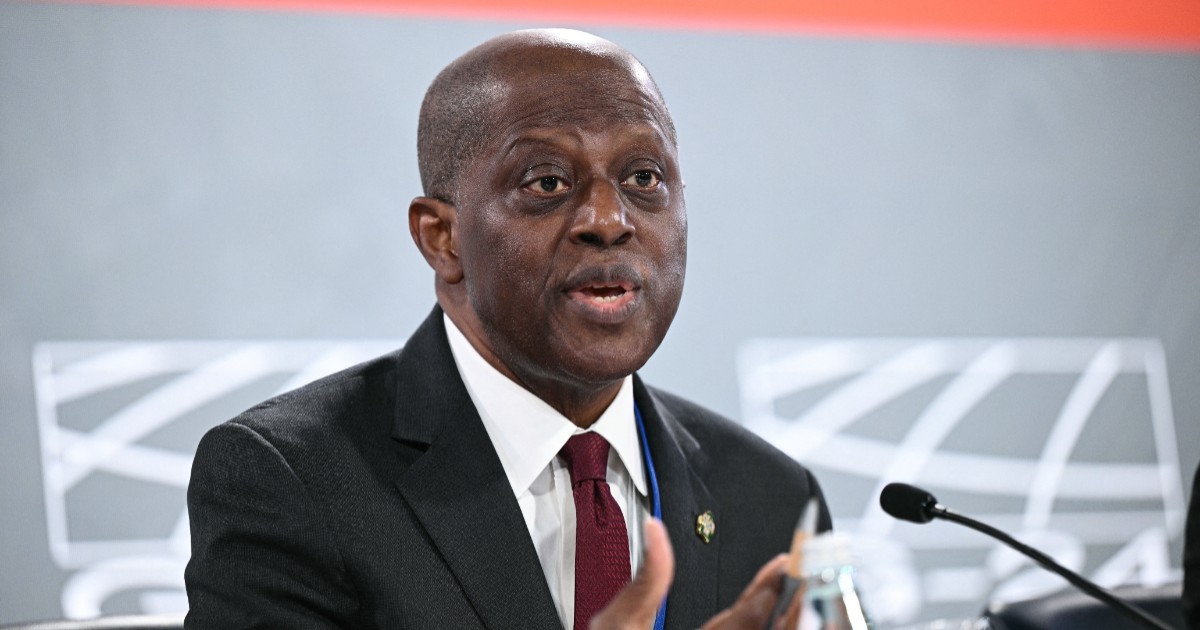
- CBN Governor Yemi Cardoso says Africa should increasingly finance its own development by mobilising pension assets, insurance funds, domestic savings and diaspora wealth.
- He warned that global capital has become more selective, making it harder for emerging markets to rely on external financing.
- Cardoso urged African countries to prioritise investment that creates jobs, transfers technology and strengthens local industries rather than simply extracting resources.
- He also called for deeper regional trade, macroeconomic stability and greater investment in young people to position Africa for an AI-driven global economy.
Speaking at the Emerging Markets Forum in Abuja on Wednesday, Cardoso said Africa should mobilise its vast pension assets, insurance funds, domestic savings and diaspora wealth to build productive industries capable of creating jobs and strengthening the continent’s economic resilience.
“Capital has become selective and impatient,” Cardoso said, warning that the changing global economic order demands a different development strategy for emerging markets.
His remarks come as African governments face tighter global financial conditions, with rising borrowing costs, slower foreign direct investment inflows and growing competition for international capital.
DON’T MISS THIS:Nigeria bets on digital payments to rewire global finance and cut reliance on reserve currencies
At the same time, institutional investors across the continent are managing rapidly expanding pools of long-term savings that economists increasingly argue could play a larger role in financing infrastructure and industrial development.
According to the African Development Bank, Africa’s pension industry has grown significantly over the past decade, with South Africa accounting for the continent’s largest pension market, while Nigeria, Kenya, Botswana and Namibia continue to expand their long-term institutional savings.
Invest in Africa, not just extract from it
Cardoso argued that attracting foreign investment should remain a priority, but said governments must focus on investment that builds productive capacity rather than simply extracting natural resources.
DON’T MISS THIS:Nigeria moves to track every official retail dollar sale in latest push to rebuild confidence in FX market
“We must also seek foreign investment that creates jobs, transfers technology, develops local suppliers and strengthens African businesses, not investment that simply extracts value and leaves,” he said.
The comments come as African countries seek to capture greater value from their abundant reserves of critical minerals needed for electric vehicles, batteries and clean energy technologies, with policymakers increasingly advocating local processing and manufacturing instead of exporting raw materials.
Stability remains the foundation
Cardoso said macroeconomic stability remains the first requirement for sustainable industrialisation.
He pointed to Nigeria’s recent economic reforms, including exchange-rate liberalisation, tighter monetary policy, improved transparency in the foreign exchange market and an end to monetary financing of fiscal deficits, arguing that difficult policy decisions have helped rebuild investor confidence.
DON’T MISS THIS:
“Credibility is built intentionally, one right decision after another,” he said.
He added that Africa’s long-term competitiveness would depend not only on stable economies but also on deeper regional integration through the African Continental Free Trade Area (AfCFTA), greater investment in young people and women, and preparing the workforce for an economy increasingly shaped by artificial intelligence.
Cardoso said the continent now has an opportunity to move from being a passive participant in the global economy to helping shape its future.
“The world is changing,” he said. “Let us seize this moment for Africa.”
