

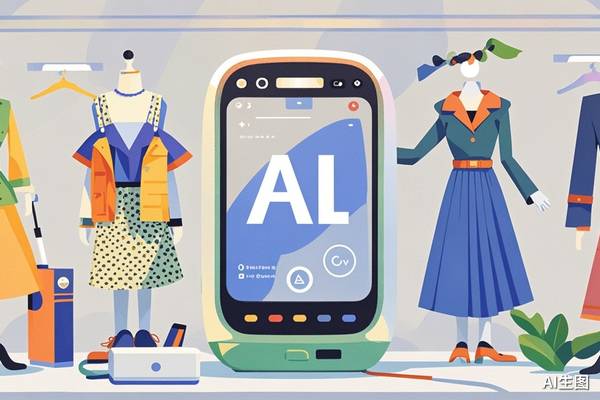
Yiliu AI: An AI content marketing tool exclusively built for physical clothing stores
When the traffic anxiety of brick-and-mortar clothing stores collides with the AI content <a href="https://bitcomme.com/australian-tech-leaders-overestimate-developer-productivity/” title=”Australian tech leaders overestimate developer productivity”>productivity revolution, YiLiu AI, an AI tool tailor-made for clothing retail scenarios, is quietly rewriting the rules of content marketing games for offline clothing stores.
The customer acquisition dilemma of offline clothing stores is the core driving force that gave birth to YiLiu AI. In recent years, local traffic has become the core growth source for physical clothing stores and clothing studios, but most small and medium-sized store owners neither have a professional content creation team nor systematic content marketing capabilities: shooting and retouching images takes most of the day, they cannot find inspiration for copywriting, the threshold of editing short videos is too high, and the content they finally produce fails to match the preferences of local users. They spend a lot of time and energy but fail to attract customers to the store. On the other hand, cross-functional teams with both Internet AI technology capabilities and practical experience in the clothing industry found that general-purpose AI tools cannot meet the customer acquisition needs of clothing stores, and there has long been a lack of a truly vertical AI content marketing tool dedicated to the clothing retail scenario. Aiming at this precise market gap, the YiLiu AI project was officially launched. It has now completed product development and launch, and served a number of real physical store users.
The development of the project started from the collision of cross-industry demands, and the industry accumulation of the two founders has become the core support for the rapid advancement of the project. Founder Wu Cheng has more than 6 years of experience in Internet product R&D. He previously worked at Baidu Intelligent Cloud and Dewu, participated in the construction of machine learning platforms and content businesses serving hundreds of millions of users, and has mature capabilities in product planning, system construction and project implementation. The other founder, Li Yanan, has been deeply engaged in the clothing industry for 5 years, long engaged in clothing IP and influencer training, has cumulatively served tens of thousands of offline and private domain students, has practical experience in self-media operation and live streaming, is familiar with the operation and customer acquisition scenarios of clothing stores, and accurately grasps the real pain points of front-line store owners. From demand sorting and product conception to technology R&D in 2023, the team completed the development of core functions in less than a year, launched the product for real store testing, and successively solved a number of industry adaptation problems during the period, such as the content generated by general AI not conforming to the characteristics of clothing categories and adapting to local customer acquisition scripts, and finally realized the product launch.
Different from general AI content generation tools, the core technical highlight of YiLiu AI lies in the model training and function adaptation that are completely vertical to the clothing retail scenario. Aiming at the core demand of local customer acquisition for clothing stores, the project has carried out special model optimization for the display characteristics of clothing categories and the content preferences of local users, which can generate content that meets the store drainage needs with one click, including Moments copy, Xiaohongshu marketing images and texts, and short video scripts for store drainage. It lowers the usage threshold for clothing store owners who have no content creation foundation, enabling them to quickly produce drainage content that complies with platform rules without professional skills, and solves the core pain points of slow content production and unstable quality in stores.
For China’s physical clothing retail market, YiLiu AI has a huge potential market space. According to relevant industry statistics, the total number of offline clothing stores and clothing studios in China exceeds 10 million, more than 90% of which are small and medium-sized merchants lacking professional content operation capabilities, and the demand for AI-empowered content marketing has not been fully met. The market size of the clothing store content marketing scenario alone has reached tens of billions of yuan. If the content marketing needs of links such as clothing wholesale and supply chain are further covered, the overall market space will be further expanded.
At present, YiLiu AI has been opened for use by real stores, and a number of physical store owners who tried it in advance have given positive feedback. A women’s clothing store owner in Hangzhou, Zhejiang said that it used to take her half an hour to write a Moments copy, but now she can generate copy that fits the style in more than ten seconds with YiLiu AI, saving several hours a week for inventory management and store keeping, and the likes and inquiries for the content she posted are much higher than before. A founder of a clothing studio in Guangzhou mentioned that he did not know how to shoot and retouch images, and the image and text generation function of YiLiu AI helped him quickly complete the Xiaohongshu marketing content, and he has already attracted three batches of new customers to the store through the content.
At present, YiLiu AI has not disclosed financing related information. The core goal of the project at this stage is to connect more clothing studios, physical stores and industry service providers, collect real trial feedback to polish the product. The subsequent project team will continue to deeply explore the content needs of clothing retail stores, continuously improve the content marketing capabilities of images, texts and short videos, and keep iterating in line with the changes of rules of various platforms and user preferences. At the same time, the content production capability polished for the clothing retail scenario is also applicable to practitioners in clothing wholesalers and supply chain links, which can help them complete content distribution and marketing for downstream stores at lower costs. At present, the project also looks forward to further communication with partners who have industry channels, merchant resources or investment capabilities, to jointly verify the commercial value of the product.
Looking back on the process of the project from conception to implementation, the two founders said that there are still many unmet segmented demands in the digital upgrading of the physical clothing industry. Only when AI tools are truly rooted in the industry and understand the pain points of front-line practitioners, can they create products with real value. The team will continue to take root in the clothing retail track, use AI to help more small and medium-sized merchants lower the threshold of content marketing, and seize the growth dividend of local traffic.
