

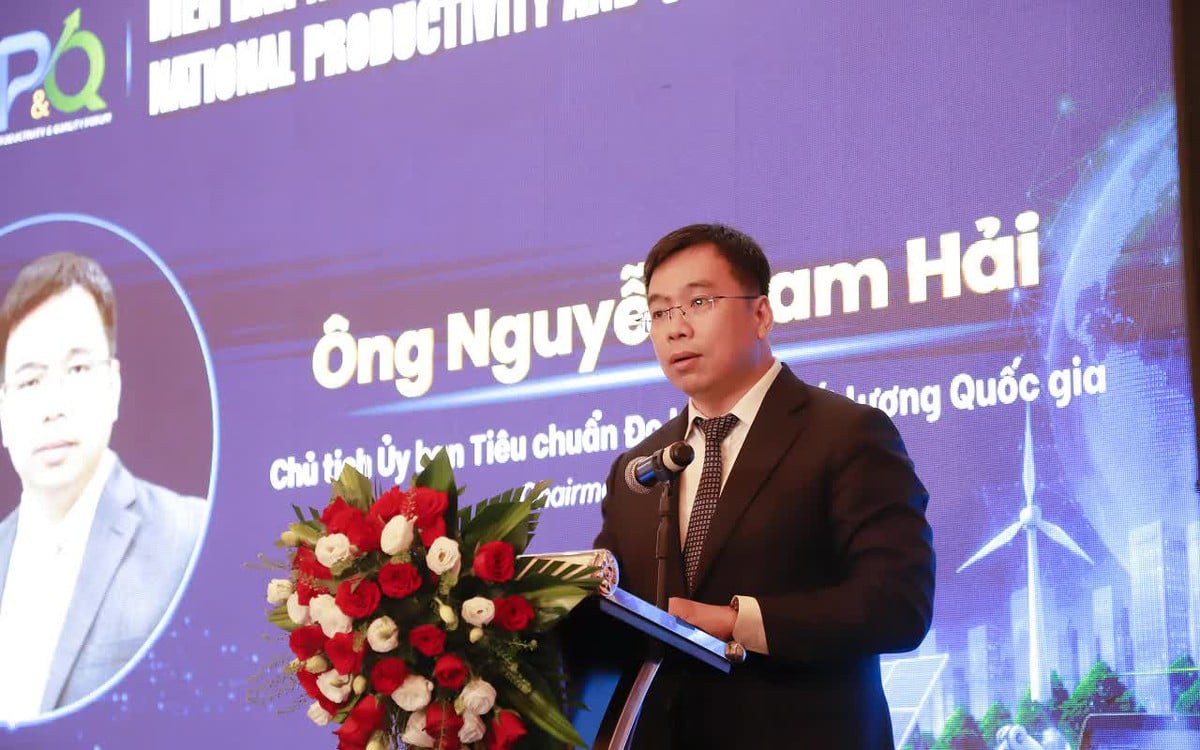
On the morning of August 14, 2026, the second thematic workshop, themed “Digital Transformation to Enhance Productivity and Product Quality,” took place within the framework of the National Productivity and Quality Forum 2026.
In his opening remarks, Chairman of the National Committee for Standards, Metrology and Quality Nguyen Nam Hai emphasized that the workshop was discussing a very practical issue: How to make digital transformation truly create higher productivity and better quality for products and goods.
According to Chairman Nguyen Nam Hai, the overarching theme of this year’s Forum is “Breaking through productivity based on science , technology, innovation, and digital transformation to propel Vietnam rapidly towards the Vision 2045.” The spirit of Resolution No. 57-NQ/TW also emphasizes the need to make science, technology, innovation, and digital transformation direct drivers of development.
But digital transformation is not an end in itself. Results cannot be measured solely by the quantity of software, platforms, or data created. What needs to be measured is how much cost is reduced, how much time is saved, how well errors are controlled, whether quality is more consistent, and whether the business has better access to the market.
To achieve this, technology must be accompanied by high-quality data, standardized processes, competent people, and appropriate management methods. This is the intersection point between digital transformation and standards, measurement, quality, and productivity.
The seminar program approached the issue in a fairly clear sequence, from product traceability and data; connecting businesses with customers on digital platforms; digital transformation of trade promotion activities; to the application of AI and self-operating business models. “These contents show that digital technology only creates value when applied to the right production, business, and management problems,” Chairman Nguyen Nam Hai shared.

Mr. Bui Ba Chinh, Director of the National Barcode Center, National Committee for Standards, Metrology and Quality, presented a paper titled “Digital Traceability – A Solution to Enhance Productivity and Ensure Quality in the Supply Chain,” emphasizing the role of data in digital transformation and productivity enhancement, with four core points: “Data is a new asset – Traceability is the data infrastructure – Digital transformation is a method of creating value from data – Productivity is the result of effective data exploitation.”
Based on these guidelines, Mr. Bui Ba Chinh offered several recommendations for state management agencies. Accordingly, it is necessary to use databases to serve the work of administration, statistics, analysis and forecasting; regulate the economy; monitor compliance with laws on product and goods quality; and at the same time improve the platform and shared database.
For businesses, Mr. Chinh recommended implementing digital transformation according to a roadmap suitable to the size of the enterprise; building digital transformation systems based on identification – collection – storage – sharing; and simultaneously applying advanced technologies and exploiting retrieved data to serve management, optimize operations and improve productivity.
Mr. Le Ba An Binh, Commercial Director of Zalo, presented a paper on the topic “Zalo – Partnering with Businesses to Improve Productivity and Quality”. Mr. An Binh emphasized the principle of optimizing productivity without compromising quality, and pointed out three factors that businesses need to focus on:
First, data is the fundamental foundation – choosing solutions for the organization, limiting data fragmentation across multiple individual accounts, and mastering data before applying AI;
Secondly, optimize operational productivity – optimize, monitor, and upgrade step by step. Establish clear processes and leverage available tools, selecting appropriate advanced tools;
Third, quality is paramount; you shouldn’t trade cost for quality interaction. Meaningful, high-quality interactions deliver lasting value.
Concluding the workshop, Chairman of the National Committee for Standards, Metrology and Quality Nguyen Nam Hai summarized three key issues:
Firstly, digital transformation must begin with a specific problem and end with a measurable result. Every technology investment needs to clearly answer how it will help reduce costs, shorten time, minimize errors, improve quality, or expand the market. Technology is only meaningful when it creates real value for the business and its customers.
Secondly, high-quality, standardized, identifiable, and connected data is the infrastructure of digital transformation. Therefore, traceability is not just about attaching a code to a product, but must help businesses manage their supply chain, control quality, ensure information transparency, and meet market demands. AI is also only effective when there is reliable data and appropriate management processes.
Thirdly, there is no single digital transformation model for all businesses. Each business needs to choose a roadmap that suits its size, capabilities, and the problems it needs to solve; implementing it from the stage with the clearest potential for value creation, evaluating the results, and then expanding. Along with technology, it is necessary to simultaneously invest in people, processes, standards, and management capabilities.
For the National Committee for Standards, Metrology and Quality, the discussions at the Workshop suggested three areas for further development: perfecting standards and technical guidelines for data, identification, traceability, and the application of digital technology; strengthening the connection between supporting organizations and the actual needs of businesses, especially small and medium-sized enterprises; and developing methods for assessing the impact of digital transformation using specific productivity and quality indicators.
“The ultimate goal is not to have a lot of digital platforms, a lot of data, or a lot of technology. The goal is to create businesses with higher productivity, better quality products, more transparent supply chains, and stronger competitiveness,” said Mr. Nguyen Nam Hai.
The National Productivity and Quality Forum 2026 comprises four thematic workshop sessions and one plenary conference session:
Workshop 1 – Science, technology and innovation policies to boost national productivity;
Seminar 2 – Digital transformation to improve productivity and product/goods quality;
Workshop 3 – Promoting Green Productivity through the Implementation of ESG Models in Organizations and Businesses;
Seminar 4 – Innovation: A Driver of Sustainable Productivity Growth for Businesses.
The 2026 National Productivity and Quality Forum Plenary Conference is themed: “Breaking through productivity based on science, technology, innovation and digital transformation to propel Vietnam rapidly towards the Vision 2045”.
