

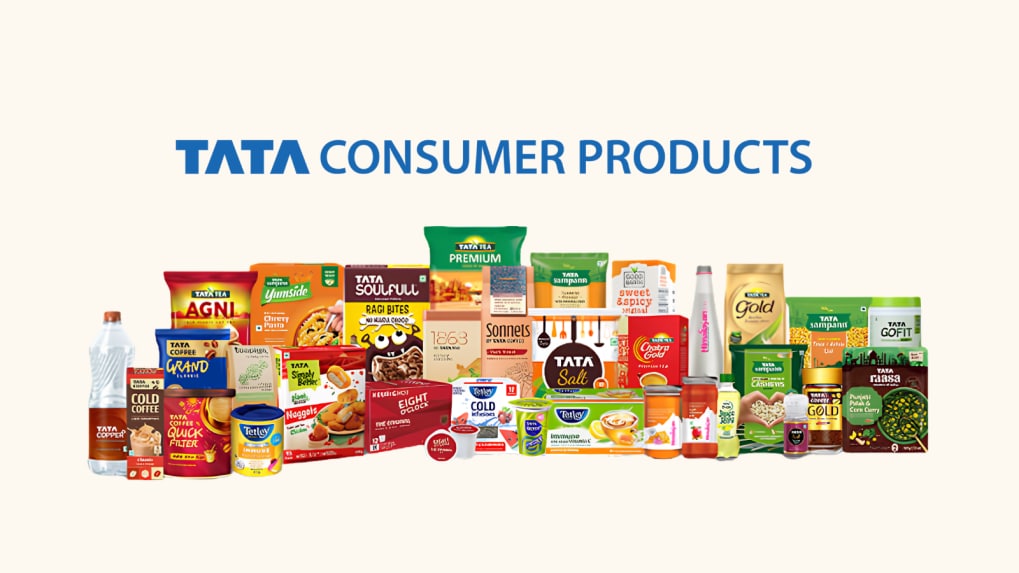
Tata Consumer Products is increasing its focus on the digital storefronts where consumers discover and buy everyday goods. The company putting more money into product visibility and shopper marketing as quick commerce becomes a more important channel for its growing food brands.
The strategy is particularly evident at Tata Sampann, the company’s packaged-food brand, whose sales have expanded across categories including pulses, dry fruits and cold-pressed oils. The company is investing more heavily in visibility for Sampann than for its tea and salt businesses, Chief Executive Sunil D’Souza said.
The distinction reflects a shift in how consumer goods companies compete for attention. On quick-commerce platforms, being available is only part of the challenge. Brands must also stand out in digital product listings and compete for visibility at the point of purchase.
“As quick commerce has continued to power ahead, we’ve continued to invest more behind visibility to make sure we drive penetration and market share in those channels,” D’Souza said.
Trending Topics
Jio IPORohit PatelKuldeep SehrawatMS DhoniPM Modi
The spending comes as Tata Consumer’s newer businesses gain weight in its portfolio. Its growth businesses increased revenue by 40% in the second quarter of the 2026-27 financial year and now account for 38% of its India business.
Advertising numbers tell only part of the story
Tata Consumer’s advertising and promotion expenditure amounted to 5.5% of sales in the September quarter and 5.8% in the first half of the financial year. Those figures, however, exclude visibility expenditure, which the company now reports separately.
Including visibility, the combined spending ratio was about 6.3% to 6.5% of sales, D’Souza said.
Visibility expenditure is deducted from revenue, while advertising and promotion are reported separately. The headline advertising ratio therefore does not capture the full amount the company is directing towards brand presence and consumer engagement.
The spends allocation varies by category. Sampann receives greater visibility and shopper-marketing investment because its products are more heavily skewed towards online retail and modern trade, D’Souza said.
For the company, that means marketing is increasingly tied to where consumers shop, rather than being measured only through traditional advertising expenditure.
Sampann’s expansion raises the stakes
Tata Sampann grew 57% in the quarter, making it one of the strongest performers in the portfolio.
Its dry-fruits and cold-pressed-oils businesses together have crossed an annual revenue run rate of ₹1,000 crore, according to the company. Established categories such as pulses, poha and makhana are also growing at more than 30%.
Quick commerce is helping the brand extend its reach as platforms expand their networks of dark stores. Asked about Sampann’s performance as quick commerce moves into smaller cities, D’Souza said the brand was growing on these platforms at broadly the same pace as a leading player in the sector.
He added that Sampann’s products held mostly first- or second-place positions across platforms.
The challenge is to convert greater digital availability into repeat purchases and sustained category growth. Tata Consumer is also applying a strict test to new products: innovations that fail to deliver within six months are reviewed, with a maximum of three additional months of support before a decision to discontinue them.
The company launched 22 products in the quarter and 36 in the first half, focusing on health and wellness, convenience and premiumisation.
AI moves into marketing and sales execution
Tata Consumer is also using artificial intelligence to connect consumer insights with decisions made by its sales force.
Around 1,600 to 1,700 salespeople are using an AI-powered sales companion, with the company aiming to extend the system to its entire sales force by December. The tool provides outlet-by-outlet and product-level recommendations. When a salesperson misses a retailer, an AI voice agent can call the outlet and facilitate an order.
The company has also rolled out a trade-spend optimiser for tea across India this month. It is using AI to analyse consumer insights for its research and development and marketing innovation teams.
D’Souza said the technology could reduce costs, but argued that its larger value would come from increasing sales. Pilot programmes had improved the number of product lines sold per salesperson call, he said, helping persuade the company to scale the initiative.
“The real differentiator comes in how do you bump up your revenue lines with AI,” he said.
The applications suggest that Tata Consumer is approaching AI not simply as a way to automate back-office work, but as a tool to improve the effectiveness of its distribution and marketing investments.
The push into quick commerce and newer food categories comes as Tata Consumer’s established businesses deliver mixed results.
Consolidated revenue rose 14% in the quarter, while net profit increased 16% to ₹470 crore. India’s salt business grew revenue by 15%, with volume up 9%, and generated close to ₹1,100 crore in revenue.
Tea volumes in India were flat, while revenue declined 1%, reflecting weather conditions, price increases and the lingering effects of disruptions in the previous quarter. Ready-to-drink beverages recorded 47% revenue growth, with volumes up 34%. Capital Foods and Organic India together grew 24% in the domestic market.
Tata Starbucks reported 15% revenue growth and its fifth consecutive quarter of positive same-store sales growth. It ended the quarter with 505 stores across 81 Indian cities.
Tata Consumer’s traditional categories remain substantial, but newer products are expanding more quickly and require different approaches to distribution, visibility and consumer engagement.
Follow Storyboard18 on Google for the latest and breaking brand marketing and industry updates, along with in-depth coverage of digital news. Stay informed with the latest perspectives only on Storyboard18.
Tags
First Published onOctober 30, 2026, 06:46:02 IST
SPOTLIGHT

Special CoverageGen Z is rewriting the media-to-commerce funnel, forcing brands beyond traditional cohorts
The conversation highlighted a fundamental shift underway in the relationship between audiences, platforms and brands. Rather than treating Gen Z as a uniform consumer segment, marketers are increasingly having to account for individual behaviours, fragmented content consumption and a stronger expectation
SAC 2026: Swiggy, Nestlé, HDFC, Flipkart, Puma, Lahori Zeera shine | Why Piyush Pandey remains India’s creative North Star
Storyboard18 brings you top five news updates from the world of advertising, marketing, and business of brands.
