

The only company in China that has the capability to deliver fully domestically manufactured space computing products covering low, medium and high orbital planes.
This article is approximately 3500 words, with a recommended reading time of 7 minutes
36Kr learned that Zhongke Miwei, a company focused on space intelligent computing and satellite intellectualization, has recently completed its Series A1 and A2 financing, with the total amount of the two rounds exceeding 100 million yuan. Investors include Bohua Industrial Investment, Matrix Partners China, GL Ventures, Yushi Space, China-Singapore Group, Baidu Ventures, Xinrui Capital, Huakong Fund, USTC Silicon Valley Venture Capital, etc. IO Capital acted as the exclusive financial advisor. This round of financing covers aerospace industrial capital, leading venture capital institutions and industrial parties, providing industrial resource support for the company to further expand its space intelligent computing and core intelligent satellite system business.
For commercial aerospace, with the continuous increase in the number of satellites, how to process massive on-orbit data, reduce the pressure of data downlink, and make satellites more intelligent and capable of autonomous operation, is becoming a new demand for infrastructure.
Zhongke Miwei is incubated by the University of Science and Technology of China and the Shanghai Processor Center, and the team has been working on intelligent computing architecture and space engineering for nearly 10 years. Wang Ziyan, the founder of the company, once served as the vice president of a listed artificial intelligence chip company, and all members of the co-founding team are from the School of Software of the University of Science and Technology of China.
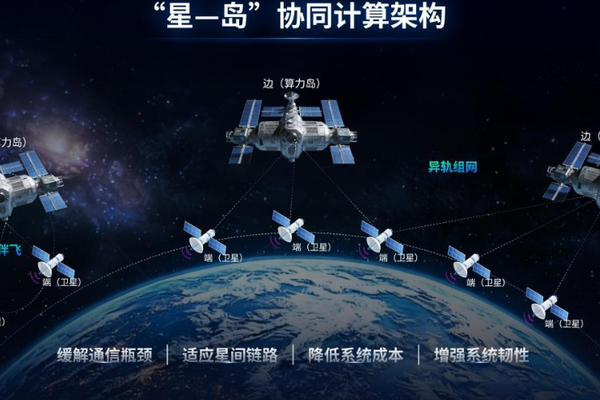
Zhongke Miwei is positioned as a “builder of space intelligent computing and satellite intelligent solutions”, and builds a new generation of intelligent constellation computing architecture of “satellite intelligence — island computing, satellite-island collaborative intelligence”. At present, the company’s core products include highly reliable space computer hardware, on-board service-oriented operating system, and computing architecture for distributed collaboration of constellations.
At the hardware level, Zhongke Miwei has launched the fully domestic heterogeneous intelligent computing system “Honghuang”, covering multiple forms from modules to complete machines to systems. This product has four levels of reliability: hardware, firmware, software and system, supports harsh radiation environments on all orbital planes, and mainly solves the problem of high-density intelligent computing of satellites under the conditions of limited power consumption, limited volume and strong radiation environment, and supports the collaborative work of different types of chips such as CPU, GPU, NPU and FPGA. Its computing power can be modularly combined on demand, and the integrated computing and thermal control can be delivered, covering space computing requirements from dozens of Tops to dozens of Pops.
At the software level, Zhongke Miwei has launched the service-oriented operating system “Xuanhuang OS” for heterogeneous intelligent computing. It uniformly abstracts different types of underlying computing hardware, so that developers do not need to develop and adapt for different chips separately, but can call the underlying computing power through a unified software environment, thus reducing the threshold for development and deployment of intelligent applications and improving the efficiency of algorithm iteration.
In addition to the single satellite having intelligent computing capability, the company has also independently developed the “satellite-island” collaborative computing architecture. Among them, “satellite” refers to the sensing satellite equipped with intelligent computing capability, and “island” refers to the computing power node satellite deployed in space, which provides on-orbit computing power supply and computing power access for the sensing satellite. Under this architecture, satellites can further form collaboration with other satellites and space computing power node satellites. A single satellite can complete target recognition, mission planning, data interpretation and other tasks on orbit. At the same time, for tasks with higher computing requirements, it can further call the computing power of other nodes.
From the perspective of commercialization path, Zhongke Miwei has currently formed a multi-level service model from standard products to system solutions. On the one hand, the company can provide standardized software and hardware products such as “Honghuang” modules and complete machines; on the other hand, it can also provide customized intelligent computing systems according to different satellite missions, and further extend to supporting services such as flexible, agile and lower-cost R&D and industrial manufacturing capabilities for satellite manufacturing and constellation operation enterprises.
At present, Zhongke Miwei’s products have been applied in commercial aerospace, national major special projects, manned spaceflight, deep space exploration and other fields. The company disclosed that with the accumulation of the team in the early nearly ten years, it has supported four satellites carrying computing power products to operate stably on orbit, and the longest on-orbit operation time is close to 5 years; the company currently has more than 25 products under development, and it is the only company in China that has the delivery capability of fully domestic space computing products for low, medium and high all orbital planes.
The following is an excerpt of the communication between 36Kr and founder Wang Ziyan:
36Kr: The team started R&D of “computing power going into space” in 2018. What is the difference between the R&D at that time and now?
Wang Ziyan: The whole work of bringing computing into space is iterating continuously with the evolution of China’s semiconductor and basic industrial chain. In the early stage, we used chips with relatively small computing power and power consumption to solve the problem of small model inference. Moreover, these tasks that supported our accumulation have extremely high aerospace engineering requirements, and the challenge from 0 to 1 is huge, but it is a comprehensive exercise for our current capabilities, which is our luck.
Now the capability of computing chips is constantly improving, and the process is constantly breaking through. For the current R&D, the challenges are all-round. We always focus on two starting points: engineering realizability and commercial closed loop. We should not only consider the environmental constraints of the limited satellite platform, but also consider the radiation resistance and vacuum heat dissipation of high-power devices. At the same time, we should consider the adaptation and optimization with on-board applications, as well as the optimization of the overall computing architecture under the time-varying and unsteady communication environment, which puts forward very comprehensive requirements for the team’s technical stack and higher requirements for engineering capability.
36Kr: From the early small computing power chips to the current large computing power payloads, what are the improvements in technical difficulty? What challenges do hardware and software face respectively?
Wang Ziyan: In the early days, the chips we launched into space had small computing power and power consumption, and the satellite missions were also very focused, so we could optimize a dedicated system for specific applications. Now the application requirements on the satellite are more generalized, and the demand for computing is also greater. Facing many different AI chips, the differentiation of architecture and the fragmentation of software stack are challenges to the generalization of applications; at the same time, the energy supply, weight, power consumption density and heat dissipation of space computing are all constrained in a limited range, so the system software architecture must adapt to these extreme conditions, and the operating system, task scheduling and distributed collaboration all need to be redesigned.
From the specific hardware level, the large computing power AI chip itself is a typical low-voltage high-current chip, the core voltage is about 0.75 to 0.85 volts, but the internal core power may reach nearly 100 to 200 amperes. For products that need to work reliably in the space environment, the external power supply of the whole system, Flash, Nor Flash and other peripheral components that store firmware and ensure system startup and security, etc., are more significant system-level shortcomings. How to design the reliability architecture of the smallest unit of the whole space computing module is actually the work we have been doing. Our work has been from small chips to large chips, and the technical stack has always been focused on a series of work such as orbital reliability, radiation resistance and heat dissipation, which are common and continuous.
36Kr: How to understand the planning of “satellite-island” collaboration, and why will “computing power islands” definitely emerge in the future?
Wang Ziyan: Let’s take a simple example. If a high-power sensing device (such as an X-band radar) and a high-power computing device are installed on a satellite at the same time, there will be a situation of “one minute of power on, one hour of charging”. Because the resources of the satellite platform are limited, it is difficult to carry two high-power components at the same time.
At present, we do not have the capability of large-scale communication networking like Starlink, and it is also difficult for our ground stations to be deployed globally in a wide area. These constraints will restrict the construction and operation of larger-scale constellations in the future.
When there are more and more sensing satellites in orbit, accompanied by the surge of orbital data, and the demand for computing tasks increases greatly, there must be special computing power satellites to serve the whole constellation. This “computing power island” can fly in the same orbit to provide computing power for sensing satellites; when technologies such as inter-satellite laser communication are applied on a larger scale, it can also realize cross-orbit collaboration, access computing power on demand, and even replace some ground stations to control and plan the constellation. In short, satellites in the past were “eyes”, now we need to add “brains” to the “eyes”, but a single satellite cannot hold a large enough “brain”, so we need a special, larger-capacity constellation-level “brain”. This is the future development direction, and it is also what we are continuously planning.
Zhou Ruizhe, Managing Director of Bohua Industrial Investment: On-orbit intelligent computing is the core of the aerospace information industry moving towards in-depth application. Miwei Technology has the rare full-stack self-research capability of space intelligent computing in China, has completed multi-satellite on-orbit practice, opened up the closed loop from technology R&D to engineering delivery, and made up for the underlying capability of commercial aerospace constellation intellectualization. This investment is a key layout of Bohua Industrial Investment in the space computing power track, helping it to achieve deep collaboration with the constellation industrial chain that Bohua has invested in. We will rely on the industrial network to help Miwei Technology expand more industry scenarios and promote the large-scale implementation of domestic space-based intelligent computing technology.
Matrix Partners China: Zhongke Miwei is the core target of aerospace intellectualization. The three barriers of customized chip cooperation, engineering capability and national team ecology form a good first-mover advantage. Satellite intellectualization is an important direction of the 15th Five-Year Plan. The new generation of Starlink satellites has also changed from pure communication satellites to intelligent payload satellites, and Miwei’s product positioning is more suitable for China’s national conditions.
Yushi Space: Zhongke Miwei has outstanding technical leading advantages in the field of space intelligent computing, has formed mature accumulation around key technologies such as on-board computers, heterogeneous computing architecture, on-board thermal control, and lightweight model deployment, and has overcome a series of difficulties such as device radiation resistance, computing power scheduling, and on-board operating system in the space environment. The technical path highly matches the dual-line technical route of Yushi Space’s intelligent constellation and space supercomputing center. The founding team of Zhongke Miwei comes from the system of the University of Science and Technology of China, which has both profound technical accumulation of scientific research institutes and engineering implementation experience of leading industrial manufacturers. They not only understand the constraints of aerospace environment, but also are proficient in the development of AI computing power software and hardware, with solid scientific research foundation and strong industrialization execution capability. Through this investment, Yushi Space realizes deep binding of the industrial chain, achieves technical collaboration and complementary capabilities, and jointly promotes the product iteration and on-orbit verification of the space computing power constellation.
Cui Kedi, Executive Director of Baidu Ventures: Wang Ziyan, the founder of Zhongke Miwei, and his team have long been focused on space intelligent computing. In nearly ten years of continuous exploration, they have formed a deep understanding of aerospace engineering constraints and the evolution of intelligent computing technology. Mr. Wang not only has the technical accumulation in the field of intelligent computing, but also has the engineering practice ability to bring technology into the complex aerospace scene. This long-termism and engineering thinking is an important foundation for Zhongke Miwei to continuously build product capabilities. We especially value the continuous evolution of the team from early small computing power chips to today’s large computing power payloads, from single satellite computing to the “satellite-island” collaborative architecture, which reflects the judgment and persistence of the long-term development direction of space computing. We expect Zhongke Miwei to continue to promote the development of domestic space intelligent computing capabilities from single-point breakthrough to systematic development
USTC Silicon Valley Venture Capital: Zhongke Miwei deeply cultivates the field of space computing power and domestic intelligent computing, takes the distributed space intelligent computing architecture as the core, fills the gap of domestic heterogeneous intelligent computing operating system, and achieves a major breakthrough in space computing power technology. USTC Silicon Valley Venture Capital’s investment in Zhongke Miwei has practically implemented the investment strategy of “investing in early-stage, small and hard technology enterprises”, which is also highly consistent with the key layout directions of future industries such as aerospace information and artificial intelligence in Shushan District.
