

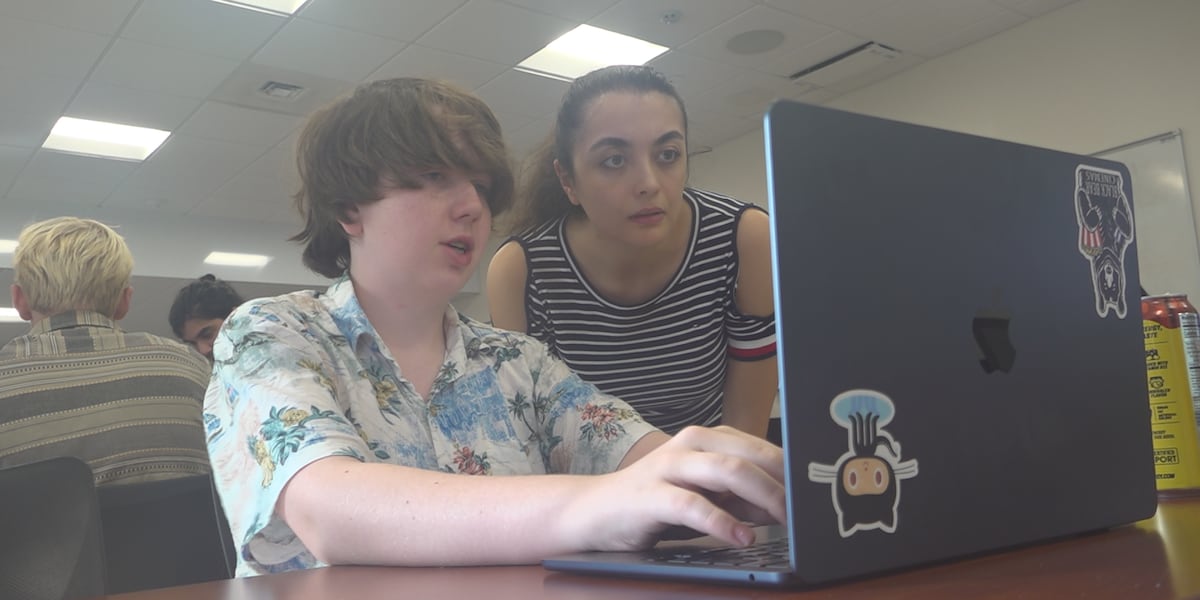
Maine (WABI) – Classes are back in session across the University of Maine System, and this year students and staff have access to ChatGPT Edu
Ryan Low, chancellor for finance and AI integration for the UMaine System, said the rollout has gone smoothly so far.
“So far, so good. There’s always kind of quirks that come along when you’re going through a migration like this, but our team has been flexible. Different people are dealing with different things,” Low said.
The addition of ChatGPT Edu cost the university just under $1.4 million He said the university is only on a two-year contract to see if the investment is worthwhile
“We’re going to access what we think that value is,” Low said. “It ends up being about $22 per user per year and we think that investment makes sense.”
Low said security is the biggest difference between ChatGPT Edu and free versions of the tool available at home.
“The great thing about the ChatGPT Edu environment that we’re in is none of the data is being used to train any models. It’s not going out to the world to learn from. We feel really comfortable about the security side of the tool,” Low said.
UMaine staff said they want the AI model used as a tool, not as a replacement for traditional learning.
Alice Bernosky, an Earth and climate science professor at UMaine, said AI has no place in certain assessments in her 100-level class.
“There are plenty of assessments of students’ knowledge that AI does not have a place in that, so in-person exams. So, where it really came in and where I really encourage students is in their presentations in terms of trying to come up with an idea that overlaps between class and their own interests or their own major, even in terms of structuring that presentation, but not in terms of creating the presentation,” Bernosky said.
Bernosky said she pushes her students to go further than only asking one prompt and accepting the answer AI gives them.
“I do try and really impress upon students that ultimately science is about curiosity, persistence, and skepticism. And I think that that fits remarkably well with AI. It’s really tempting to just be okay with what you’re told, but to really develop that skill of pushing back, I think is really important.”
Some students remain undecided on AI use. Bernosky said she polled her students, and a third of them said they don’t want to use AI.
Bernosky said a small percentage in that poll also said they already rely too heavily on AI use.
Garner Holdsworth, a UMaine senior, said how the university implements AI will influence his decision on whether to use it.
“If a professor uses AI to generate an assignment given the course plan, and then a student uses AI to help them solve the course, solve the problem, and then the teacher uses AI to help them grade it, it’s just bots chatting with other bots back and forth. It doesn’t feel like school to me, so we have to learn how to implement it properly,” Holdsworth said.
With the school year underway, Low said he is hearing feedback on the program in its early stages, particularly about the environmental impacts of AI.
“We’ve certainly heard from folks across the system who were excited about the technology coming out,” Low said. “We’ve also heard folks on the other end who are not impressed with the technology, who are not interested, who are concerned about environmental impacts. We certainly respect, uh, all of those opinions as well.”
Holdsworth echoed that environmental concern.
“There is a huge anti-AI wave. I have my own personal opinions about it,” Holdsworth said. “I’m not a fan of some of the ways that AI is being implemented in every aspect in our modern lives. I definitely think that, you know, the data centers and whatnot are doing terrible things to the communities in some areas. It really comes from what your opinion on is with the direction that we’re going.”
UMaine is not requiring staff or students to use the AI model and does not anticipate requiring it in the near future.
Copyright 2026 WABI. All rights reserved.
