

Add preferred source
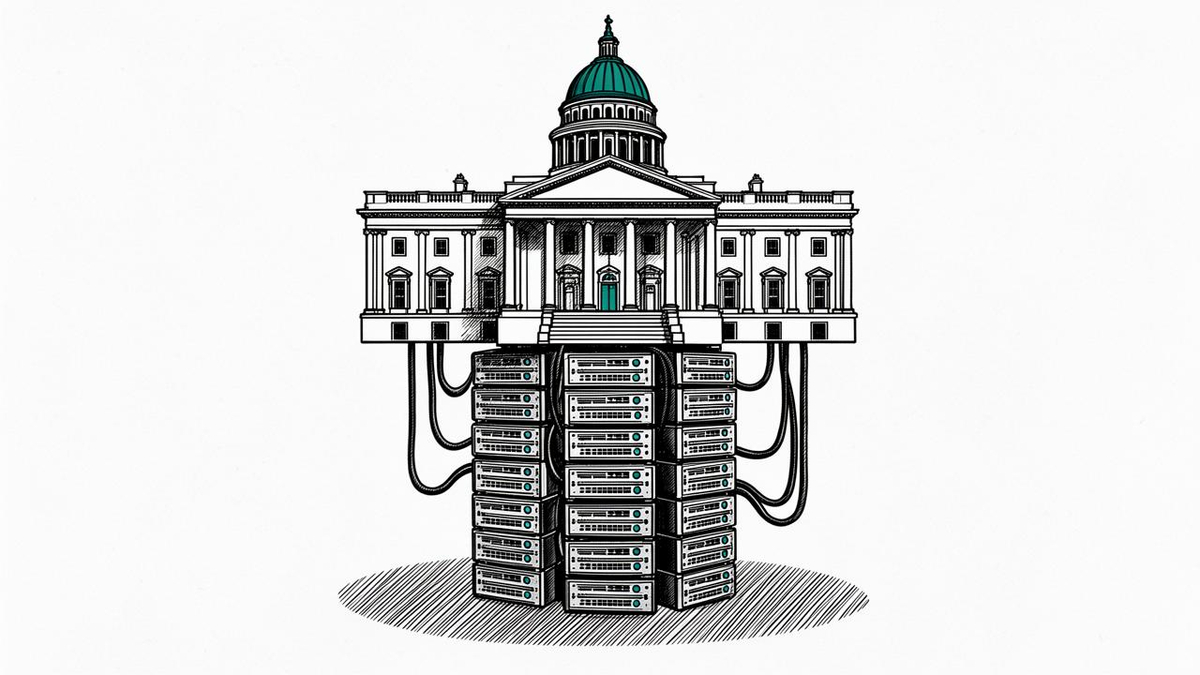
President Donald Trump and his two sons have made extensive investments across AI and data center-related industries, reigniting conflict-of-interest concerns as the debate over AI regulation intensifies. Since returning to the White House, Trump has purchased shares in Dell Technologies, Micron, GE Vernova, Broadcom, and other AI infrastructure companies. His sons have also invested in data center and AI ventures through a venture capital firm and an investment company. Trump Media & Technology Group announced a merger with a nuclear fusion company, extending the family’s business footprint into the AI sector. The White House has pushed back, stating that investments are managed by independent asset managers, but ethics experts have called the arrangement unprecedented. Trump has dismissed calls to slow AI development, maintaining an accelerationist stance.
Key Elements
President Donald Trump and his two sons have significantly expanded their investments in AI and data center-related industries, even as the regulatory debate over artificial intelligence development intensifies. Given that Trump has publicly dismissed calls to slow AI development, concerns are resurfacing that his policy decisions could directly intersect with his family’s personal financial interests.
An analysis by the Washington Post (WP) published on the 20th (local time), based on Trump’s financial disclosure records and corporate filings, found that the Trump family’s businesses and investments are deeply intertwined with industries benefiting from the AI boom. Among the roughly 30,000 stock transactions disclosed since Trump returned to office, numerous purchases involved companies supplying AI semiconductors, servers, and data center power infrastructure.
Specifically, Trump purchased shares in data center-related Dell Technologies, memory chip maker Micron Technology, and power equipment company GE Vernova. He also bought stock in Broadcom, Texas Instruments, Credo Technology, and Super Micro Computer.
Many of these companies operate in sectors experiencing surging demand from expanded AI data center investment. Notably, Trump purchased shares in companies whose stock prices had declined amid growing calls to slow AI development. However, WP noted that it remains unclear whether Trump currently holds these positions.
Trump’s two sons are also actively investing in AI and data center-related ventures. His eldest son, Donald Trump Jr., serves as a partner at 1789 Capital, a Florida-based venture capital firm. The firm recently raised a $1.2 billion fund focused on digital infrastructure real estate, including AI data centers. 1789 Capital has also invested in AI companies such as Cerebras Systems, Perplexity, and Elon Musk’s xAI.
His younger son, Eric Trump, has invested through American Ventures in defense and robotics companies that leverage AI. Both sons also participated in founding American Data Centers, which targeted AI infrastructure buildout immediately after Trump’s return to office; that venture later merged with digital asset mining company American Bitcoin.
Companies owned by or affiliated with the Trump family are also expanding into AI-related businesses. Trump Media & Technology Group (TMTG), in which Trump is the largest shareholder, recently announced a merger with nuclear fusion company TAE Technologies. TAE Technologies is pursuing power plant construction to meet the surging electricity demand driven by AI data center expansion. TMTG is also developing TruthAPI, a service providing AI companies with access to Truth Social posts.
World Liberty Financial, the cryptocurrency venture Trump co-founded with his two sons, is also collaborating with Hong Kong-based AI company WorldClaw. WorldClaw users can access multiple AI models using USD1, a stablecoin issued by World Liberty Financial.
White House Claims “Independent Management,” Ethics Experts Call It “Unprecedented”
The White House has categorically denied any conflict of interest. White House spokesman Davis Ingle said in a statement, “All of President Trump’s investments are managed by independent asset managers,” adding that “through computer-based model portfolios that automatically track recognized indices such as the Schwab 1000, neither President Trump nor any family member can direct or influence which stocks are bought or sold and when.”
However, ethics experts point out that this asset management arrangement is highly unusual. Don Fox, who served as acting director of the Office of Government Ethics (OGE) during the Obama administration, said, “No president since conflict-of-interest rules were introduced has ever managed his wealth this way.” Previous U.S. presidents have placed their assets in blind trusts during their terms, but Trump has entrusted his assets to a trust in which his eldest son serves as trustee. This has fueled persistent concerns that Trump could effectively influence individual stock transactions.
The United States introduced provisions restricting financial conflicts of interest for public officials in the federal criminal code in 1962, and strengthened its ethics oversight system through the Ethics in Government Act of 1978, enacted in the wake of the Watergate scandal, which mandated financial disclosures for senior officials.
Dismissing Calls to Slow AI… The Intersection of Policy and Investment Value
Since returning to office, Trump has consistently maintained that AI development must be accelerated, citing the need to prevent China from seizing technological leadership. He recently dismissed industry arguments for slowing AI development due to technological risks as “a scam,” and claimed the only safeguard AI needs is “a strong and smart president.”
Trump has also floated the idea of creating an “AI Force” separate from existing law enforcement to police AI industry issues. Some analysts view this as a move to strengthen his negotiating position ahead of a White House meeting with Chinese President Xi Jinping.
WP reported that the debate over AI development has emerged as a major issue for the U.S. economy and stock market, as well as for the political landscape ahead of the November midterm elections. With Trump holding substantial economic interests in AI-related stocks and businesses, policy decisions that could influence the pace and regulation of AI development may directly intersect with his investment value.
Once added, BigGo Finance appears first in Google Search Top Stories, so you get the broadest, most up-to-the-minute, and most comprehensive global financial news first.
