

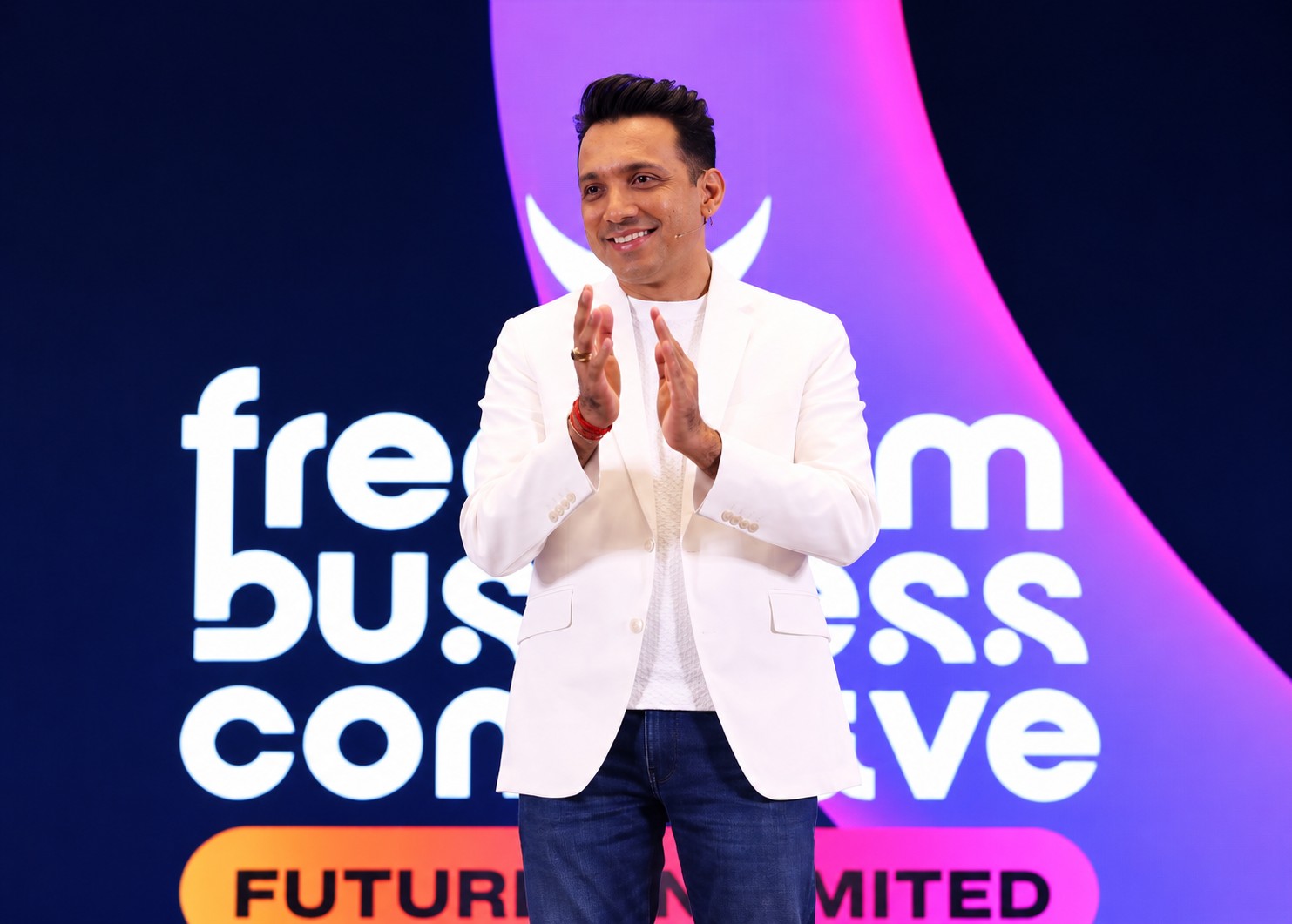
Siddharth Rajsekar, founder of India’s largest digital
coaching community, built an AI version of himself to mentor students round the
clock. At Reboot, ILH’s annual online event held every year on Guru Purnima, he
went one step further – unveiling Sia, an AI voice assistant that calls his
students before they even think to ask for help.
Somewhere in India right now, a student stuck on a business
problem at 2 AM is getting advice – not from a human mentor, but from an AI
trained to sound exactly like one.
That AI is modelled on Siddharth
Rajsekar, better known as Sidz, the founder of Internet
Lifestyle Hub (ILH) – a coaching and entrepreneurship platform he’s
spent close to a decade building into one of India’s largest, with 51,000+ paid
members and a collective ₹1,500+ crore in student earnings. Last year, Sidz did
something most founders only joke about: he cloned himself.
Meet the AI that never logs off
Built on Delphi, an AI platform used by experts and
creators to turn their knowledge into an always-on digital version of
themselves, Siddharth’s clone is trained on the sum of what he’s taught: 17.4
million words, pulled from his calls, courses, and coaching sessions over the
years, and updated every week with the latest.
The point wasn’t a gimmick. It was bandwidth. Siddharth
has thousands of students, and one of him. So he built a version of himself
that could sit with every one of them at once – answering questions on niching
down, pricing, offers, and the stuck-at-midnight problems that don’t wait for
the next scheduled call.
The numbers, which Siddharth shared on stage at Reboot
2026, ILH’s annual flagship event, back that up: in its first year, his AI
clone has held roughly 39,000 conversations and exchanged more than 500,000
messages with students, with over 1,000 people talking to it on an average day,
for sessions running close to 16 minutes each.
At the same event, Sidz did something that doubled as
both a demo and a bit of theatre – he asked his own AI clone, live on stage,
what had changed about it. It answered in his voice: that the earlier version
of him was “hungry and scrappy,” figuring things out in real time,
but the current one operates with more clarity – it knows what works, moves
faster, and has gone from a 51,000-member community to one generating over
₹1,500 crore in student earnings, not by waiting for perfect, but by shipping
and improving in public.
Then he introduced Sia
If the AI clone answers questions, Sia asks them.
Unveiled at the same event, Sia is Siddharth’s new AI
voice assistant – and unlike his text-based clone, she calls people. Demoed
live on stage, Sia rang Siddharth mid-keynote and introduced herself:
“This is Sia from Internet Lifestyle Hub. My role is simple – I’ll call
you at the right time and point you in the right direction. Every conversation
short, clear, and useful.”
Her job is entirely operational, and deliberately
unglamorous: when someone registers for a webinar, Sia calls within minutes to
confirm they’ll show up. Five days after a student joins the community, she
checks in. Before big live events, she reminds members to log in, block their
calendars, and show up ready. For now, she only calls out – members save her
number and receive calls, rather than dialling in themselves, though Siddharth
has said that’s next.
“I wanted an assistant so that no one on this
journey disappears quietly,” Sidz said, explaining the thinking behind
Sia. “For you to never feel forgotten between calls, and never lose
momentum because life got in the way.”
The bigger bet
Siddharth has been vocal about where he thinks this is
heading: agentic AI absorbing the operational grind of running a coaching
business – reminders, follow-ups, first-line support – freeing up humans to do
the one thing he insists AI still can’t: connect with another human being. His
clone and Sia are effectively that thesis, deployed. One handles the questions.
The other handles the nudges. He still shows up for the parts that need a
person.
His bigger bet is on where the whole industry goes
next. Siddharth’s argument is that the future of coaching won’t be built on
generic AI at all – every coach, consultant, and creator asking a generic
chatbot to sound like an expert. It’ll be built on experts cloning themselves:
training their own AI on their own calls, content, and frameworks, so their
audience gets answers shaped by that specific person’s experience, not a
generic AI’s <a href="https://bitcomme.com/the-best-brands-on-social-media-in-2026-so-far/” title=”The best brands on social media in 2026 (so far)”>best guess. A student asking a general-purpose chatbot for business
advice gets a broad, average answer. A student asking Siddharth’s clone gets an
answer trained only on what Siddharth has actually taught, in his own words,
drawn from years of real coaching calls. That’s the difference he’s betting on:
not AI replacing experts, but every expert running their own AI, contextual to
their own audience.
He’s not planning to keep the tech to himself, either.
Building an AI clone of your own voice, and deploying your own version of a
Sia-like calling agent, is now part of what he teaches inside ILH’s advanced
programs – meaning the thousands of coaches training under him may soon be
fielding calls from their own AI assistants, too.
For a founder who’s built his reputation on being early
– he trained in sound engineering in 2001, before it was even a recognised
career path in India, moved into mobile testing years before smartphones
existed, and got into digital coaching two years before COVID pushed the
industry online – cloning himself is just the latest bet that being first
matters more than being certain.
